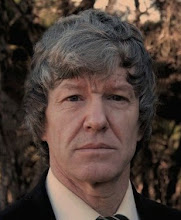
Marketplace asked a number of maily island people in Local Government to reflect seriously and/or humorously on Christmas, by answering a list of questions.
The real meaning of Christmas is that it celebrates the birth of Jesus. It is a celebration that began with most important family in history, which was the seed of the most important extended family--the global Christian family. Jesus Christ is the reason for the season.
How will I be spending Christmas? First and foremost, being eternally thankful for the real reason for Christmas, the coming into this world of God's Son, Jesus Christ, and for all that that means.
Then wishing that Rodney Hide would put a sock in it--before he was born. And that 'Santa' will take him back to the North Pole and dump him somewhere. And feeling sorry for Rudolph for having to carry Rodney (and his girlfriend, of course) all that way--being dumbed down to a kind of international wheelie-bin service.
What is the most fun I have had at Christmas or New Year? Knitting a sock for Rodney Hide. A large sock.
My predictions for 2010? All true Waihekeans will be knitting humungous socks for Rodney Hide. And writing sacks (not bins) of retrospective letters to Santa and Rudolph. And that we will wake up and this will only have been a nightmare, and at the foot of the bed will be a pillow-case overflowing with a bright new Waiheke Council. And that Rodney Hide will be nominated in the New Year Honours List for a special award: TGTSW (The
Grinch That Stole Waiheke). And that on Rodney's next overseas jaunt some kind airline will deliver his luggage back to Wellington, but lose him.
What is my New Year's resolution? Learn to knit large socks faster.
Wednesday, 23 December 2009
THE LITTERBUG COUNCIL OFFICER
Thank you Michael McQuillan! We used to have an island on which rubbish bags went out on Monday and Tuesday, and were gone within hours.
Now, thanks to him, we get rubbish bags and wheelie bins all over the place for days on end, cluttering the footpaths and berms.
Permanent mess.
McQuillan should read, get into his skull, and obey, section 10 in the Local Government Act 2002, which defines the purpose of local government as: '(a) To enable democratic local decision-making and action by, and on behalf of communities; and (b) To promote the social, economic, environmental and cultural well-being of communities, in the present and for the future.'
With people like him replacing democratic decision-making with bureaucratic, the word 'progress' has become a one-word joke.
Now, thanks to him, we get rubbish bags and wheelie bins all over the place for days on end, cluttering the footpaths and berms.
Permanent mess.
McQuillan should read, get into his skull, and obey, section 10 in the Local Government Act 2002, which defines the purpose of local government as: '(a) To enable democratic local decision-making and action by, and on behalf of communities; and (b) To promote the social, economic, environmental and cultural well-being of communities, in the present and for the future.'
With people like him replacing democratic decision-making with bureaucratic, the word 'progress' has become a one-word joke.
Monday, 14 December 2009
OPEN LETTER TO ALAN KNIGHT
As you can see from the blog at this link, a man can be so possessed by unreasoning, implacable hatred that he descends to puerile insult in a vain attempt to justify his hatred.
As has been wisely said, 'Hatred is the poison you drink in the hope that someone else will die.' It has no effect on the hated; it destroys the hater. And he wastes life expressing his hatred.
One day outside the supermarket that expression reached a venomous extreme, when he hurled this at me: 'Murder would be too good for you.'
I do not hate you, Alan. But I do feel very sorry for you. 'Lord of Misrule' is lord of nothing.
God bless you.
As has been wisely said, 'Hatred is the poison you drink in the hope that someone else will die.' It has no effect on the hated; it destroys the hater. And he wastes life expressing his hatred.
One day outside the supermarket that expression reached a venomous extreme, when he hurled this at me: 'Murder would be too good for you.'
I do not hate you, Alan. But I do feel very sorry for you. 'Lord of Misrule' is lord of nothing.
God bless you.
Saturday, 12 December 2009
ROCK-CLIMBING EVENT A GREAT SUCCESS
The Rock-climbing Event has been a great success. It far exceeded my best hopes. Nearly four hundred people, mainly children, took the opportunity to scale the nine-metre faces of Rockup Limited's mobile rock-climbing rig, many of them triumphing over a fear of heights in the process. The rig has four faces, so four climbers can be going up at once, each on a triple safety harness attached to a hydraulically-damped wire-rope belay, so when they have reached the top and pressed the siren-button that signals their success they abseil gently down to the foam mat at the bottom. Ditto if they fall off. The detailed attention to safety in the design and operation of the equipment was most noticeable.
The event, which was fully sponsored, was run in two stages. The first stage was an educational programme run at Waiheke Primary School on the 9th of December and Te Hurihi Primary School on the 10th and 11th. Classes were put through a very impressive process that emphasised safety, teamwork, communication and organisation. The climbmaster, Joe, a skilled 21-year-old Englishman and his assistant, Taylor, a 22-year-old American woman, did a superlative job. Each class was divided in small teams, usually of three children, who competed for points, gained by reaching the siren-button at top of the wall and by working together to keep to the simple rules that Joe had taught them. During that stage over two hundred children did the climb, most more than once, many several times. Well done, everyone.
It was very easy to choose the prizewinner for the best team on the island, because of the seventy teams that climbed the wall while the rig was at the primary schools, one stood out. A three-girl team at Waiheke Primary School that called itself Fruit-salad, made up of Savanah, Tahnee and Lochie, reached the top a total of sixteen times, well ahead of any other team. A boy's team at Te Purihi did well, but Fruit-salad's excellent teamwork, good organisation, speed of changeover (swapping the harness from one girl to the next) and massive score put it in a class of its own. Super well done, girls!
The second stage was the five-hour public event staged on Saturday the 12th where the new supermarket is to be built in Belgium Street (many thanks to Tony Pope for making that available). There, one wall was dominated by those who wanted to go for speed-prizes in various age-groups. Two walls were used for the Mum-and-child and Dad-and-child teams who wanted to go for the speed-prizes in those categories. At its peak that stage of the event was putting through about a hundred climbs an hour. Upwards of a hundred and fifty people climbed the wall that day,making a total for the island of about four hundred. Over the four days of the event the wall was climbed about 1600 times (which works out at about $3.50 a climb, less that the usual charge of $5).
In the up-to-eight age-group the speed-prize for boys was won by Kahn Nicholson and one for girls by Alex Hynds.
In the nine-to-twelve age-group the speed-prize for boys was won by Amara Sidibe, whose best time out of seven climbs was an astonishing 15 seconds--the fastest climb timed on the island. Second prize went to Leo Tomczyk, who was only 2 seconds behind Amara at the end of a to-and-fro tussle that went on most of the afternoon, and which saw him go up the speed-wall eleven times, but still be full of beans and wanting more. The prize for girls in that age-group was won by Rachelle Perry, whose best time was a fast 19 seconds.
In the thirteen-to-fifteen age-group the prize for boys was won by Gus Falvey. The prize for girls was won by Forrest Denize, who went up that wall till her hands could take no more, ending nine closely-packed climbs with best time of 19 seconds.
The special-achiever awards for the children who stood out amongst the many who triumphed over their fears were Tess MacIntyre, Thomas Coddlington and Calla Andrews. Tess froze, high up, on her first two attempts, but pulled herself together and got to the top. Thomas could not face the wall all, but overcame his fears and went up it, higher and higher each time. Calla was too afraid to go on the wall when it went to her school, but at the public event on Saturday she went up it like a squirrel, several times, and turned in such fast times that her best climb was only two seconds behind the winner in her age-group, Rachelle Perry. Well done, children!
The speed-prize in the girls 16-19 age-group was won by Liz Worthy, who hardly drew breath after completing her first climb then went up the speed-climb in only 23 seconds (no boys in that age-group had a go, so the speed-prize that had been designated for them went to Amara Sidibe).
The speed-prize for the best Dad-and-child team was won by Gary Gray and his son Zion, and for the best Mum-and-child team by Jane Burn and her son Tom (in 37 and 31 seconds respectively).
The speed-prizes for adults were won by Darian Brown, who in spite of the rain pelting down at the end went up in 19 seconds, and by Lucy Bennett who breezed up in 22 seconds.
Special thanks to all the sponsors, without whom the event would not have been possible. The major part of the cost was met by the Waiheke Community Board from its events budget, followed by TPI and Tony Pope. The balance came (listing them in no particular order) from First National Real Estate Oneroa, TheArtistGoldsmith Oneroa, Ostend Medical Centre, Oneroa Medical Centre, and The Barn. The prizes were generously donated by Fullers, Gulf Sound & Vision, Oneroa Four Square (which donated the four-dozen muesli bars that rewarded each member of the winning teams at the schools), OutThere, Oneroa/Ostend Unichem Pharmacies and Waiheke Vets.
As I said to Joe and Taylor, 'The benefit you have brought to this community is incalculable.' When people face a challenge, overcome their fears and stretch their boundaries the benefit is felt by many others, not just them.
I hope this will become an annual event.
The event, which was fully sponsored, was run in two stages. The first stage was an educational programme run at Waiheke Primary School on the 9th of December and Te Hurihi Primary School on the 10th and 11th. Classes were put through a very impressive process that emphasised safety, teamwork, communication and organisation. The climbmaster, Joe, a skilled 21-year-old Englishman and his assistant, Taylor, a 22-year-old American woman, did a superlative job. Each class was divided in small teams, usually of three children, who competed for points, gained by reaching the siren-button at top of the wall and by working together to keep to the simple rules that Joe had taught them. During that stage over two hundred children did the climb, most more than once, many several times. Well done, everyone.
It was very easy to choose the prizewinner for the best team on the island, because of the seventy teams that climbed the wall while the rig was at the primary schools, one stood out. A three-girl team at Waiheke Primary School that called itself Fruit-salad, made up of Savanah, Tahnee and Lochie, reached the top a total of sixteen times, well ahead of any other team. A boy's team at Te Purihi did well, but Fruit-salad's excellent teamwork, good organisation, speed of changeover (swapping the harness from one girl to the next) and massive score put it in a class of its own. Super well done, girls!
The second stage was the five-hour public event staged on Saturday the 12th where the new supermarket is to be built in Belgium Street (many thanks to Tony Pope for making that available). There, one wall was dominated by those who wanted to go for speed-prizes in various age-groups. Two walls were used for the Mum-and-child and Dad-and-child teams who wanted to go for the speed-prizes in those categories. At its peak that stage of the event was putting through about a hundred climbs an hour. Upwards of a hundred and fifty people climbed the wall that day,making a total for the island of about four hundred. Over the four days of the event the wall was climbed about 1600 times (which works out at about $3.50 a climb, less that the usual charge of $5).
In the up-to-eight age-group the speed-prize for boys was won by Kahn Nicholson and one for girls by Alex Hynds.
In the nine-to-twelve age-group the speed-prize for boys was won by Amara Sidibe, whose best time out of seven climbs was an astonishing 15 seconds--the fastest climb timed on the island. Second prize went to Leo Tomczyk, who was only 2 seconds behind Amara at the end of a to-and-fro tussle that went on most of the afternoon, and which saw him go up the speed-wall eleven times, but still be full of beans and wanting more. The prize for girls in that age-group was won by Rachelle Perry, whose best time was a fast 19 seconds.
In the thirteen-to-fifteen age-group the prize for boys was won by Gus Falvey. The prize for girls was won by Forrest Denize, who went up that wall till her hands could take no more, ending nine closely-packed climbs with best time of 19 seconds.
The special-achiever awards for the children who stood out amongst the many who triumphed over their fears were Tess MacIntyre, Thomas Coddlington and Calla Andrews. Tess froze, high up, on her first two attempts, but pulled herself together and got to the top. Thomas could not face the wall all, but overcame his fears and went up it, higher and higher each time. Calla was too afraid to go on the wall when it went to her school, but at the public event on Saturday she went up it like a squirrel, several times, and turned in such fast times that her best climb was only two seconds behind the winner in her age-group, Rachelle Perry. Well done, children!
The speed-prize in the girls 16-19 age-group was won by Liz Worthy, who hardly drew breath after completing her first climb then went up the speed-climb in only 23 seconds (no boys in that age-group had a go, so the speed-prize that had been designated for them went to Amara Sidibe).
The speed-prize for the best Dad-and-child team was won by Gary Gray and his son Zion, and for the best Mum-and-child team by Jane Burn and her son Tom (in 37 and 31 seconds respectively).
The speed-prizes for adults were won by Darian Brown, who in spite of the rain pelting down at the end went up in 19 seconds, and by Lucy Bennett who breezed up in 22 seconds.
Special thanks to all the sponsors, without whom the event would not have been possible. The major part of the cost was met by the Waiheke Community Board from its events budget, followed by TPI and Tony Pope. The balance came (listing them in no particular order) from First National Real Estate Oneroa, TheArtistGoldsmith Oneroa, Ostend Medical Centre, Oneroa Medical Centre, and The Barn. The prizes were generously donated by Fullers, Gulf Sound & Vision, Oneroa Four Square (which donated the four-dozen muesli bars that rewarded each member of the winning teams at the schools), OutThere, Oneroa/Ostend Unichem Pharmacies and Waiheke Vets.
As I said to Joe and Taylor, 'The benefit you have brought to this community is incalculable.' When people face a challenge, overcome their fears and stretch their boundaries the benefit is felt by many others, not just them.
I hope this will become an annual event.
Thursday, 26 November 2009
SHRINKAGE!
Have you noticed that purveyors of groceries are increasingly pulling a very neat trick? Instead of raising their prices they reduce the size of the packet/jar/tube/bottle/etc and keep the price the same (approximately).
The problem is that that is not sustainable. Sooner or later the packet/jar/tube/bottle/etc gets so small that it vanishes.
Which means that in a few years' time they will be selling us nothing for $2000 a year.
Sounds like the rates.
The problem is that that is not sustainable. Sooner or later the packet/jar/tube/bottle/etc gets so small that it vanishes.
Which means that in a few years' time they will be selling us nothing for $2000 a year.
Sounds like the rates.
ROCKUP TO THE ROCK-CLIMBING EVENT
Thanks to a list of sponsors, the four-day rock-climbing event that was planned for early December by the Waiheke Community Board will be going ahead. Rockup's mobile all-weather rock-climbing unit will be here from the 9th to the 12th of December (all weathers except high winds).
On Day One it will be at Waiheke Primary School for its students, and some parents. On Days Two & Three it will be at Te Huruhi for its students, and some parents, and while there it will also be open to Waiheke High School students.
On Day Four, Saturday the 12th, it will be available to everyone. It will be in Belgium Street, where the new supermarket is to be built, behind the bus stop over the road from The Barn.
It it is 8 metres high, and has four faces, so four people can be using it at once. Climbers are attached with a triple-lock harness to a hydraulically-damped belaying wire, so if they fall off, and when they have reached the top, they float gently down. Two Rockup staff will be in attendance.
Admission, thanks to the sponsors, will be free. But a gold-coin donation will be welcome; proceeds will be allocated by the Waiheke Community Board to community groups.
Major sponsors are TPI, Tony Pope (who also made available the site of the new supermarketfor Saturday the 12th), and the Waiheke Community Board. Other sponsors are Ostend Medical Centre, First National Real Estate Waiheke, TheArtistGoldsmith Oneroa, The Barn, Oneroa Accident & Medical Centre, Offshore Rentals, and the last few dollars were chipped in by Martin Green.
Prizes will given to people in various age-groups who make it to the top in the shortest time. There will also be a prize for the fastest mother-and-daughter and father-and-son teams (the son and daughter must be under twelve), and there will be prizes for those who overcome some handicap and make it to the top.
Prizes have so far been donated by Fullers, Gulf Sound & Vision, Oneroa Four Square, Out There, and Waiheke/Ostend Village Pharmacies. Anyone else who wants to donate a prizes or prizes please contact Nobilangelo, the Member of the Community Board who is organising the event, on 2242.
To see what the rock-climbing unit looks like, click here.
On Day One it will be at Waiheke Primary School for its students, and some parents. On Days Two & Three it will be at Te Huruhi for its students, and some parents, and while there it will also be open to Waiheke High School students.
On Day Four, Saturday the 12th, it will be available to everyone. It will be in Belgium Street, where the new supermarket is to be built, behind the bus stop over the road from The Barn.
It it is 8 metres high, and has four faces, so four people can be using it at once. Climbers are attached with a triple-lock harness to a hydraulically-damped belaying wire, so if they fall off, and when they have reached the top, they float gently down. Two Rockup staff will be in attendance.
Admission, thanks to the sponsors, will be free. But a gold-coin donation will be welcome; proceeds will be allocated by the Waiheke Community Board to community groups.
Major sponsors are TPI, Tony Pope (who also made available the site of the new supermarketfor Saturday the 12th), and the Waiheke Community Board. Other sponsors are Ostend Medical Centre, First National Real Estate Waiheke, TheArtistGoldsmith Oneroa, The Barn, Oneroa Accident & Medical Centre, Offshore Rentals, and the last few dollars were chipped in by Martin Green.
Prizes will given to people in various age-groups who make it to the top in the shortest time. There will also be a prize for the fastest mother-and-daughter and father-and-son teams (the son and daughter must be under twelve), and there will be prizes for those who overcome some handicap and make it to the top.
Prizes have so far been donated by Fullers, Gulf Sound & Vision, Oneroa Four Square, Out There, and Waiheke/Ostend Village Pharmacies. Anyone else who wants to donate a prizes or prizes please contact Nobilangelo, the Member of the Community Board who is organising the event, on 2242.
To see what the rock-climbing unit looks like, click here.
Thursday, 12 November 2009
YJ plus ATA plus AC equals YMCA
The news is getting worse for those who are pinning their hopes for Waiheke on the Local Board system that is to take over from the present Community Boards.
To be effective Boards of whatever name need time, money and people. They need to have control over the local budgets on behalf of their community, and their members need a full-time income because it is a full-time job. They need staff, which means staff they choose, not ones chosen by the corporate-culture cookie-cutter wielded
by the Chief Bureaucrat (CEO). They need meaningful input into the decision-making for their community, so they must not be under the thumb of the bureaucracy. But the structure proposed by Mr Yellow-Jacket's Auckland Transition Agency (ATA), puts them under two managers in the third level of bureaucratic managers, i.e., two levels below the CEO--they are local bodies neatly filed under bureaucracy like corpses in a morgue (see ATA10 Discussion Docu04 pages 13&14).
That is dead wrong. They should be associated with the mayor's department and linked directly to it. The elected should be with the elected. They are representatives of the people so they should be over the employed, not under them. We have had far too much of Sir Humphreys running things. They are the public servants, not the masters. The proposed structure is just YMCA (Yesterday's Muck Cooked Again).
Fair remuneration is of course needed for elected representatives to stay alive, but it is also absolutely vital for the existence of a democracy. If people cannot stand for the Community/Local Boards because they cannot afford to be members, it is impossible to get a truly representative local government. Government that is not
representative is not democracy.
In refusing to attend to the issue of remuneration, and allowing his ATA to muscle for under-the-thumb Local Boards, Mr Yellow-Jacket is saying loud and clear that what he really means by 'putting the local back into local government' is to jab it with a massive local anaesthetic.
To be effective Boards of whatever name need time, money and people. They need to have control over the local budgets on behalf of their community, and their members need a full-time income because it is a full-time job. They need staff, which means staff they choose, not ones chosen by the corporate-culture cookie-cutter wielded
by the Chief Bureaucrat (CEO). They need meaningful input into the decision-making for their community, so they must not be under the thumb of the bureaucracy. But the structure proposed by Mr Yellow-Jacket's Auckland Transition Agency (ATA), puts them under two managers in the third level of bureaucratic managers, i.e., two levels below the CEO--they are local bodies neatly filed under bureaucracy like corpses in a morgue (see ATA10 Discussion Docu04 pages 13&14).
That is dead wrong. They should be associated with the mayor's department and linked directly to it. The elected should be with the elected. They are representatives of the people so they should be over the employed, not under them. We have had far too much of Sir Humphreys running things. They are the public servants, not the masters. The proposed structure is just YMCA (Yesterday's Muck Cooked Again).
Fair remuneration is of course needed for elected representatives to stay alive, but it is also absolutely vital for the existence of a democracy. If people cannot stand for the Community/Local Boards because they cannot afford to be members, it is impossible to get a truly representative local government. Government that is not
representative is not democracy.
In refusing to attend to the issue of remuneration, and allowing his ATA to muscle for under-the-thumb Local Boards, Mr Yellow-Jacket is saying loud and clear that what he really means by 'putting the local back into local government' is to jab it with a massive local anaesthetic.
Thursday, 5 November 2009
THE BLOTCH IN THE BAY
The Blotch in the Bay--the proposed $10-million-dollar 150-berth marina at Matiatia--is a bad idea. It is only in the interests of a tiny number; it is not in the best interests of the Waiheke community. I don't care whether those who get the berths are fat-cats or thin-cats. That is no place for a cat-basket and kitty-litter. The development would forever spoil the bay and skew how it is used and developed. It is the far-from-thin end of a very long wedge, which would open the doors to a string of even worse developments.
Matiatia Bay is our *public* transport hub, the bus-stop for the island's floating bus. To build 150 private 'boat-garages' there is cross-purposes high on the steroids of greed.
Its proponent first represented it as for the public good, saying there are not enough moorings for island boaties. But when questioned by the Community Board he admitted he would not be able to control who got the berths. That exposed his real motive: his wallet.
Auckland boaties would love it. It takes 2-5 hours to sail out this far, but with a marina at Matiatia they could keep their boats here, catch a 35-minute ferry, and save hours. They would get far more sailing-time in the heart of the Gulf; we would get a defaced bay.
A berth would therefore be a cute investment for non-boaties. Buy a $20,000, $40,000 or $200,000 one and sell it to a rich Aucklander for a handsome profit.
The proponent also pointed to the benefits of his pump-out facilities. But all those
pumped-out pees and poos have to go somewhere, and be treated somewhere, and the leftovers have to go somewhere. Into the bay...
That bay is too small, too precious, and its dominant use too important to the island. Spoiling it and messing up its purpose must not happen.
I wish my colleagues on the Community Board who voted for the marina had not forgotten their promise to act in the best interests of the community. Especially the one who voted for it because he said he likes to wander round marinas and admire the boats. Please! Go to Auckland and wander round Westhaven. Don't mess up Matiatia.
Matiatia Bay is our *public* transport hub, the bus-stop for the island's floating bus. To build 150 private 'boat-garages' there is cross-purposes high on the steroids of greed.
Its proponent first represented it as for the public good, saying there are not enough moorings for island boaties. But when questioned by the Community Board he admitted he would not be able to control who got the berths. That exposed his real motive: his wallet.
Auckland boaties would love it. It takes 2-5 hours to sail out this far, but with a marina at Matiatia they could keep their boats here, catch a 35-minute ferry, and save hours. They would get far more sailing-time in the heart of the Gulf; we would get a defaced bay.
A berth would therefore be a cute investment for non-boaties. Buy a $20,000, $40,000 or $200,000 one and sell it to a rich Aucklander for a handsome profit.
The proponent also pointed to the benefits of his pump-out facilities. But all those
pumped-out pees and poos have to go somewhere, and be treated somewhere, and the leftovers have to go somewhere. Into the bay...
That bay is too small, too precious, and its dominant use too important to the island. Spoiling it and messing up its purpose must not happen.
I wish my colleagues on the Community Board who voted for the marina had not forgotten their promise to act in the best interests of the community. Especially the one who voted for it because he said he likes to wander round marinas and admire the boats. Please! Go to Auckland and wander round Westhaven. Don't mess up Matiatia.
A BAD HIDING
GETTING THE BEST FROM A BAD HIDING
Rodney Hide's notion that better local government will come from massive centralisation is a bad idea, a nasty oxymoron on steroids. Even worse is his notion that the SuperSilly can be dumped on 1.4 million people after the October 2010 local-body election--which means it will not really get going till early 2011--and that everything will immediately be wunnerful because all the idealogue theorists setting it up will have got it right.
He has already made that unlikely by refusing to make the Remuneration Authority obey the law and pay Community/Local Board Members a living wage. He therefore wants to keep them in fulltime jobs kneecapped by trifling part-time incomes, thus denied the time to do what the law says they should do, what they want to do, and what their communities rightly expect them to do. He therefore wants the SuperShiny Local Boards to be as chronically hamstrung as the present Community Boards.
But 1.4 million people have to live in his head whether they like it or not, so the best we can do is to try to make the best of it--ASAP. Waiheke is the ideal place to do what needs to be done in 2010--i.e., run a pilot on a small scale before dumping the thing untested on 1.4 million. Get hands-on experience first.
A new type of passenger jet is not rolled out of the factory and immediately loaded up with hundreds of people. It is tested and fine-tuned first. But Yellow-Jacket Hide wants to roll out the Super-shiny and immediately load up 1.4 million people. It would be far better to run a pilot in a small, self-contained community with a fair-sized population and a strong interest in local government. Waiheke is such a community, and the fact that its SuperShiny area is already defined in law makes it uniquely positioned to be the pilot--i.e., for our Community Board to run from early 2010, in effect, as a Local Board.
That is why I proposed to the Waiheke Community Board at our October meeting that we ask the Auckland Transition Agency to make us the pilot.
There is more than enough legislation in place to make that possible, so all that is
needed is for the ATA to say yes and to direct Auckland City Council accordingly. It is worth a shot, and our Community Board should put the question. If a question can be asked, and there is potential benefit, it should be asked. If it is not asked the answer will certainly be no--and the blame will be on those who did not have the guts to open their mouths. If it is asked and the answer is no, the blame is on others. The Community Board is sworn to act in the best interests of the community; it should ask.
If we were to succeed we would have more say in our own affairs (assuming that Hide's scheme really will 'put the local back into local government')--and we would have it in early 2010, not early 2011.
We would therefore squeeze some early silk out of the SuperShiny sow's ear; we would be a year ahead of the game; the period of local-government uncertainty would be dramatically reduced; our community would be better off. We should give it a shot.
Rodney Hide's notion that better local government will come from massive centralisation is a bad idea, a nasty oxymoron on steroids. Even worse is his notion that the SuperSilly can be dumped on 1.4 million people after the October 2010 local-body election--which means it will not really get going till early 2011--and that everything will immediately be wunnerful because all the idealogue theorists setting it up will have got it right.
He has already made that unlikely by refusing to make the Remuneration Authority obey the law and pay Community/Local Board Members a living wage. He therefore wants to keep them in fulltime jobs kneecapped by trifling part-time incomes, thus denied the time to do what the law says they should do, what they want to do, and what their communities rightly expect them to do. He therefore wants the SuperShiny Local Boards to be as chronically hamstrung as the present Community Boards.
But 1.4 million people have to live in his head whether they like it or not, so the best we can do is to try to make the best of it--ASAP. Waiheke is the ideal place to do what needs to be done in 2010--i.e., run a pilot on a small scale before dumping the thing untested on 1.4 million. Get hands-on experience first.
A new type of passenger jet is not rolled out of the factory and immediately loaded up with hundreds of people. It is tested and fine-tuned first. But Yellow-Jacket Hide wants to roll out the Super-shiny and immediately load up 1.4 million people. It would be far better to run a pilot in a small, self-contained community with a fair-sized population and a strong interest in local government. Waiheke is such a community, and the fact that its SuperShiny area is already defined in law makes it uniquely positioned to be the pilot--i.e., for our Community Board to run from early 2010, in effect, as a Local Board.
That is why I proposed to the Waiheke Community Board at our October meeting that we ask the Auckland Transition Agency to make us the pilot.
There is more than enough legislation in place to make that possible, so all that is
needed is for the ATA to say yes and to direct Auckland City Council accordingly. It is worth a shot, and our Community Board should put the question. If a question can be asked, and there is potential benefit, it should be asked. If it is not asked the answer will certainly be no--and the blame will be on those who did not have the guts to open their mouths. If it is asked and the answer is no, the blame is on others. The Community Board is sworn to act in the best interests of the community; it should ask.
If we were to succeed we would have more say in our own affairs (assuming that Hide's scheme really will 'put the local back into local government')--and we would have it in early 2010, not early 2011.
We would therefore squeeze some early silk out of the SuperShiny sow's ear; we would be a year ahead of the game; the period of local-government uncertainty would be dramatically reduced; our community would be better off. We should give it a shot.
Monday, 12 October 2009
MINUTES OF PUBLIC MEETING 11TH OCTOBER 2009
Minutes of a public meeting in the Memorial Hall
on Sunday the 11th of October 2009
to consider the next stage of the super-council process
Called and chaired by Councillor Denise Roche.
55 people present, sitting round an assembly of tables in the centre of the hall.
Denise opened by setting out the purposes of the meeting:
1) To give an update on the 'train-ride‘ to the super-council;
2) To get feedback for the Local Government Commission on what we wanted our ward for councillor to be, and what system we would have;
3) What we should be doing to get what we want. A campaign? If so, what?
What ward should be going into? Auckland Regional Council and City Vision think it should be the Central Business District plus Western Bays.
Pita: Expressed great anger that the Waiheke Community Board has been reported as saying that we should be with the CBD, that that was what the community wanted. He did not want to hear any more Board members saying that they knew what the community wanted.
Brian: The first thing we should do is revisit what we want. Then we can see where we fit.
Bernard: We want our own ward.
Inge: If we were in the CBD we would have no say. Would we have to pay for CBD things?
Denise: No, because the Local Board will be deciding on that.
Nobilangelo: This comes down to representation. We need to ensure that whoever represents us understands us, empathises with us. So if we cannot get a Hauraki Gulf Islands councillor as we have now, we must have one from a community as much like ours as possible. That means a village-rural community, not the CBD or any urban area. We often say of Auckland, 'They don‘t get it.‘ We need someone who understands us.
Christopher: The boundaries of the CBD have not yet been determined. We do not have to go along with Auckland City Council‘s thinking. We can dismiss it. We can ignore them completely. We need to get rid of the Citizens-&-Ratepayers-minded. We need to be free to align ourselves with people of like values.
Eileen: What I actually presented to the LGc on behalf of the Community Board was that we want our own councillor, and that Devonport was only a possibility. The UNESCO heritage status was being considered by the powers that be.
Carol: What about Great Barrier? The idea of the super-council was to get a regional focus. For us the regional focus should be the Hauraki Gulf Islands. We should be together.
Mike: All this is against the law. They have ignored the law. They will do it again. It is corruption. What is super about this 'super-city‘? This will just be a super concentration of power. If you think it is bad now, see how bad it will be.
George: It depends on our negotiating a proper contract for our Local Board. We need to be able to say what we want. If we can do that it will matter little what the councillor/ward is. If, as has been proposed, there is a truly independent arbitrator for the negotiation process we should get a good result. We must fight to get as much power as possible for the Waiheke Local Board.
Denise: Our councillor will be our key negotiator, so who it is not irrelevant.
Basil: We have to be realistic, then we will not be disillusioned when the results come out. On National Radio recently there was a discussion by 'experts‘ about the super-council, some from overseas. They never once used the word democracy. They were all agents of big international corporations. They want us. Which is why they have taken over the waste contract. Those people have no interest in the opinions of the people. They operate on the same principle as Hitler--you can manipulate public opinion. They don‘t want us to be talking like this. They want to dumb us down. Don‘t put too much emphasis on who the councillor will be. He won‘t have much power. All the people in charge want to do is paint over the rotten weatherboards. They have set up a new priesthood, with a new language: 'workstreams.‘ They are working on the Auckland Transition Agency to destroy Auckland. They are not on our side.
Mike: Why don‘t we ask the Auditor-General why they are ignoring the law?
Bernard: The mayor will have enormous power. We have to support the mayor most in our favour. That is our only hope. If we get John Banks it would be a disaster.
Denise: We may end up with first-past-the-post, party-dominated council.
Roger: I‘ve been listening for a change [laughter]. I asked the ATA to take into account the Human Rights Commission and human rights. One of the ATA‘s 'workstreams‘ is run by the person from Auckland City Council who wrote its report on Auckland governance. The person was seconded to the ATA. Others have been seconded there from ACC. They are in with the ATA. This ward system is driving us to where we do not want to be. This was an opportunity to change our local governance, but we are being pushed down a path. The community policy here is shocking: everything has been done to take us to corporatisation. Even our Recreation Centre is being run by a private company. Our community has been destroyed. We cannot comply with what ACC wants. We cannot fit in with it. All this is wool across the eyes. What we have now does not work, and this [new system] will not work.
Colin: This is a question of vision. The Royal Commission on Auckland Governance was presented as being about economy of scale. We know what that means! This [new system] was presented presented as peri-urban. That means the urbanisation of the islands. The Royal Commission and the Select Committee never analysed what Waiheke is. We want a separate councillor.
Nobilangelo: A very important point, which will make or break the Local Boards, is remuneration. The Remuneration Authority is corrupt, it wilfully breaks the law, it is more powerful than Parliament because Parliament is afraid to take it on. And it has been kneecapping local government for years. The result is that Community Boards in particular, and many councillors, cannot do the job they are meant to do, and want to do; they cannot afford the time, because they are paid so little. Some are on only $206 a year. The average for Community Boards is $4000-odd. But it is a full-time job. It should be a minimum of $30,000. Then the job can be done as it could and should be. Auckland Regional Councillors, on $22,000, are the lowest-paid councillors in the country. We need to pressure those spineless MPs to sack the Remuneration Authority, and change the law so that if the Authority does not keep to the law it sacks itself.
Pita: We have to come together. We have to use all the resources we have. I do not want to hear anyone say he knows all the community‘s views. The Waiheke Community Board reports to the LGC: we have to get a much better way of getting the community‘s views to it. A campaign and a working party.
Pita then put forward a resolution, which was seconded by Roger:
'The meeting advise the Waiheke Island (sic) Community Board that the Board must form a Community Working Party as soon as possible, in the Board's name and with the Board's facilitation and arrange meetings of the working party as necessary:
'Firstly: To finalise the Community views on Ward boundaries and membership in relation to the Auckland Council legislation and in particular the community's preferences in terms of representation for this community.
'Secondly: To assist the Board in presenting those views to the Local Government Commission and to represent and advocate for those views where ever and when ever possible.
'Thirdly: To assist the Board in lobbying for support of those views.'
Tony: I am concerned at the negative comments about the Waiheke Community Board. We said to the LGC that we did not want to be with Thames-Coromandel. We want to be with Auckland. We prefer to have our own councillor. Our first choice is a Hauraki Gulf Islands councillor. Second to go with Devonport. Third is to be with the CBD. That was our presentation. {{As a member of the Waiheke Community Board, I note here that that was never debated in the Community Board, either in open meeting or in a workshop; not even in an email discussion. There was no discussion, no vote.}} In the Thames-Coromandel application Nobilangelo pointed to a synergy of the two communities, because of their similarities. But there would be a lot more travel. It took me an hour and half to get to a meeting in Waitakere. We are blessed, because the Waiheke Local Board‘s area has already been defined. I think that the Local Boards will have more power than the Community Boards. The wards will be 65,000-70,000, so I think we will be lumped with someone else. Our biggest hope is to have an HGI ward. I hope ACC never gets its wish to have six councillors elected at large. We want all the councillors to be elected from wards. If the community wants Devonport, I will be happy with that; if wants the CBD, I will be happy with that; if it wants something else, I will be happy with that. My personal preference is (1) A Waiheke councillor; (2) A Hauraki Gulf Islands councillor; (3) Somewhere sensible.
Pita: Membership of the working-party should be open to anyone who wants to join it.
A woman: Why more talk?
Pita: To get a more comprehensive idea of what the community wants.
Andrew: What if we say what we want and the answer is no? Do we just accept it? How does the Waiheke Community Board know if it has a mandate? Would they resign, and thus cause an election with what we want as the election issue? (Nobilangelo pointed out that resigning would have no effect, because the timing is now such that there would be no election.)
Tony Sears then got up and walked out.
There is more work to do than can be done in a monthly community board meeting. Transport links are irrelevant. My personal view is that we should have a stand-alone councillor. If we don‘t get that we should make a fuss.
A woman: Everyone wants our own councillor. So people don‘t want options. We want our own councillor. The working party would get the same view.
George: Nikki Kaye emailed me to say, 'Make a representation.‘ So make a representation to her that you want to make a submission.
Christopher: [Reading] The record shows that the Waiheke Community Board said it wanted us to be with the CBD. This is all about vision. Devonport in the past has said it wanted to go with us. It is not practical to say we want our own councillor.
Inge: If Great Barrier wants to be with the CBD, we should let them go with that, and if we want Devonport we should get that. We don‘t have to have the same thing.
Pita: We have a powerful argument to put to the government that the Hauraki Gulf Islands should have its own ward and councillor.
His motion was then put to the meeting:
Ayes: all but two hands went up.
Noes: no hands.
Abstentions: two.
on Sunday the 11th of October 2009
to consider the next stage of the super-council process
Called and chaired by Councillor Denise Roche.
55 people present, sitting round an assembly of tables in the centre of the hall.
Denise opened by setting out the purposes of the meeting:
1) To give an update on the 'train-ride‘ to the super-council;
2) To get feedback for the Local Government Commission on what we wanted our ward for councillor to be, and what system we would have;
3) What we should be doing to get what we want. A campaign? If so, what?
What ward should be going into? Auckland Regional Council and City Vision think it should be the Central Business District plus Western Bays.
Pita: Expressed great anger that the Waiheke Community Board has been reported as saying that we should be with the CBD, that that was what the community wanted. He did not want to hear any more Board members saying that they knew what the community wanted.
Brian: The first thing we should do is revisit what we want. Then we can see where we fit.
Bernard: We want our own ward.
Inge: If we were in the CBD we would have no say. Would we have to pay for CBD things?
Denise: No, because the Local Board will be deciding on that.
Nobilangelo: This comes down to representation. We need to ensure that whoever represents us understands us, empathises with us. So if we cannot get a Hauraki Gulf Islands councillor as we have now, we must have one from a community as much like ours as possible. That means a village-rural community, not the CBD or any urban area. We often say of Auckland, 'They don‘t get it.‘ We need someone who understands us.
Christopher: The boundaries of the CBD have not yet been determined. We do not have to go along with Auckland City Council‘s thinking. We can dismiss it. We can ignore them completely. We need to get rid of the Citizens-&-Ratepayers-minded. We need to be free to align ourselves with people of like values.
Eileen: What I actually presented to the LGc on behalf of the Community Board was that we want our own councillor, and that Devonport was only a possibility. The UNESCO heritage status was being considered by the powers that be.
Carol: What about Great Barrier? The idea of the super-council was to get a regional focus. For us the regional focus should be the Hauraki Gulf Islands. We should be together.
Mike: All this is against the law. They have ignored the law. They will do it again. It is corruption. What is super about this 'super-city‘? This will just be a super concentration of power. If you think it is bad now, see how bad it will be.
George: It depends on our negotiating a proper contract for our Local Board. We need to be able to say what we want. If we can do that it will matter little what the councillor/ward is. If, as has been proposed, there is a truly independent arbitrator for the negotiation process we should get a good result. We must fight to get as much power as possible for the Waiheke Local Board.
Denise: Our councillor will be our key negotiator, so who it is not irrelevant.
Basil: We have to be realistic, then we will not be disillusioned when the results come out. On National Radio recently there was a discussion by 'experts‘ about the super-council, some from overseas. They never once used the word democracy. They were all agents of big international corporations. They want us. Which is why they have taken over the waste contract. Those people have no interest in the opinions of the people. They operate on the same principle as Hitler--you can manipulate public opinion. They don‘t want us to be talking like this. They want to dumb us down. Don‘t put too much emphasis on who the councillor will be. He won‘t have much power. All the people in charge want to do is paint over the rotten weatherboards. They have set up a new priesthood, with a new language: 'workstreams.‘ They are working on the Auckland Transition Agency to destroy Auckland. They are not on our side.
Mike: Why don‘t we ask the Auditor-General why they are ignoring the law?
Bernard: The mayor will have enormous power. We have to support the mayor most in our favour. That is our only hope. If we get John Banks it would be a disaster.
Denise: We may end up with first-past-the-post, party-dominated council.
Roger: I‘ve been listening for a change [laughter]. I asked the ATA to take into account the Human Rights Commission and human rights. One of the ATA‘s 'workstreams‘ is run by the person from Auckland City Council who wrote its report on Auckland governance. The person was seconded to the ATA. Others have been seconded there from ACC. They are in with the ATA. This ward system is driving us to where we do not want to be. This was an opportunity to change our local governance, but we are being pushed down a path. The community policy here is shocking: everything has been done to take us to corporatisation. Even our Recreation Centre is being run by a private company. Our community has been destroyed. We cannot comply with what ACC wants. We cannot fit in with it. All this is wool across the eyes. What we have now does not work, and this [new system] will not work.
Colin: This is a question of vision. The Royal Commission on Auckland Governance was presented as being about economy of scale. We know what that means! This [new system] was presented presented as peri-urban. That means the urbanisation of the islands. The Royal Commission and the Select Committee never analysed what Waiheke is. We want a separate councillor.
Nobilangelo: A very important point, which will make or break the Local Boards, is remuneration. The Remuneration Authority is corrupt, it wilfully breaks the law, it is more powerful than Parliament because Parliament is afraid to take it on. And it has been kneecapping local government for years. The result is that Community Boards in particular, and many councillors, cannot do the job they are meant to do, and want to do; they cannot afford the time, because they are paid so little. Some are on only $206 a year. The average for Community Boards is $4000-odd. But it is a full-time job. It should be a minimum of $30,000. Then the job can be done as it could and should be. Auckland Regional Councillors, on $22,000, are the lowest-paid councillors in the country. We need to pressure those spineless MPs to sack the Remuneration Authority, and change the law so that if the Authority does not keep to the law it sacks itself.
Pita: We have to come together. We have to use all the resources we have. I do not want to hear anyone say he knows all the community‘s views. The Waiheke Community Board reports to the LGC: we have to get a much better way of getting the community‘s views to it. A campaign and a working party.
Pita then put forward a resolution, which was seconded by Roger:
'The meeting advise the Waiheke Island (sic) Community Board that the Board must form a Community Working Party as soon as possible, in the Board's name and with the Board's facilitation and arrange meetings of the working party as necessary:
'Firstly: To finalise the Community views on Ward boundaries and membership in relation to the Auckland Council legislation and in particular the community's preferences in terms of representation for this community.
'Secondly: To assist the Board in presenting those views to the Local Government Commission and to represent and advocate for those views where ever and when ever possible.
'Thirdly: To assist the Board in lobbying for support of those views.'
Tony: I am concerned at the negative comments about the Waiheke Community Board. We said to the LGC that we did not want to be with Thames-Coromandel. We want to be with Auckland. We prefer to have our own councillor. Our first choice is a Hauraki Gulf Islands councillor. Second to go with Devonport. Third is to be with the CBD. That was our presentation. {{As a member of the Waiheke Community Board, I note here that that was never debated in the Community Board, either in open meeting or in a workshop; not even in an email discussion. There was no discussion, no vote.}} In the Thames-Coromandel application Nobilangelo pointed to a synergy of the two communities, because of their similarities. But there would be a lot more travel. It took me an hour and half to get to a meeting in Waitakere. We are blessed, because the Waiheke Local Board‘s area has already been defined. I think that the Local Boards will have more power than the Community Boards. The wards will be 65,000-70,000, so I think we will be lumped with someone else. Our biggest hope is to have an HGI ward. I hope ACC never gets its wish to have six councillors elected at large. We want all the councillors to be elected from wards. If the community wants Devonport, I will be happy with that; if wants the CBD, I will be happy with that; if it wants something else, I will be happy with that. My personal preference is (1) A Waiheke councillor; (2) A Hauraki Gulf Islands councillor; (3) Somewhere sensible.
Pita: Membership of the working-party should be open to anyone who wants to join it.
A woman: Why more talk?
Pita: To get a more comprehensive idea of what the community wants.
Andrew: What if we say what we want and the answer is no? Do we just accept it? How does the Waiheke Community Board know if it has a mandate? Would they resign, and thus cause an election with what we want as the election issue? (Nobilangelo pointed out that resigning would have no effect, because the timing is now such that there would be no election.)
Tony Sears then got up and walked out.
There is more work to do than can be done in a monthly community board meeting. Transport links are irrelevant. My personal view is that we should have a stand-alone councillor. If we don‘t get that we should make a fuss.
A woman: Everyone wants our own councillor. So people don‘t want options. We want our own councillor. The working party would get the same view.
George: Nikki Kaye emailed me to say, 'Make a representation.‘ So make a representation to her that you want to make a submission.
Christopher: [Reading] The record shows that the Waiheke Community Board said it wanted us to be with the CBD. This is all about vision. Devonport in the past has said it wanted to go with us. It is not practical to say we want our own councillor.
Inge: If Great Barrier wants to be with the CBD, we should let them go with that, and if we want Devonport we should get that. We don‘t have to have the same thing.
Pita: We have a powerful argument to put to the government that the Hauraki Gulf Islands should have its own ward and councillor.
His motion was then put to the meeting:
Ayes: all but two hands went up.
Noes: no hands.
Abstentions: two.
Saturday, 10 October 2009
UTU AND THE PLATINUM STEPS
The obscenity that is Auckland City Council has produced some shockingly excessive examples of crass stupidity and bureaucratic waste in its time, from the huge to the small. A still-current example of the smaller end of the Fathead Scale is the saga of the supermarket steps. Many people who walk to the supermarket from further up Ostend take a shortcut by going down the steep berm and over the gently-sloping grass at the top corner of the property instead of going right round the footpath. Very sensible: it is the quickest way to the front door.
But because the berm is steep it is not an easy route, and is hazardous when wet, or when going back up carrying shopping-bags, so soon after the 2007 election I put forward as a SLIPs proposal that we build a flight of steps at that corner (SLIPs is Council-speak for Small Local Improvement Projects). Eight wooden steps and a handrail going down the public berm. A very easy task.
But the council officers, for some reason that had nothing to do with reason, did not want the steps. So they invented lies to serve as obstructions.
Lie Number One said that putting steps there was illegal because it would create trespassers. It is impossible to fathom how they managed to think that anyone could take seriously the notion that giving people easier and safer passage into a public shopping-area, down a route that they had been using frequently for yonks, would create trespassers. But why let reason and the truth get in the way of malign bureaucratic intransigence?
That lie, of course, was finally compelled to crumble in the face of the truth.
The SLIPs empire comes under Michael McQuillan, king of the wheelie-bins and unflagging pusher of a hidesouly expensive sewerage system for the island. His empire, nothing daunted, recently switched to Lie Number Two. After beavering away from nearly two years, off and on, mainly very off (with the help of its 117-page manual), it arrived at a quotation for these eight steps and a handrail: $29,880!!! With a footnote that it might cost more. That makes pale into petty cash the outrageous $3970 they spent last year on six steps and a handrail in O'Brien Road.
One of the reasons for the huge cost is that McQuillan's empire added a completely unnecessary 50-metre path across the very land that they said the steps would create trespassers on. They proposed paying for a gravel path across Tony Pope's grass. A breakdown of all their costings shows $1000 for someone to stand there for a total of 24 hours counting pedestrians (who use the shortcut so much they they have worn a rut that shows in Council aerial photos); $16,203 for the steps and the path; $2821 to secure the easement for the path that no one asked for; $4656 for project-management (read consultants fee?); $200 to maintain the steps, then $600 a year to maintain them thereafter.
You have to hand it to them. They have raised incompetence, profligate waste and separation from reality to a stunningly high level. As the acid old joke says: 'You can't criticise the organisation because there isn't any.'
A true costing for the supermarket steps, with the helpful assistance of Placemakers, comes to no more than $1100, and that includes the building consent, and, to underline the point, quoting on H6 treatment (timber treated for immersion in the sea) even though only H4 is needed (the Council insists on H5).
Anyone with a working brain-cell and two functioning hands could get the whole thing done in a few days. When I did the twenty-nine wooden steps across the berm at my place it took only a few days, ant that was in the heat of February, and working with hand-tools because my power was not then connected.
Fortunately we have a Community Board, which at its monthly meeting in September voted to cut through all that nonsense, and ordered that nothing be done except to build the steps as specified.
As Councillor Roche accurately summarised during the Community Board's discussion, the $29,880 gambit was nothing but utu (a Maori word that means revenge)--aimed at me personally, and at Waiheke in general, by council officers driven by malice rather than responsibility and the rule of law.
We shall see if we get the steps, and how much longer it takes, and what the final cost turns out to tbe.
But because the berm is steep it is not an easy route, and is hazardous when wet, or when going back up carrying shopping-bags, so soon after the 2007 election I put forward as a SLIPs proposal that we build a flight of steps at that corner (SLIPs is Council-speak for Small Local Improvement Projects). Eight wooden steps and a handrail going down the public berm. A very easy task.
But the council officers, for some reason that had nothing to do with reason, did not want the steps. So they invented lies to serve as obstructions.
Lie Number One said that putting steps there was illegal because it would create trespassers. It is impossible to fathom how they managed to think that anyone could take seriously the notion that giving people easier and safer passage into a public shopping-area, down a route that they had been using frequently for yonks, would create trespassers. But why let reason and the truth get in the way of malign bureaucratic intransigence?
That lie, of course, was finally compelled to crumble in the face of the truth.
The SLIPs empire comes under Michael McQuillan, king of the wheelie-bins and unflagging pusher of a hidesouly expensive sewerage system for the island. His empire, nothing daunted, recently switched to Lie Number Two. After beavering away from nearly two years, off and on, mainly very off (with the help of its 117-page manual), it arrived at a quotation for these eight steps and a handrail: $29,880!!! With a footnote that it might cost more. That makes pale into petty cash the outrageous $3970 they spent last year on six steps and a handrail in O'Brien Road.
One of the reasons for the huge cost is that McQuillan's empire added a completely unnecessary 50-metre path across the very land that they said the steps would create trespassers on. They proposed paying for a gravel path across Tony Pope's grass. A breakdown of all their costings shows $1000 for someone to stand there for a total of 24 hours counting pedestrians (who use the shortcut so much they they have worn a rut that shows in Council aerial photos); $16,203 for the steps and the path; $2821 to secure the easement for the path that no one asked for; $4656 for project-management (read consultants fee?); $200 to maintain the steps, then $600 a year to maintain them thereafter.
You have to hand it to them. They have raised incompetence, profligate waste and separation from reality to a stunningly high level. As the acid old joke says: 'You can't criticise the organisation because there isn't any.'
A true costing for the supermarket steps, with the helpful assistance of Placemakers, comes to no more than $1100, and that includes the building consent, and, to underline the point, quoting on H6 treatment (timber treated for immersion in the sea) even though only H4 is needed (the Council insists on H5).
Anyone with a working brain-cell and two functioning hands could get the whole thing done in a few days. When I did the twenty-nine wooden steps across the berm at my place it took only a few days, ant that was in the heat of February, and working with hand-tools because my power was not then connected.
Fortunately we have a Community Board, which at its monthly meeting in September voted to cut through all that nonsense, and ordered that nothing be done except to build the steps as specified.
As Councillor Roche accurately summarised during the Community Board's discussion, the $29,880 gambit was nothing but utu (a Maori word that means revenge)--aimed at me personally, and at Waiheke in general, by council officers driven by malice rather than responsibility and the rule of law.
We shall see if we get the steps, and how much longer it takes, and what the final cost turns out to tbe.
Thursday, 1 October 2009
WHY AUCKLAND RATES RISE AND RISE
The reason was discovered by a nineteenth century genius, an Englishman called Charles Babbage, who amongst other things invented a mechanical computer.
He found that the more mysterious the means by which a product or service came to market the higher the price would be. Auckland City Council keeps getting more and more mysterious. The law says it should be open and transparent and democratically accountable, but why let good law get in the way of a swelling empire?
He found that the more mysterious the means by which a product or service came to market the higher the price would be. Auckland City Council keeps getting more and more mysterious. The law says it should be open and transparent and democratically accountable, but why let good law get in the way of a swelling empire?
REPLY TO JOHN COLLINGS' LETTER TO MARKETPLACE
In a letter to Waiheke Marketplace published on the 30th of September John Collings asked why anyone should vote for me in the local body elections at the end of 2010 for a seat on the Waiheke Community Board, because I had led the application to the Local Government Commission to shift the Hauraki Gulf Island from under the council in Auckland city to being with Thames-Coromandel District Council, and in his view that exercise was huge waste of time and money. He added up some imaginary figures and arrived at a total of $100,000.
In his lettere he made a string of errors and baseless assumptions. First, there will not be a Waiheke Community Board after 1 November 2010. Under the new legislation there will be a Waiheke Local Board. Second, he made assumptions about costs, then treated them as facts. Third, he obviously does not like democracy and the democratic process, which equally obviously means any opinion that he does not agree with. Fourth, democracy costs money; that is a fact of life. Fifth, Auckland City Council wastes more money before breakfast than his outside guesstimate. Sixth, if he had done some homework, he would know that Thames-Coromandel is provably a much better council than a city empire to the west, especially for a village-rural community like ours. Seventh, I made a solemn, statutory promise to do my best for this community. Trying, with the support of the statutory number of Waihekeans required to validate the application, is one of the actions that has kept that promise. Eighth, I hope that someone as incapable of logical thought as that letter demonstrates will not be standing. Ninth, he is assuming that I will be standing again.
If you ever studied logic, John, you show no evidence of it. For in logic there is a fundamental dictum: 'If, if and only if the premise is true and the reasoning is true will the conclusion be true.' To be true, a view must be founded on true premises and arrived at by true reasoning. Otherwise it will certainly be false.
Your letter, like the opposing petition to the Thames-Coromandel initiative that you cooked up with Mervyn Bennett, was devoid of any research worthy of the name, and equally devoid of true reasoning. Therefore the consequence was false premises and a shonky path from them, so the conclusions could not possibly be true. Your letter, like your Thames-Coromandel opposition, was misleading, manipulative, lacking in facts, logical reasoning and true conclusions.
You should also realise that some of the costs you complained about were due to the cardboard opposition created by you and Mervyn, which makes your complaints rather hypocritical.
It is instructive, and should be instructive to the pair of you, that it was necessary to write your letter to Marketplace due to the fact that the paper run by Mervyn, which was founded on his world-view, could not survive on Waiheke, lost money, and folded--and lost a good deal more money, if the island grapevine is correct, than the amount that you rail about in your letter. People in glass houses should not chuck rocks.
But if you and Mervyn are so against me I must be doing something right. Thank you both for your effusive inverted praise...
In his lettere he made a string of errors and baseless assumptions. First, there will not be a Waiheke Community Board after 1 November 2010. Under the new legislation there will be a Waiheke Local Board. Second, he made assumptions about costs, then treated them as facts. Third, he obviously does not like democracy and the democratic process, which equally obviously means any opinion that he does not agree with. Fourth, democracy costs money; that is a fact of life. Fifth, Auckland City Council wastes more money before breakfast than his outside guesstimate. Sixth, if he had done some homework, he would know that Thames-Coromandel is provably a much better council than a city empire to the west, especially for a village-rural community like ours. Seventh, I made a solemn, statutory promise to do my best for this community. Trying, with the support of the statutory number of Waihekeans required to validate the application, is one of the actions that has kept that promise. Eighth, I hope that someone as incapable of logical thought as that letter demonstrates will not be standing. Ninth, he is assuming that I will be standing again.
If you ever studied logic, John, you show no evidence of it. For in logic there is a fundamental dictum: 'If, if and only if the premise is true and the reasoning is true will the conclusion be true.' To be true, a view must be founded on true premises and arrived at by true reasoning. Otherwise it will certainly be false.
Your letter, like the opposing petition to the Thames-Coromandel initiative that you cooked up with Mervyn Bennett, was devoid of any research worthy of the name, and equally devoid of true reasoning. Therefore the consequence was false premises and a shonky path from them, so the conclusions could not possibly be true. Your letter, like your Thames-Coromandel opposition, was misleading, manipulative, lacking in facts, logical reasoning and true conclusions.
You should also realise that some of the costs you complained about were due to the cardboard opposition created by you and Mervyn, which makes your complaints rather hypocritical.
It is instructive, and should be instructive to the pair of you, that it was necessary to write your letter to Marketplace due to the fact that the paper run by Mervyn, which was founded on his world-view, could not survive on Waiheke, lost money, and folded--and lost a good deal more money, if the island grapevine is correct, than the amount that you rail about in your letter. People in glass houses should not chuck rocks.
But if you and Mervyn are so against me I must be doing something right. Thank you both for your effusive inverted praise...
Tuesday, 15 September 2009
HIDE'S SECOND BILL FOR AUCKLAND
Like all legislation, Rodney Hide's second Auckland bill is like a child's colouring book. Nothing but a lot of black lines on white paper. Whether it can be turned into a masterpiece depends on how good the lines are. Whether it will be depends on how skilfully it is finished.
Some of the lines provided in this Bill are good, some are indifferent, some are inadequate, some have some nasty traps; some are clear, some are fuzzy, some are safe, some are perilous, and some will not exist until 2012.
How good the final picture will be depends on the 'artists'--the 21 elected and the 6000 employed. If they are not much bothered about keeping within the lines, if they are not skilled at choosing the best pencils and paints, if they are careless about using the most fitting colours, if they do not know how to be creative and sensitive about adding rich and appropriate detail to the expanses of white, we will get a mess. A crayon scribble.
Whatever happens we face years of uncertainty while Local-Board/Council negotiations are made, bugs are worked out, and the elected and employed find their way round the new structure (and the dishonest figure out how to manipulate it).
One of the biggest flaws, especially considering that Rodney Hide bangs on so much about 'putting the local back in government', is that the CEO of the new empire is responsible for hiring all the staff, and local boards cannot hire or fire. That will tend to create a homogeneous bureacracy. If local boards really are going to be responsible for keeping the local character they will find themselves up against the perpetual obstacle of the cookie-cutter mentality of that huge centrally controlled bureacracy. Local boards should fight for control of local staffing.
The requirement for local boards to sign up to a code of conduct, although it sounds nice in principle to make sure people watch their P's and Q's, can be a very nasty way of suppressing them. The present community boards are exempt from a code, which does not mean they behave like Dunedin university students, but it does mean they are not under the prohibition in Auckland City Council's code of being forbidden from talking to any member of the staff except through the CEO. That is a code for control-freaks who want to run things behind the scenes without much chance of being got at by the people's representatives.
Which makes even more telling Franz Kafka's profound comment on government: 'After the dust of revolution has settled there arises the slime of a new bureaucracy.'
Some of the lines provided in this Bill are good, some are indifferent, some are inadequate, some have some nasty traps; some are clear, some are fuzzy, some are safe, some are perilous, and some will not exist until 2012.
How good the final picture will be depends on the 'artists'--the 21 elected and the 6000 employed. If they are not much bothered about keeping within the lines, if they are not skilled at choosing the best pencils and paints, if they are careless about using the most fitting colours, if they do not know how to be creative and sensitive about adding rich and appropriate detail to the expanses of white, we will get a mess. A crayon scribble.
Whatever happens we face years of uncertainty while Local-Board/Council negotiations are made, bugs are worked out, and the elected and employed find their way round the new structure (and the dishonest figure out how to manipulate it).
One of the biggest flaws, especially considering that Rodney Hide bangs on so much about 'putting the local back in government', is that the CEO of the new empire is responsible for hiring all the staff, and local boards cannot hire or fire. That will tend to create a homogeneous bureacracy. If local boards really are going to be responsible for keeping the local character they will find themselves up against the perpetual obstacle of the cookie-cutter mentality of that huge centrally controlled bureacracy. Local boards should fight for control of local staffing.
The requirement for local boards to sign up to a code of conduct, although it sounds nice in principle to make sure people watch their P's and Q's, can be a very nasty way of suppressing them. The present community boards are exempt from a code, which does not mean they behave like Dunedin university students, but it does mean they are not under the prohibition in Auckland City Council's code of being forbidden from talking to any member of the staff except through the CEO. That is a code for control-freaks who want to run things behind the scenes without much chance of being got at by the people's representatives.
Which makes even more telling Franz Kafka's profound comment on government: 'After the dust of revolution has settled there arises the slime of a new bureaucracy.'
Friday, 4 September 2009
LETTERS ON THE THAMES-COROMANDEL APPLICATION
Copies of letters to Marketplace and Gulf News, expressing the same thing in different ways (Gulf News always provides more space than Marketplace).
Marketplace:
The Local Government Commission, top-heavy with Aucklanders and dominated by Rodney Hide, has failed to get it. It has failed to see that the islands are not the city. It has also failed to understand that a council is a manager appointed by and for a community and that the best result can only come from appointing the best.
If you owned a company and had to choose between two management candidates, one who scored 8 out of 10 for ability and understood what your company was all about, and one who scored 4 and didn't, you would if you had any sense choose the 8.
The LGC has chosen to dump the 4 on us.
Thanks Mr Hide!
--
Gulf News:
What the Local Government Commission has said in effect is that the islands cannot exist without the city as a crutch, that Waihekeans cannot manage without Auckland--that we cannot manage in partnership with a community like ours; we can manage only if we are controlled by an entity completely unlike us.
That is a fusillade of falsehoods.
But it is hardly surprising. For twenty years we have had to put up with falsehoods directing us from Auckland, and the LGC is now dominated by Aucklanders--the latest appointment was put there by Rodney Hide so that he could get his own way. (Rodney's party got only 150 votes from the islands last November and his candidate got only 40).
The question put to the LGC was all about the quality of management. A council is a manager for a community, appointed by it and for it. If you owned a company and were appointing a manager for it, and had two candidates on offer, one who scored 8 out of 10 in all the tests and understood your company, and one who scored 4 and didn't, you would if you had any sense choose the 8.
The LGC has rejected the 8 and foisted the 4 on us. The illegal folly of 1989 has been repeated in 2009. The fundamental purpose of local government has been betrayed: 'To enable democratic local decision-making and action by, and on behalf of, communities.'
The false premise with which island life has had to contend for two decades has again been set in pseudo-legal concrete.
But it was worth having a shot at escaping to a far better council, one that understands our kind of community, where we would have had 23% of the vote and 3 councillors rather than the Super Silly's 0.6% of the vote. If we hadn't tried the fault would have been ours. Now it is the fault of the foisters.
Marketplace:
The Local Government Commission, top-heavy with Aucklanders and dominated by Rodney Hide, has failed to get it. It has failed to see that the islands are not the city. It has also failed to understand that a council is a manager appointed by and for a community and that the best result can only come from appointing the best.
If you owned a company and had to choose between two management candidates, one who scored 8 out of 10 for ability and understood what your company was all about, and one who scored 4 and didn't, you would if you had any sense choose the 8.
The LGC has chosen to dump the 4 on us.
Thanks Mr Hide!
--
Gulf News:
What the Local Government Commission has said in effect is that the islands cannot exist without the city as a crutch, that Waihekeans cannot manage without Auckland--that we cannot manage in partnership with a community like ours; we can manage only if we are controlled by an entity completely unlike us.
That is a fusillade of falsehoods.
But it is hardly surprising. For twenty years we have had to put up with falsehoods directing us from Auckland, and the LGC is now dominated by Aucklanders--the latest appointment was put there by Rodney Hide so that he could get his own way. (Rodney's party got only 150 votes from the islands last November and his candidate got only 40).
The question put to the LGC was all about the quality of management. A council is a manager for a community, appointed by it and for it. If you owned a company and were appointing a manager for it, and had two candidates on offer, one who scored 8 out of 10 in all the tests and understood your company, and one who scored 4 and didn't, you would if you had any sense choose the 8.
The LGC has rejected the 8 and foisted the 4 on us. The illegal folly of 1989 has been repeated in 2009. The fundamental purpose of local government has been betrayed: 'To enable democratic local decision-making and action by, and on behalf of, communities.'
The false premise with which island life has had to contend for two decades has again been set in pseudo-legal concrete.
But it was worth having a shot at escaping to a far better council, one that understands our kind of community, where we would have had 23% of the vote and 3 councillors rather than the Super Silly's 0.6% of the vote. If we hadn't tried the fault would have been ours. Now it is the fault of the foisters.
Friday, 21 August 2009
LGC SAYS ISLANDS ARE CITY
It's official. The village-rural Hauraki Gulf Islands, where people are one to every 55,000 square kilometres, have a community of interest with Auckland city, where people are one to every 360m square metres, but none with with the village-rural Coromandel Peninsula, where people are one to every 88,000 square metres.
That must be true. No, really, it must, because the 'independent statutory authority', the Local Government Commission, said so when it announced at 11:00am today (Friday the 21st of June 2009) that it would not be proceeding with the application to transfer the islands from Auckland's rule to Thames-Coromandel's. Two members of the LGC came to the Waiheke Community Board's boardroom to make the announcement (both Aucklanders, one recently appointed by the Minister of Local Government, Rodney Hide, to 'liase' with Hide's creation, the Auckland Transitional Agency).
But the decision was of course political. And no surprise. I have a letter from Rodney Hide dated the 9th of June in which he said that the Hauraki Gulf Islands would be staying inside Auckland's boundaries. So the LGC did its master's bidding. So much for the 'independent statutory authority.'
The rest of the Community Board certainly failed to do its job in the Thames-Coromandel exercise. After the election, like everyone elected to local government, they each swore 'faithfully and impartially to the best of their skill and judgement to act in the best interests of the Waiheke Community.' But they did no research, so they could not know which council was best. And obviously did not care, because in their submission to the LGC they said they could not be bothered.
Auckland Council is only a 4 out of 10; Thames-Coromandel is an 8 (and the National Research Bureau finds a 80-84% general satisfaction-rating each year). Thames-Coromandel is far better in every respect, especially for a community like ours. A far better mayor, a far better CEO, far better staff, far better organisational structure (Auckland has none worthy of the name), and far closer to the community. Thames-Coromandel has two ears and one mouth. Auckland has a very different anatomy.
So we tried for the best available, got the worst, and now we must live in Rodney Hide's head. No one could call that the best way to live. Not even him.
(In the General Election on November the 8th last year, Rodney Hide's ACT Party got exactly 150 votes from the Hauraki Gulf Islands--out of 4051. The ACT candidate got exactly 40--out of 4046.)
In 1989 the islands had 100% of the vote, 100% of the say and 100% of the councillors, because we had our own councils. The LGC of 1989 dumped us into the city where we soared to 2.3% of the vote, less of the say, and only one besieged councillor. Now the LGC of 2009 has dumped us into the Super Silly, where we shall have only 0.6% of the vote, even less of the say and (bar a miracle) no councillor at all.
Where from here? Babies. We need enough babies or new islanders (real islanders, not Aucklanders who sleep here), so that we have a population a tad over 10,000 at the next census night. Then we can go back to the LGC and ask for our own council. But while this government lasts, and this LGC is what it is, even that would not work.
But the possibility remains. Therefore so does the threat that if the new powers that be are not nice to us we can go back and try again in two years' time.
The only other ploy is to get the UNESCO World Heritage Status. Then there would be some international clout.
In the meantime it is a law of the jungle that those who rule you tend to make you more and more like them. Expect to see more and more citification of these village-rural islands.
:-(((
That must be true. No, really, it must, because the 'independent statutory authority', the Local Government Commission, said so when it announced at 11:00am today (Friday the 21st of June 2009) that it would not be proceeding with the application to transfer the islands from Auckland's rule to Thames-Coromandel's. Two members of the LGC came to the Waiheke Community Board's boardroom to make the announcement (both Aucklanders, one recently appointed by the Minister of Local Government, Rodney Hide, to 'liase' with Hide's creation, the Auckland Transitional Agency).
But the decision was of course political. And no surprise. I have a letter from Rodney Hide dated the 9th of June in which he said that the Hauraki Gulf Islands would be staying inside Auckland's boundaries. So the LGC did its master's bidding. So much for the 'independent statutory authority.'
The rest of the Community Board certainly failed to do its job in the Thames-Coromandel exercise. After the election, like everyone elected to local government, they each swore 'faithfully and impartially to the best of their skill and judgement to act in the best interests of the Waiheke Community.' But they did no research, so they could not know which council was best. And obviously did not care, because in their submission to the LGC they said they could not be bothered.
Auckland Council is only a 4 out of 10; Thames-Coromandel is an 8 (and the National Research Bureau finds a 80-84% general satisfaction-rating each year). Thames-Coromandel is far better in every respect, especially for a community like ours. A far better mayor, a far better CEO, far better staff, far better organisational structure (Auckland has none worthy of the name), and far closer to the community. Thames-Coromandel has two ears and one mouth. Auckland has a very different anatomy.
So we tried for the best available, got the worst, and now we must live in Rodney Hide's head. No one could call that the best way to live. Not even him.
(In the General Election on November the 8th last year, Rodney Hide's ACT Party got exactly 150 votes from the Hauraki Gulf Islands--out of 4051. The ACT candidate got exactly 40--out of 4046.)
In 1989 the islands had 100% of the vote, 100% of the say and 100% of the councillors, because we had our own councils. The LGC of 1989 dumped us into the city where we soared to 2.3% of the vote, less of the say, and only one besieged councillor. Now the LGC of 2009 has dumped us into the Super Silly, where we shall have only 0.6% of the vote, even less of the say and (bar a miracle) no councillor at all.
Where from here? Babies. We need enough babies or new islanders (real islanders, not Aucklanders who sleep here), so that we have a population a tad over 10,000 at the next census night. Then we can go back to the LGC and ask for our own council. But while this government lasts, and this LGC is what it is, even that would not work.
But the possibility remains. Therefore so does the threat that if the new powers that be are not nice to us we can go back and try again in two years' time.
The only other ploy is to get the UNESCO World Heritage Status. Then there would be some international clout.
In the meantime it is a law of the jungle that those who rule you tend to make you more and more like them. Expect to see more and more citification of these village-rural islands.
:-(((
Wednesday, 22 July 2009
SELECT COMMITTEE ON AUCKLAND: SUBMISSION 2
My oral submission to the Select Committee on the second of Rodney Hide's Auckland Bills:
Relative to local government the Remuneration Authority is chronically corrupt. For years it has poisoned the grassroots of local government by working to its own rules instead of the mandatory criteria set by Parliament in Clause 7 of Schedule 7 of the Local Government Act 2002. It is well known that David Oughton dislikes community boards, so he treats their remuneration with contempt. Some members are paid only $206 a year, and the average means that none of us can work full-time for our communities, as our statutory duties demand, so ratepayers cannot get what they vote for. Many councillors are treated unfairly. Auckland Regional Councillors, on $22,000, are the lowest-paid regional councillors in the country. When Parliament makes good laws and bad public servants ignore
them that is corruption.
Good laws are like locks. Only the honest heed them; they never stop the dishonest. If Parliament fails to include penalties in laws, you are assuming it will be administered by angels. But the Remuneration Authority and Auckland City Council, to name two, have long proved that that assumption asks for bad local government, and gets it. The bureaucrats do what they want. And penalties must be easily and cheaply accessible to the people. Otherwise corruption wins.
That assumption of angelic administrators is a fatal flaw in what you are doing here. The other is that it is out of scale with New Zealand, way out of scale with local government and way out of kilter with it.
Good local government is government that is local and government that is good. But to achieve better local government you are centralising power into the hands of a massive bureaucracy of 6000 people, an empire that will rival or out-rival anything else in Australasia. Yet you fondly believe it will deliver a better result. Those who cannot learn from the mistakes of history are doomed to repeat them. Look at Auckland City Council--2300 staff, the biggest in the country, second biggest in Australasia--and it manifests everything bad about a large bureaucracy, yet you want one about three times the size.
Big bureaucracies are always the same. Inefficient, with a high internal overhead, selfish, self-centred, inward-looking, arrogant, a law unto themselves, and anti-democracy. They become impersonal machines, little interested in what the people think. They are primarily concerned with what The Machine thinks. This will just be a variation on Yes, Minister. Except it will be Yes, Mayor.
That huge bureaucracy will be out of kilter with what local government is there for--'to enable democratic local decision-making and action by and on behalf of communities'--and it will be so big that it will be way out of scale with the country.
What you are creating is a state within a state. A powerful mayor, and a powerful council, which will preside over a third of the country and its economic engine, and a very powerful bureaucracy that will rule the whole roost. They will be able to thumb their noses at Parliament.
Out here on the Harauki Gulf Islands none of the regional considerations you are so exercised about have any relevance. And the mismatch in scale is outrageous. Already Auckland City Council is far bigger than we are in power, and far bigger than Great Barrier in population. This huge bureaucracy will be much worse. Great Barrier, population 852, used to be run by three people; Waiheke, population 7689, needs only fifty; Rakino, population 12, needs 1; we do not need 2300 bureaucrats, we certainly do not need 6000.
If the local boards do not have control of local staff, control will be central and local staff will be able to thumb their noses at us even more than they do now. The Machine, even more than now, will decide for us.
The Hauraki Gulf Islands are again being swamped by a tsunami of party policy and a lust for power and territory--far larger than what hit us in 1989.
This Auckland adventure is a power-trip for a power-freak. There was no need to turn the world upside down to accomplish better regional government, which is what you are really talking about. What you want can be achieved under the present Act--if you had bothered to read it--with minor modifications. You only need to send in the tweaks, not the tanks.
For many years the Remuneration Authority has poisoned the grassroots of local government in New Zealand, particularly at the community-board grassroots. Now, in a third of the country, you are going to shoot it in the head. Because the head will be the Bureaucracy, not the People.
But we, the people, are not stupid. There is infinitely more brain out in the real world than in Parliament--certainly more than exists between Rodney Hide's ears. And there will be referendum on this--in November 2011, or 2014 if the majority takes longer to wake up. Your government ultimately will stand or fall on what you do to this third of the country.
Relative to local government the Remuneration Authority is chronically corrupt. For years it has poisoned the grassroots of local government by working to its own rules instead of the mandatory criteria set by Parliament in Clause 7 of Schedule 7 of the Local Government Act 2002. It is well known that David Oughton dislikes community boards, so he treats their remuneration with contempt. Some members are paid only $206 a year, and the average means that none of us can work full-time for our communities, as our statutory duties demand, so ratepayers cannot get what they vote for. Many councillors are treated unfairly. Auckland Regional Councillors, on $22,000, are the lowest-paid regional councillors in the country. When Parliament makes good laws and bad public servants ignore
them that is corruption.
Good laws are like locks. Only the honest heed them; they never stop the dishonest. If Parliament fails to include penalties in laws, you are assuming it will be administered by angels. But the Remuneration Authority and Auckland City Council, to name two, have long proved that that assumption asks for bad local government, and gets it. The bureaucrats do what they want. And penalties must be easily and cheaply accessible to the people. Otherwise corruption wins.
That assumption of angelic administrators is a fatal flaw in what you are doing here. The other is that it is out of scale with New Zealand, way out of scale with local government and way out of kilter with it.
Good local government is government that is local and government that is good. But to achieve better local government you are centralising power into the hands of a massive bureaucracy of 6000 people, an empire that will rival or out-rival anything else in Australasia. Yet you fondly believe it will deliver a better result. Those who cannot learn from the mistakes of history are doomed to repeat them. Look at Auckland City Council--2300 staff, the biggest in the country, second biggest in Australasia--and it manifests everything bad about a large bureaucracy, yet you want one about three times the size.
Big bureaucracies are always the same. Inefficient, with a high internal overhead, selfish, self-centred, inward-looking, arrogant, a law unto themselves, and anti-democracy. They become impersonal machines, little interested in what the people think. They are primarily concerned with what The Machine thinks. This will just be a variation on Yes, Minister. Except it will be Yes, Mayor.
That huge bureaucracy will be out of kilter with what local government is there for--'to enable democratic local decision-making and action by and on behalf of communities'--and it will be so big that it will be way out of scale with the country.
What you are creating is a state within a state. A powerful mayor, and a powerful council, which will preside over a third of the country and its economic engine, and a very powerful bureaucracy that will rule the whole roost. They will be able to thumb their noses at Parliament.
Out here on the Harauki Gulf Islands none of the regional considerations you are so exercised about have any relevance. And the mismatch in scale is outrageous. Already Auckland City Council is far bigger than we are in power, and far bigger than Great Barrier in population. This huge bureaucracy will be much worse. Great Barrier, population 852, used to be run by three people; Waiheke, population 7689, needs only fifty; Rakino, population 12, needs 1; we do not need 2300 bureaucrats, we certainly do not need 6000.
If the local boards do not have control of local staff, control will be central and local staff will be able to thumb their noses at us even more than they do now. The Machine, even more than now, will decide for us.
The Hauraki Gulf Islands are again being swamped by a tsunami of party policy and a lust for power and territory--far larger than what hit us in 1989.
This Auckland adventure is a power-trip for a power-freak. There was no need to turn the world upside down to accomplish better regional government, which is what you are really talking about. What you want can be achieved under the present Act--if you had bothered to read it--with minor modifications. You only need to send in the tweaks, not the tanks.
For many years the Remuneration Authority has poisoned the grassroots of local government in New Zealand, particularly at the community-board grassroots. Now, in a third of the country, you are going to shoot it in the head. Because the head will be the Bureaucracy, not the People.
But we, the people, are not stupid. There is infinitely more brain out in the real world than in Parliament--certainly more than exists between Rodney Hide's ears. And there will be referendum on this--in November 2011, or 2014 if the majority takes longer to wake up. Your government ultimately will stand or fall on what you do to this third of the country.
SELECT COMMITTEE ON AUCKLAND: SUBMISSION 1
My written submission to the Select Committee on the second of Rodney Hide's Auckland Bills.
LOCAL DELEGATIONS MUST BE DECIDED LOCALLY NOT REGIONALLY
Delegations Must Be Protected in Law
To ensure true local democracy the delegations to local boards in sections 13 and 15 of the Bill must be determined bottom-up not top-down. They must therefore not be handed down by the Auckland Council, because they would be subject to the same abuse that has crippled community representation under Auckland City Council. It has whittled delegations away till they are virtually non-existent. If the Auckland Council delegated them they would also be prone to the one-size fits all mentality, which would particularly impact small, far-off communities such as Waiheke. Big bureaucracies do not like exceptions.
Delegations from the Auckland Council should therefore be subject to the same democratic, independent statutory process as local body reorganisations. A reorganisation proposal can be initiated by an application validated by the signatures of 10% of the affected registered electors. It is then subject to submissions to the Local Government Commission, which hands down a ruling signed off by the Governor-General and gazetted. Because it is protected by law no council, councillor, mayor or bureaucrat can gainsay it or interfere with it.
A delegation proposal would work in the same way. A proposal would be put together by the community, detailing the delegations it wants. If that is validated by being signed by 10% of the affected registered electors it would go to the LGC as a formal application. Submissions for and against would be heard, and the LGC would then hand down its ruling. That would receive vice-regal assent and be gazetted. The Auckland Council would then operate accordingly. That would remove them from political and bureaucratic control and interference.
That is the only mechanism that will ensure that democratic local decision-making and action really is by and on behalf of communities, and that that remains so, because it will be protected in law.
REMUNERATION FOR LOCAL BOARD MUST BE SET AS LAID DOWN IN LAW
If local/community board members are to do the job set down in statute they must be compensated for the time required. Therefore Clause 7 Schedule 7 of the Local Government Act 2002, which lays down the mandatory criteria for local body remuneration, must be strictly adhered to. If the Remuneration Authority continues to ignore it, and instead uses its weird pool formula‘, which defies the law, it must be dismissed.
A community/local board job is a full-time job, so it should be paid at least $30,000. With the taxation claims that can be made for self-employed that would be adequate. No one should get rich, but they should be paid fairly, and ratepayers should get what they expect, which is impossible from part-timers.
As Thomas Paine pointed out in his classic book on democracy, democracy is representative government. But if the only people who can stand, and still eat, are those of independent means, government cannot be truly representative, which skews democracy and skews decision-making. It is a denial of natural justice, which New Zealanders are guaranteed under s27 of the Bill of Rights Act.
THERE SHOULD BE PENALTIES FOR BREACHING THE LOCAL GOVERNMENT ACT
Legislation too often assumes that it will be administered by angels. Sadly, that is too often not the case. Therefore there must be teeth in the legislation. Section 238 should be clarified so that there is no doubt that it applies to councillors and council officers. Then communities would have a legal weapon against those who ride rough-shod over their democratic voice.
LOCAL BOARDS SHOULD DEVELOP LOCAL BUDGETS,
DETERMINE LOCAL RATES, and VET ALL LOCAL STAFF APPOINTMENTS
If local boards are not responsible for local income and expenditure they will be dead letters. Thames-Coromandel Community Boards do that. Waiheke and Great Barrier Boards should do the same.
Local staff should be under democratic vetting, via their boards. And all staff should live locally. Commuters can never understand the community they are working for.
For there to be good local governance there has to be local control of the staff. Not remote. If we have to put up with someone who ignores local wishes, and can get away with it because he/she is protected by the distant empire, local governance is knee-capped.
LOCAL DELEGATIONS MUST BE DECIDED LOCALLY NOT REGIONALLY
Delegations Must Be Protected in Law
To ensure true local democracy the delegations to local boards in sections 13 and 15 of the Bill must be determined bottom-up not top-down. They must therefore not be handed down by the Auckland Council, because they would be subject to the same abuse that has crippled community representation under Auckland City Council. It has whittled delegations away till they are virtually non-existent. If the Auckland Council delegated them they would also be prone to the one-size fits all mentality, which would particularly impact small, far-off communities such as Waiheke. Big bureaucracies do not like exceptions.
Delegations from the Auckland Council should therefore be subject to the same democratic, independent statutory process as local body reorganisations. A reorganisation proposal can be initiated by an application validated by the signatures of 10% of the affected registered electors. It is then subject to submissions to the Local Government Commission, which hands down a ruling signed off by the Governor-General and gazetted. Because it is protected by law no council, councillor, mayor or bureaucrat can gainsay it or interfere with it.
A delegation proposal would work in the same way. A proposal would be put together by the community, detailing the delegations it wants. If that is validated by being signed by 10% of the affected registered electors it would go to the LGC as a formal application. Submissions for and against would be heard, and the LGC would then hand down its ruling. That would receive vice-regal assent and be gazetted. The Auckland Council would then operate accordingly. That would remove them from political and bureaucratic control and interference.
That is the only mechanism that will ensure that democratic local decision-making and action really is by and on behalf of communities, and that that remains so, because it will be protected in law.
REMUNERATION FOR LOCAL BOARD MUST BE SET AS LAID DOWN IN LAW
If local/community board members are to do the job set down in statute they must be compensated for the time required. Therefore Clause 7 Schedule 7 of the Local Government Act 2002, which lays down the mandatory criteria for local body remuneration, must be strictly adhered to. If the Remuneration Authority continues to ignore it, and instead uses its weird pool formula‘, which defies the law, it must be dismissed.
A community/local board job is a full-time job, so it should be paid at least $30,000. With the taxation claims that can be made for self-employed that would be adequate. No one should get rich, but they should be paid fairly, and ratepayers should get what they expect, which is impossible from part-timers.
As Thomas Paine pointed out in his classic book on democracy, democracy is representative government. But if the only people who can stand, and still eat, are those of independent means, government cannot be truly representative, which skews democracy and skews decision-making. It is a denial of natural justice, which New Zealanders are guaranteed under s27 of the Bill of Rights Act.
THERE SHOULD BE PENALTIES FOR BREACHING THE LOCAL GOVERNMENT ACT
Legislation too often assumes that it will be administered by angels. Sadly, that is too often not the case. Therefore there must be teeth in the legislation. Section 238 should be clarified so that there is no doubt that it applies to councillors and council officers. Then communities would have a legal weapon against those who ride rough-shod over their democratic voice.
LOCAL BOARDS SHOULD DEVELOP LOCAL BUDGETS,
DETERMINE LOCAL RATES, and VET ALL LOCAL STAFF APPOINTMENTS
If local boards are not responsible for local income and expenditure they will be dead letters. Thames-Coromandel Community Boards do that. Waiheke and Great Barrier Boards should do the same.
Local staff should be under democratic vetting, via their boards. And all staff should live locally. Commuters can never understand the community they are working for.
For there to be good local governance there has to be local control of the staff. Not remote. If we have to put up with someone who ignores local wishes, and can get away with it because he/she is protected by the distant empire, local governance is knee-capped.
Saturday, 18 July 2009
AUCKLAND IS NOT LEGALLY A CITY
The flurry of amalgamations in New Zealand in 1989 got rather carried away, and when some of the country's 'cities' were createdthe small matter of the law was overlooked.
In New Zealand law, no district, no territory can be called a city, or its corporation a city council, unless it satisifies three criteria. It must have a population of at least 50,000. It must be a distinct entity and a major centre of activity in its region. And it must be predominantly urban. (The relevant bit of law, which was the same in 1989, is now in Clause 7 of Schedule 3 of the Local Government Act 2002, which can be read at www.legislation.co.nz).
Auckland 'City', Wellington 'City', Waitakere 'City' and Upper Hutt 'City' are not legally cities, because they are not predominantly urban, and there may be others. The Local Government Commission of 1989 obviously did not check to see if what they were creating complied witht the law.
When Auckland's 154.154 square kilometres was amalgamated with the Hauraki Gulf Island's 475.5 square kilometres on the 1st of November 1989, the new district was only 24.5% urban. No district that is 75.5% village-rural can call itself predominantly urban, so Auckland has not legally been a city for twenty years. Therefore every decision made over the signature, so to speak, of 'Auckland City' since 1/11/1989 has been illegal. Millions of rates notices, for example.
The Local Government Commission says Wellington is 70% rural, Waitakere is 78% rural, Upper Hutt is 92%. 92% baa-lambs, moo-cows, and blokes getting about on farm-bikes, and they called it a city! Big boo-boo, big legal mess.
The amalgamation of the Hauraki Gulf Islands with Auckland in 1989 was therefore illegal. It voided Auckland's city status. It also breached the fundamental of community of interest, because the law makes it very clear that for the sake of achieving good local government the predominantly urban and the predominantly non-urban must be kept separate. Chalk and cheese should not be put together. The two distinct types of community should not be ruled by each other.
That is why the Islands have had chronic problems with Auckland, caused by Auckland's inability to understand a village-rural-island district.
In New Zealand law, no district, no territory can be called a city, or its corporation a city council, unless it satisifies three criteria. It must have a population of at least 50,000. It must be a distinct entity and a major centre of activity in its region. And it must be predominantly urban. (The relevant bit of law, which was the same in 1989, is now in Clause 7 of Schedule 3 of the Local Government Act 2002, which can be read at www.legislation.co.nz).
Auckland 'City', Wellington 'City', Waitakere 'City' and Upper Hutt 'City' are not legally cities, because they are not predominantly urban, and there may be others. The Local Government Commission of 1989 obviously did not check to see if what they were creating complied witht the law.
When Auckland's 154.154 square kilometres was amalgamated with the Hauraki Gulf Island's 475.5 square kilometres on the 1st of November 1989, the new district was only 24.5% urban. No district that is 75.5% village-rural can call itself predominantly urban, so Auckland has not legally been a city for twenty years. Therefore every decision made over the signature, so to speak, of 'Auckland City' since 1/11/1989 has been illegal. Millions of rates notices, for example.
The Local Government Commission says Wellington is 70% rural, Waitakere is 78% rural, Upper Hutt is 92%. 92% baa-lambs, moo-cows, and blokes getting about on farm-bikes, and they called it a city! Big boo-boo, big legal mess.
The amalgamation of the Hauraki Gulf Islands with Auckland in 1989 was therefore illegal. It voided Auckland's city status. It also breached the fundamental of community of interest, because the law makes it very clear that for the sake of achieving good local government the predominantly urban and the predominantly non-urban must be kept separate. Chalk and cheese should not be put together. The two distinct types of community should not be ruled by each other.
That is why the Islands have had chronic problems with Auckland, caused by Auckland's inability to understand a village-rural-island district.
Thursday, 2 July 2009
JULY 16TH FOR THAMES-COROMANDEL SAGA
The next public stage in the application to the Local Government Commission to move the Hauraki Gulf Islands from Auckland City Council to the far superior Thames-Coromandel District Council is to take place at the Waiheke Island Resort on Thursday the 16th of July.
Details will be posted when the LGC releases them, which is expected to be soon.
Details will be posted when the LGC releases them, which is expected to be soon.
Subscribe to:
Posts (Atom)