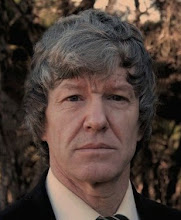
Extended copy of a letter sent to Marketplace for the issue published on the 22nd of October 2008:
Thank you for being the only true newspaper on the island. Your story last week on the application to the Local Government Commission (LGC) to move the Hauraki Gulf Islands from Auckland City Council to Thames-Coromandel District Council was accurate and impartial. You were careful to be the unbiased eyes and ears of the community.
Would that the island's other publications had the same integrity, and skill. You obviously are now Waiheke's pre-eminent newspaper.
It's just as well there's no referendum in this boundary-change process, because islanders have been so misled and misinformed that a free and fair election would be impossible. The real issue--that this is all about getting good local government--has been ignored and buried. So has the proof. Ditto the fact that this is a strict legal process, which must be decided under the heading of good local government, it is not a game for political idealogues and biased, shallow-minded 'journalists.'
For the application to the LGC, the other two Waiheke publications are guilty of being viewspapers not newspapers--Wicked & Weak has carried on a malignant campaign, and Gulf News' editor has run 'news' stories that were actually biased, unanalytical editorials in disguise. Neither wants to be the eyes and ears of the community; they want to be its brain, telling it what to think.
Tuesday, 21 October 2008
Monday, 13 October 2008
APPLICATION TO JOIN THAMES-COROMANDEL VALID
It is now valid and official--and therefore unstoppable: it must proceed to its final conclusion, whatever that is. That means the second of four bridges has been crossed by the application to the Local Government Commission (LGC) to change the boundary for the Hauraki Gulf Islands--i.e., to transfer authority over most of what is now the Hauraki Gulf Islands Ward from Auckland City Council and Auckland Regional Council to Thames-Coromandel District Council and Environment Waikato.
It had to cross three bridges on its way to the final one--the ruling from the LGC--which can be expected about the middle of 2009. Two to go.
Under the Local Government Act 2002 (LGA2002) any petition/application of this sort must have the signatures of at least 10% of the affected registered electors. So the first bridge to cross is getting enough signatures to be reasonably sure of clearing that number; the second is to lodge the petition/application and have it validated. I lodged the original of this one with Thames-Coromandel on Friday the 26th of September 2008, it was handed to Independent Election Services for validation on Monday the 29th (with a covering letter from Thames-Coromandel's CEO Steve Ruru), and on the same day I lodged copies of it with the two Auckland councils and Environment Waikato.
On the 29th of September the Hauraki Gulf Islands Ward had 6692 registered electors, 6345 from the three general rolls that cover the area and 347 from the local-body ratepayers' roll, so 10% was 669. Independent Election Services carefully checked the petition/application and announced on Friday the 3rd of October that the 10% threshold had been well and truly passed, at which point it became an official application. They did not count the exact number of valid signatures, because they need only to determine if the application is valid. As it happened that took only one pass, the first one, in which they look for the signatures that are easy to verify. They stopped at 703, 10.5%, well clear of the 10%
The third bridge is to develop the reorganisation scheme, the document that will rule the lives of Hauraki Gulf islanders if the LGC rules in favour of the application. It will be based on the reorganisation proposal that was must in law accompany the petition/application (see link below).
The first step in that process is for the four councils to meet and decide whether the reorganisation scheme will be put together by a joint committee or whether one council will be nominated to do it. The obvious and just decision would be for Thames-Coromandel District Council to be nominated, because it will be most affected if the LGC says yes. Why should Auckland councils be involved with developing a scheme in which they would have no part? TCDC would obviously involve its regional, Environment Waikato, as necessary, because that is how it works.
The councils must meet and make that decision within 60 days--i.e., from the 26th of September, so they must agree by the 25th of November. If they cannot, the proposal must go straight to the LGC for consideration. The LGC's booklet summarising Schedule 3 of the LGA2002 shows that if they failed to agree, the reorganisation proposal that accompanied the petition/application would be the one it would consider.
Thames-Coromandel District Council will be discussing the application at its next full council meeting on the 5th of November--a date that has an apt resonance. Doubly so, because by an equally apt coincidence that was the date in 2007 when I first broached the idea with Philippa Barriball, Thames-Coromandel's mayor. Triply so, because one of my grandmothers always swore that she had an ancestor in the Gunpowder Plot (and her surname did match one of those rebellious stackers of explosive barrels).
The draft of reorganisation proposal, the pre-cursor of the reorganisation scheme, can be read on this page of this blog. Unless the councils fail to agree within 60 days it will be fine-tuned by an advisory committee on the islands in negotiation with the above committee, then further refined in public consultation, before going to the Local Government Commission to go through the public submissions process, the fourth bridge, which ends in the final ruling.
That ruling must, in law, be made first and foremost on the criterion of good local government. The LGC must determine which council will provide the Hauraki Gulf Islands with the best standard of local government. The lesser criteria are easily covered, and are very much subsididary to good local government. It will be most interesting to see how Auckland City Council fares under the LGC's scrutiny.
....
It is very disappointing that media coverage of the Thames-Coromandel initiative has been so wanting. True democracy is the expressed wish of an educated, informed, involved majority of the electorate. Unless it is educated and informed it cannot be involved and make good decisions, so the lifeblood of democracy is accurate, trustworthy, impartial information. Therefore the role of the media is vital. They have to be good, clean, open arteries so that that lifeblood can flow unhindered direct from the source of information to the electorate. If the arteries are blocked the democratic system downstream gets gangrene, heart-attacks and strokes. Worse, if the direct route from news to electorate is blocked and replaced with a side-artery to the editor's or the publisher's views, the electorate gets bad blood instead of the clean truth. It gets blood contaminated with HIV--Hubristic Interference Virus--and democracy goes down with Accurate Information Deficiency Syndrome. Good democratic decisions, and free and fair elections then become impossible.
In short, the media should be faithful public servants. But although this petition/application to the LGC is the biggest local-body story on the islands since our forced amalgamation with Auckland City in 1989 (because it is the first time we have had the real possibility of escape from the domination of Auckland City Council, and from the inappropriate rule of islands by a city), the attitude so far of most Waiheke papers has been indifference, contempt or toxic antagonism. Instead of being clean, straight arteries feeding accurate, impartial information to their communities they have been blocked with malignant tumours or thick wads of ignorant cholesterol, and have fed infected blood from side-arteries. It is about time such papers showed responsibility and acted as if they really cared about the lives of 8628 people, and wanted for them the best local government available.
It is particularly disappointing that even Gulf News messed things up. Its front-page lead on the story in last week's issue (9th of October), which had ten paragraphs, had only one correct. One out of ten.
To get the details of the application process accurately go to this Local Government Commission page. The relevant part is chapter 2, 'Procedures for altering boundaries and transferring functions.'
It had to cross three bridges on its way to the final one--the ruling from the LGC--which can be expected about the middle of 2009. Two to go.
Under the Local Government Act 2002 (LGA2002) any petition/application of this sort must have the signatures of at least 10% of the affected registered electors. So the first bridge to cross is getting enough signatures to be reasonably sure of clearing that number; the second is to lodge the petition/application and have it validated. I lodged the original of this one with Thames-Coromandel on Friday the 26th of September 2008, it was handed to Independent Election Services for validation on Monday the 29th (with a covering letter from Thames-Coromandel's CEO Steve Ruru), and on the same day I lodged copies of it with the two Auckland councils and Environment Waikato.
On the 29th of September the Hauraki Gulf Islands Ward had 6692 registered electors, 6345 from the three general rolls that cover the area and 347 from the local-body ratepayers' roll, so 10% was 669. Independent Election Services carefully checked the petition/application and announced on Friday the 3rd of October that the 10% threshold had been well and truly passed, at which point it became an official application. They did not count the exact number of valid signatures, because they need only to determine if the application is valid. As it happened that took only one pass, the first one, in which they look for the signatures that are easy to verify. They stopped at 703, 10.5%, well clear of the 10%
The third bridge is to develop the reorganisation scheme, the document that will rule the lives of Hauraki Gulf islanders if the LGC rules in favour of the application. It will be based on the reorganisation proposal that was must in law accompany the petition/application (see link below).
The first step in that process is for the four councils to meet and decide whether the reorganisation scheme will be put together by a joint committee or whether one council will be nominated to do it. The obvious and just decision would be for Thames-Coromandel District Council to be nominated, because it will be most affected if the LGC says yes. Why should Auckland councils be involved with developing a scheme in which they would have no part? TCDC would obviously involve its regional, Environment Waikato, as necessary, because that is how it works.
The councils must meet and make that decision within 60 days--i.e., from the 26th of September, so they must agree by the 25th of November. If they cannot, the proposal must go straight to the LGC for consideration. The LGC's booklet summarising Schedule 3 of the LGA2002 shows that if they failed to agree, the reorganisation proposal that accompanied the petition/application would be the one it would consider.
Thames-Coromandel District Council will be discussing the application at its next full council meeting on the 5th of November--a date that has an apt resonance. Doubly so, because by an equally apt coincidence that was the date in 2007 when I first broached the idea with Philippa Barriball, Thames-Coromandel's mayor. Triply so, because one of my grandmothers always swore that she had an ancestor in the Gunpowder Plot (and her surname did match one of those rebellious stackers of explosive barrels).
The draft of reorganisation proposal, the pre-cursor of the reorganisation scheme, can be read on this page of this blog. Unless the councils fail to agree within 60 days it will be fine-tuned by an advisory committee on the islands in negotiation with the above committee, then further refined in public consultation, before going to the Local Government Commission to go through the public submissions process, the fourth bridge, which ends in the final ruling.
That ruling must, in law, be made first and foremost on the criterion of good local government. The LGC must determine which council will provide the Hauraki Gulf Islands with the best standard of local government. The lesser criteria are easily covered, and are very much subsididary to good local government. It will be most interesting to see how Auckland City Council fares under the LGC's scrutiny.
....
It is very disappointing that media coverage of the Thames-Coromandel initiative has been so wanting. True democracy is the expressed wish of an educated, informed, involved majority of the electorate. Unless it is educated and informed it cannot be involved and make good decisions, so the lifeblood of democracy is accurate, trustworthy, impartial information. Therefore the role of the media is vital. They have to be good, clean, open arteries so that that lifeblood can flow unhindered direct from the source of information to the electorate. If the arteries are blocked the democratic system downstream gets gangrene, heart-attacks and strokes. Worse, if the direct route from news to electorate is blocked and replaced with a side-artery to the editor's or the publisher's views, the electorate gets bad blood instead of the clean truth. It gets blood contaminated with HIV--Hubristic Interference Virus--and democracy goes down with Accurate Information Deficiency Syndrome. Good democratic decisions, and free and fair elections then become impossible.
In short, the media should be faithful public servants. But although this petition/application to the LGC is the biggest local-body story on the islands since our forced amalgamation with Auckland City in 1989 (because it is the first time we have had the real possibility of escape from the domination of Auckland City Council, and from the inappropriate rule of islands by a city), the attitude so far of most Waiheke papers has been indifference, contempt or toxic antagonism. Instead of being clean, straight arteries feeding accurate, impartial information to their communities they have been blocked with malignant tumours or thick wads of ignorant cholesterol, and have fed infected blood from side-arteries. It is about time such papers showed responsibility and acted as if they really cared about the lives of 8628 people, and wanted for them the best local government available.
It is particularly disappointing that even Gulf News messed things up. Its front-page lead on the story in last week's issue (9th of October), which had ten paragraphs, had only one correct. One out of ten.
To get the details of the application process accurately go to this Local Government Commission page. The relevant part is chapter 2, 'Procedures for altering boundaries and transferring functions.'
Saturday, 11 October 2008
CORRECTION TO GULF NEWS STORY
On page 13 of Gulf News dated the 9th of October 2008 (this week's issue as this was being written) I was quoted as having said that 'Thames-Coromandel mayor Philippa Barriball supported a joint committee "nominating" this.' ['this' being 'Waiheke joining Thames-Coromandel'.]
I said no such thing. No committee will be, or can be, nominating our joining any council, or staying with one for that matter.
What I said was that the next step in the process laid down by the Local Government Act 2002 is that the four councils involved have 60 days to meet and decide whether the document called the Reorganisation Scheme is to be produced by a joint committee or whether they will nominate one council to do it.
And I said that Philippa and I had discussed that point some time ago and had found that we concurred in thinking that there should not be a joint committee, that Thames-Coromandel should be nominated to do it.
That makes good sense and is just, because if the Local Government Commission rules that we go east, instead of carrying on going west, it will be Thames-Coromandel and the Hauraki Gulf Islands that will be governed by that document, so Thames-Coromandel should be the council that works it out with us.
I said no such thing. No committee will be, or can be, nominating our joining any council, or staying with one for that matter.
What I said was that the next step in the process laid down by the Local Government Act 2002 is that the four councils involved have 60 days to meet and decide whether the document called the Reorganisation Scheme is to be produced by a joint committee or whether they will nominate one council to do it.
And I said that Philippa and I had discussed that point some time ago and had found that we concurred in thinking that there should not be a joint committee, that Thames-Coromandel should be nominated to do it.
That makes good sense and is just, because if the Local Government Commission rules that we go east, instead of carrying on going west, it will be Thames-Coromandel and the Hauraki Gulf Islands that will be governed by that document, so Thames-Coromandel should be the council that works it out with us.
THAMES-COROMANDEL'S LIBRARY COMPUTERS BEST
The computers in Auckland City Council's libraries that give people free access to the Internet have a fraction of the facilities available on the ones in Thames-Coromandel District Council's.
Thames-Coromandel has fitted its computers with webcams and headphones, and the list of software available is long. First, it has a choice of browser, both MS-Explorer and Firefox. It also has Skype (so you can make free videophone/phone calls all over the planet to other Skype users). It has MS-Word, MS-Excel, MS-Powerpoint, MS-Office Publisher, MS-Office, OpenOffice Writer, OpenOffice Calc, OpenOffice Impress, OpenOffice Draw, CD Burner, VLC Media Player, Audio Editor, CD & DVD Writer, Media Player, Picture Photo Editor, Video Editor, Web & FTP Tools, Zip, iTunes, Kompozer, Notepad, QuickTime Player, Windows Media Maker, Games, etc., etc.
Its Start-menu has an extensive list to make life easier for users, including entries for Picasa and Google Earth. Easy access to Google Earth is there in part because Thames-Coromandel has a tie-up with it, and has made available to it its aerial-photo database, thus creatiing a powerful facility.
Auckland City has headphones available on request, but has no webcams and no Skype. Nor does it have a long list of accessible stuff on the Start Menu--there's no list at all. There are only eleven programsavailable, mainly the standard stuff: MS-Explorer, MS-Word, MS-Excel, MS-Access, MS-Office Picture Manager, MS-Powerpoint, MS-Publisher, MS-Paint, MS-Calc, Roxio Easy Media Creator (Basic Edition), and Windows Media Player. Auckland has no arrangement with Google Earth.
So Thames-Coromandel's library computers are another example of the far more comprehensive public-service ethic that is one of its hallmarks. Small wonder that it has had 84% and 80% overall satisfaction-ratings in the last two years (measured by the National Research Bureau). The dissatisfied 16-20% should try Auckland--and they would get bonus: they would be changing from bags to wheelie-bins.
Thames-Coromandel has fitted its computers with webcams and headphones, and the list of software available is long. First, it has a choice of browser, both MS-Explorer and Firefox. It also has Skype (so you can make free videophone/phone calls all over the planet to other Skype users). It has MS-Word, MS-Excel, MS-Powerpoint, MS-Office Publisher, MS-Office, OpenOffice Writer, OpenOffice Calc, OpenOffice Impress, OpenOffice Draw, CD Burner, VLC Media Player, Audio Editor, CD & DVD Writer, Media Player, Picture Photo Editor, Video Editor, Web & FTP Tools, Zip, iTunes, Kompozer, Notepad, QuickTime Player, Windows Media Maker, Games, etc., etc.
Its Start-menu has an extensive list to make life easier for users, including entries for Picasa and Google Earth. Easy access to Google Earth is there in part because Thames-Coromandel has a tie-up with it, and has made available to it its aerial-photo database, thus creatiing a powerful facility.
Auckland City has headphones available on request, but has no webcams and no Skype. Nor does it have a long list of accessible stuff on the Start Menu--there's no list at all. There are only eleven programsavailable, mainly the standard stuff: MS-Explorer, MS-Word, MS-Excel, MS-Access, MS-Office Picture Manager, MS-Powerpoint, MS-Publisher, MS-Paint, MS-Calc, Roxio Easy Media Creator (Basic Edition), and Windows Media Player. Auckland has no arrangement with Google Earth.
So Thames-Coromandel's library computers are another example of the far more comprehensive public-service ethic that is one of its hallmarks. Small wonder that it has had 84% and 80% overall satisfaction-ratings in the last two years (measured by the National Research Bureau). The dissatisfied 16-20% should try Auckland--and they would get bonus: they would be changing from bags to wheelie-bins.
POETIC LINES ON WAIHEKE
The big city is heavy:
Glass and steel and concrete,
Crowds of strange faces,
Noise, traffic, fumes and sprawl
Weigh hard upon the soul.
An island is light,
Floating on the sea:
A small community,
Familiar faces greeting you,
Green and quiet,
Home--
And the soul soars.
Glass and steel and concrete,
Crowds of strange faces,
Noise, traffic, fumes and sprawl
Weigh hard upon the soul.
An island is light,
Floating on the sea:
A small community,
Familiar faces greeting you,
Green and quiet,
Home--
And the soul soars.
Thursday, 2 October 2008
THE NO-CENTS LANE
THE NO CENTS LANE
Once upon a time, long ago, when the world was young and innocent there was no Northern Service Lane in Oneroa.
'O dismay! Quelle horreur! And catastrophe piled on disaster and chaos!' roared that well-known and very up-to-date and modern and clever and world-class beast, Aucklandcitycrunchosaurus Wrecks. 'You dumb-'n-backward Waihekeans gotta have a cute NSL in Oneroa. You juss gotta.'
'Woffor?' enquired the islanders, resorting to reason under the delusion that A.Wrecks had a brain larger than a genetically-challenged chickpea.
'Coz our giant brain has decided itsa Good Thing,' roared The Beast.
'But we don't like it, we don't want it--and we don't need it,' wailed the people, still trying reason.
'O goody!' roared The Beast. 'That's three humungously excellent reasons for building it.'
'But we don't have no money,' wailed the people, still trying reason (stubborn dummies!).
'You're obviously stubborn dummies!' roared The Beast. 'But cheers for giving me another humungously excellent reason,' as it reached for a squadron of bulldozers, and filched mega-sacks of dollars for its snackies from all the people's pockets.
After the NSL was all finished, and embellished with lotsa loverly-but-absolutely-useless concrete patterns and colours wot A. Wrecks likes, The Beast gave a huge-n-gleeful roar and waved a pricetag of $1,324,452.22 million under the noses of the people. It belched gloatings galore as it pointed to the super-loverly breakdown on the other side.
'Look,' it belchingly drooled. 'Look at all these loverly numbers--$830,064.72 for physical works, $240,000 for land-compensation, $8,655.78 for legal costs, $33,463.57 for legal services, $2,994.45 for planning services, $156,015.15 for planning/design services, $15,906.37 for staff costs, and $37,352.18 for valuation/property services. O what droolful sights! And didya like the drooly total of that loverly last three!? O yibiddy belch and hurrah! A great big goobly $245,731.72 smackaroodings!
'So now,' it exulted, 'you really don't have no money. It's all been spent by a real brain--mine--what you island dummies won't never have.'
'But you shouldn't have built it,' wailed the people. 'And you didn't get us a cent of government subsidy from the NZ Transport Agency. You should have got 53%, because it's a new road, then your bloated mega-snackies and belches would have cost us half as much--you'd have saved us heaps and heaps.'
'Island dummies,' roared The Beast, 'you obviously don't unnerstand the elevated arts of public management and fiduciary brilliance.'
'Oh!' said the people, trying to work out whether to laugh or cry.
And they all lived happily never after (stop that sobbing, please!).
.......
[Footnote: Research on roading expenditure further to what I wrote about a few months back has revealed that over the last four years Auckland City Council has spent $53.169 million on roading on the Hauraki Gulf Islands, but got government subsidies of only $8.736 million--a trifling 16.43% instead of the 43%-plus that it should have got (43% for road maintenance and renewal and 53% for new roads). If it had got what everything it should have it would have had at least $22.33 million more to spend on our roads. Yet there are still those who insist that Auckland is doing a good job on our roads!]
Once upon a time, long ago, when the world was young and innocent there was no Northern Service Lane in Oneroa.
'O dismay! Quelle horreur! And catastrophe piled on disaster and chaos!' roared that well-known and very up-to-date and modern and clever and world-class beast, Aucklandcitycrunchosaurus Wrecks. 'You dumb-'n-backward Waihekeans gotta have a cute NSL in Oneroa. You juss gotta.'
'Woffor?' enquired the islanders, resorting to reason under the delusion that A.Wrecks had a brain larger than a genetically-challenged chickpea.
'Coz our giant brain has decided itsa Good Thing,' roared The Beast.
'But we don't like it, we don't want it--and we don't need it,' wailed the people, still trying reason.
'O goody!' roared The Beast. 'That's three humungously excellent reasons for building it.'
'But we don't have no money,' wailed the people, still trying reason (stubborn dummies!).
'You're obviously stubborn dummies!' roared The Beast. 'But cheers for giving me another humungously excellent reason,' as it reached for a squadron of bulldozers, and filched mega-sacks of dollars for its snackies from all the people's pockets.
After the NSL was all finished, and embellished with lotsa loverly-but-absolutely-useless concrete patterns and colours wot A. Wrecks likes, The Beast gave a huge-n-gleeful roar and waved a pricetag of $1,324,452.22 million under the noses of the people. It belched gloatings galore as it pointed to the super-loverly breakdown on the other side.
'Look,' it belchingly drooled. 'Look at all these loverly numbers--$830,064.72 for physical works, $240,000 for land-compensation, $8,655.78 for legal costs, $33,463.57 for legal services, $2,994.45 for planning services, $156,015.15 for planning/design services, $15,906.37 for staff costs, and $37,352.18 for valuation/property services. O what droolful sights! And didya like the drooly total of that loverly last three!? O yibiddy belch and hurrah! A great big goobly $245,731.72 smackaroodings!
'So now,' it exulted, 'you really don't have no money. It's all been spent by a real brain--mine--what you island dummies won't never have.'
'But you shouldn't have built it,' wailed the people. 'And you didn't get us a cent of government subsidy from the NZ Transport Agency. You should have got 53%, because it's a new road, then your bloated mega-snackies and belches would have cost us half as much--you'd have saved us heaps and heaps.'
'Island dummies,' roared The Beast, 'you obviously don't unnerstand the elevated arts of public management and fiduciary brilliance.'
'Oh!' said the people, trying to work out whether to laugh or cry.
And they all lived happily never after (stop that sobbing, please!).
.......
[Footnote: Research on roading expenditure further to what I wrote about a few months back has revealed that over the last four years Auckland City Council has spent $53.169 million on roading on the Hauraki Gulf Islands, but got government subsidies of only $8.736 million--a trifling 16.43% instead of the 43%-plus that it should have got (43% for road maintenance and renewal and 53% for new roads). If it had got what everything it should have it would have had at least $22.33 million more to spend on our roads. Yet there are still those who insist that Auckland is doing a good job on our roads!]
Wednesday, 1 October 2008
THE BLOATING EMPIRE
Auckland City Council's 2006/2007 annual report gave the total number of staff over the last few years. In 2004/2005 there were 1778, in 2005/2006 there were 1850, in 2006/2007 there were 1954. At the induction seminars after last year's election we were told that it then had about 2150 (including 350 consultants). The latest figure is given by the Careers department as being between 2200 and 2300 ('We don't know exactly, because it fluctuates').
Auckland Regional Council has 606 staff.
So about 2900 city people are 'needed' to administer us--compared with the 7689 living on Waiheke, and the 8628 living across all the Hauraki Gulf Islands. A sledgehammer to crack a sesame-seed.
Thames-Coromandel District Council has 192 staff; its regional council Environment Waikato has 350; our service centres on Waiheke and Great Barrier have 49. So if we were with TCDC instead of under the Bloated Diseased Empire there would be only 591 staff in total. That would match our scale, it could not dominate it.
Auckland Regional Council has 606 staff.
So about 2900 city people are 'needed' to administer us--compared with the 7689 living on Waiheke, and the 8628 living across all the Hauraki Gulf Islands. A sledgehammer to crack a sesame-seed.
Thames-Coromandel District Council has 192 staff; its regional council Environment Waikato has 350; our service centres on Waiheke and Great Barrier have 49. So if we were with TCDC instead of under the Bloated Diseased Empire there would be only 591 staff in total. That would match our scale, it could not dominate it.
Tuesday, 23 September 2008
AN INCONVENIENT TRUTH
Some islanders say that Thames is too far away--i.e., they trot out the inconvenience objection to being administered by the Thames-Coromandel District Council (TCDC).
But Great Barrier is much further from Auckland, which no one makes a fuss about. And how often does anyone want to go to a council meeting anyway? Most of our council matters are dealt with over the phone, over the Internet, over the counter at our Service Centre in Ostend, or in the public forum at Waiheke Community Board meetings.
That 'inconvenience' is also exaggerated., partly because the timing of Thames-Coromandel's council meetings is a lot friendlier to islanders than Auckland's. In Thames the meetings start at 9:00am and go through the day, which is a much better fit to our ferry schedules than Auckland's meetings. Theirs start at 6:00pm, and although under their standing orders they are not meant to finish later than 10:30 they sometimes do.
So if you were coming from Great Barrier you would have to stay in the Auckland overnight because Great Barrier's airport cannot function at night. If you were coming from Waiheke and using only public transport you would have to catch the 4:00pm bus, and the 4:45pm boat, which arrives in the city at about 5:20. If the meeting went till 10:30pm you would catch the 11:45pm boat back, you would arrive back on the island at 12:30am and get home about 1:15am. The journey would consume up to nine hours at night.
If you were travelling to Thames, you would catch the 6:00am bus, the 6:40am boat, then the Intercity bus that arrives in Thames at 9:15. A bus leaves Thames for Auckland at 3:00pm, so you would arrive in time to catch the 5:30pm boat and link to the 6:05 bus on Waiheke, which would get you home at about 6:40pm. That journey would consume up to twelve and a half hours during the day.
If you were driving yourself to Thames the journey would be shorter, because the Auckland to Thames trip is only 1 hour 20 minutes, so if your item was early on the agenda you would be home in the early afternoon. You would consume about eight hours during the day.
But with Auckland you would be going to a council that doesn't like us, doesn't care about us, doesn't understand us, doesn't listen to us, treats us like a city suburb and is therefore wrecking our village-rural communities.
With Thames you would be talking with people of like mind--they live on a peninsula of village-rural communities; people who believe in real consultation; and people who are passionate about grounding their decisions on democratic local decision-making and the four well-beings in the Local Government Act 2002--'the social, economic, environmental and cultural well-being of communities.'
Against all that, making a fuss about an occasional extra few hours of inconvenience misses the point--getting much better local government. The important thing is the quality of our day-to-day administration not the convenience of occasional transportation.
And we would not always have to go to the council. It would, as it sometimes does for communities on the peninsula, come to us--the whole council--to listen, to consult, to make a decision that will promote our four well-beings. As the mayor, Philippa Barriball says: 'We like to go out and tap people on the shoulder.'
So with Thames you might spend an extra three and half hours oif you ever wanted to a council meeting, but when you got there you would get a much better standard of local government, and be treated as one of them, with friendly courtesy and understanding. You would not be treated as another nuisance from those pestiferous islands. A little inconvenience occasionally for a few people is a trivial price to pay for good local government--a very small coin for an immeasurable reward.
Going east to Thames is well worth some inconvenience. Going west to Auckland is not.
But Great Barrier is much further from Auckland, which no one makes a fuss about. And how often does anyone want to go to a council meeting anyway? Most of our council matters are dealt with over the phone, over the Internet, over the counter at our Service Centre in Ostend, or in the public forum at Waiheke Community Board meetings.
That 'inconvenience' is also exaggerated., partly because the timing of Thames-Coromandel's council meetings is a lot friendlier to islanders than Auckland's. In Thames the meetings start at 9:00am and go through the day, which is a much better fit to our ferry schedules than Auckland's meetings. Theirs start at 6:00pm, and although under their standing orders they are not meant to finish later than 10:30 they sometimes do.
So if you were coming from Great Barrier you would have to stay in the Auckland overnight because Great Barrier's airport cannot function at night. If you were coming from Waiheke and using only public transport you would have to catch the 4:00pm bus, and the 4:45pm boat, which arrives in the city at about 5:20. If the meeting went till 10:30pm you would catch the 11:45pm boat back, you would arrive back on the island at 12:30am and get home about 1:15am. The journey would consume up to nine hours at night.
If you were travelling to Thames, you would catch the 6:00am bus, the 6:40am boat, then the Intercity bus that arrives in Thames at 9:15. A bus leaves Thames for Auckland at 3:00pm, so you would arrive in time to catch the 5:30pm boat and link to the 6:05 bus on Waiheke, which would get you home at about 6:40pm. That journey would consume up to twelve and a half hours during the day.
If you were driving yourself to Thames the journey would be shorter, because the Auckland to Thames trip is only 1 hour 20 minutes, so if your item was early on the agenda you would be home in the early afternoon. You would consume about eight hours during the day.
But with Auckland you would be going to a council that doesn't like us, doesn't care about us, doesn't understand us, doesn't listen to us, treats us like a city suburb and is therefore wrecking our village-rural communities.
With Thames you would be talking with people of like mind--they live on a peninsula of village-rural communities; people who believe in real consultation; and people who are passionate about grounding their decisions on democratic local decision-making and the four well-beings in the Local Government Act 2002--'the social, economic, environmental and cultural well-being of communities.'
Against all that, making a fuss about an occasional extra few hours of inconvenience misses the point--getting much better local government. The important thing is the quality of our day-to-day administration not the convenience of occasional transportation.
And we would not always have to go to the council. It would, as it sometimes does for communities on the peninsula, come to us--the whole council--to listen, to consult, to make a decision that will promote our four well-beings. As the mayor, Philippa Barriball says: 'We like to go out and tap people on the shoulder.'
So with Thames you might spend an extra three and half hours oif you ever wanted to a council meeting, but when you got there you would get a much better standard of local government, and be treated as one of them, with friendly courtesy and understanding. You would not be treated as another nuisance from those pestiferous islands. A little inconvenience occasionally for a few people is a trivial price to pay for good local government--a very small coin for an immeasurable reward.
Going east to Thames is well worth some inconvenience. Going west to Auckland is not.
SPEED-LIMIT EMAIL TO JUDITH TIZARD
Copy of an email sent to Judith Tizard on the 23rd of September 2008, as she had requested on the 21st at a public meeting on Waiheke:
LOWERING THE SPEED-LIMIT ON THE ONETANGI STRAIGHT & ELSEWHERE TO 50KPH
Below, between the dotted lines, are the resolutions passed by the Waiheke Community Board on the 25th of June 2008 and the 27th of August 2008.
I made personal representations to what is now the Transport Agency, but the man who administers that area, John Jansen, is to Sir Humphrey what a nuclear waste-dump is to a wheelie-bin. All he can talk about is The Rule. The well-being of the Waiheke Community, safety, human life are nothing to him. The Rule must be applied; The Rule must be applied in the same way everywhere in New Zealand, so that when people come to the island they will find the same conditions applying here as everywhere else.
.........
WEDNESDAY 25 JUNE 2008 - MINUTES WAIHEKE COMMUNITY BOARD
4.3. ROAD SAFETY ISSUES DR REBECCA POTTS Dr Rebecca Potts was in attendance to address the Board regarding road safety issues on the island and the posted speed limit on Onetangi straight.
A. That Dr Rebecca Potts be thanked for her presentation to the Waiheke Community Board regarding road safety issues on the island and the posted speed limit on Onetangi straight.
B. That the Waiheke Community Board advocates directly with Land Transport New Zealand to reduce the speed limit from 80km/hr to 60km/hr on Onetangi straight.
Board member Evans moved the following amendment by way of replacement:
B. That the Waiheke Community Board advocates directly with Land Transport New Zealand to reduce the speed limit from 80km/hr to 50km/hr on Onetangi straight.
A division was called for, voting on which was as follows:
For the Amendment: Mr Nobilangelo Ceramalus Mr Ray Ericson Ms Eileen Evans Mr Herb Romaniuk Cr Denise Roche Against the Amendment: Mr Tony Sears
The amendment was declared CARRIED by 5 votes to 1. The amendment became the substantive motion. The Chairman moved the following substantive motion:
A. That Dr Rebecca Potts be thanked for her presentation to the Waiheke Community Board regarding road safety issues on the island and the posted speed limit on Onetangi straight.
B. That the Waiheke Community Board advocates directly with Land Transport New Zealand to reduce the speed limit from 80km/hr to 50km/hr on Onetangi straight. CARRIED
WEDNESDAY 27 AUGUST 2008 - 9 MINUTES WAIHEKE COMMUNITY BOARD
11. NOTICE OF MOTION TRAFFIC SURVEY FOR REDUCING SPEED LIMITS Moved: Ceramalus/Roche That the relevant council officer be asked to complete traffic surveys for the New Zealand Transport Agency for the Onetangi Straight and the lower part of O'Brien Road, and to make his estimates so generous and forward-thinking that the number of points then generated by the speed limit rules will force the limits to be changed down to 50kph, and that the survey be completed and in the hands of the Agency by 19 September 2008.
Councillor Roche moved the following amendments by way of replacement: Moved: Roche/Romaniuk
A. That the Waiheke Community Board requests the Transport Committee to actively seek a 50kph speed limit for the western part of Waiheke Island from Piemelon Bay west to Matiatia, due to widespread community support and the ambience of the island.
B. That the Waiheke Community Board requests that the Transport Committee note that the Board is willing to fund the necessary officers report from its SLIPs budget, and will prepare evidence from the community to support our request for a lowered speed limit on the island.
C. That these resolutions be forwarded to the appropriate central government minister in view of the legal intransigence of the New Zealand Transport Agency in recognising community concerns. CARRIED
.............
There was of course no guarantee that doing generous estimates in order to promote community
well-being in the present and for the future would be enough to satisfy The Rule, and Auckland City Council has not shown itself over-anxious to serve our community in this. It is not an entity that can be described as Waiheke-friendly.
We are therefore left with the highly unsatisfactory state of affairs (as no doubt are many
communities in New Zealand) where we cannot apply common sense, local knowledge and concern for public well-being to the situation and lower the limit on that or any stretch of road.
Communities should be allowed to set speed-limits first and foremost according to section 10 of the Local Government Act 2002--'democratic local decision-making and action, by and on behalf of communities, and to promote the social, economic, environmental and cultural well-being of communities, in the present and for the future'--not forced into an arbitrary number by a cookie-cutter Rule.
How silly it is is underlined by the fact that on the stretch of road between Ostend and Onetangi there is a change from 50kph to 80kph just below Shepherd's point at the Ostend end, followed about 10 metres later by a 45kph advisory because of a dangerous bend ahead, followed by a short downhill straight, then another 45kph advisory, another bend, with an intersection off it, then another 45kph advisory and a third bend. Then comes the 'Straight' proper, which ends in a tight left-hander coming into the outskirts of the Onetangi village.
It is a busy stretch of road by island standards, being the main route from the western end of the island to Onetangi and points east. It is narrow, the sign halfway along says it is slippery when wet, its condition is not good (Auckland City Council's mis-management has lost the islands $8.5 million of NZTA subsidy over the last five years: the average subsidy has been 17.8%, nowhere near the 43% available). It includes a pony club, a golf-course, numerous vineyards that attract many visitors, a museum, a plant-nursery, a cemetery, and a hotel about to be constructed, etc., as well as residences with single or group driveways. It is also a bus-route. It is obvious that the limit should be lower.
But just because the density of driveways does not satisfy an overly rigid Rule we must put up with a dangerous mix of speeding cars, children and adults on horses, visitors unfamiliar with the island looking for destinations, buses stopping at various points, people coming out of partly-concealed driveways, etc. There have been accidents and near misses; we want to do our best to ensure that the cemetery does not receive more occupants than it should. There was an accident not so long ago in which a car with a drunken driver had an 'argument' with a horse and rider. The result was that the car, the horse and the rider went off in three directions; the horse is now skittish and useless on roads.
It is once again a case of Waiheke knowing more about Waiheke than some overseas' bureaucrat.
We would be very grateful if you would expedite this for us. Life is short and humans are fragile.
--
Regards,
Nobilangelo Ceramalus*.
Member of the Waiheke Community Board.
(*pronounced noble-arn-jillo kerra-marliss)
PS. Little-known factoid: Britain used to send its convicts to Australia. Now New Zealand sends its rebels to Waiheke.
LOWERING THE SPEED-LIMIT ON THE ONETANGI STRAIGHT & ELSEWHERE TO 50KPH
Below, between the dotted lines, are the resolutions passed by the Waiheke Community Board on the 25th of June 2008 and the 27th of August 2008.
I made personal representations to what is now the Transport Agency, but the man who administers that area, John Jansen, is to Sir Humphrey what a nuclear waste-dump is to a wheelie-bin. All he can talk about is The Rule. The well-being of the Waiheke Community, safety, human life are nothing to him. The Rule must be applied; The Rule must be applied in the same way everywhere in New Zealand, so that when people come to the island they will find the same conditions applying here as everywhere else.
.........
WEDNESDAY 25 JUNE 2008 - MINUTES WAIHEKE COMMUNITY BOARD
4.3. ROAD SAFETY ISSUES DR REBECCA POTTS Dr Rebecca Potts was in attendance to address the Board regarding road safety issues on the island and the posted speed limit on Onetangi straight.
A. That Dr Rebecca Potts be thanked for her presentation to the Waiheke Community Board regarding road safety issues on the island and the posted speed limit on Onetangi straight.
B. That the Waiheke Community Board advocates directly with Land Transport New Zealand to reduce the speed limit from 80km/hr to 60km/hr on Onetangi straight.
Board member Evans moved the following amendment by way of replacement:
B. That the Waiheke Community Board advocates directly with Land Transport New Zealand to reduce the speed limit from 80km/hr to 50km/hr on Onetangi straight.
A division was called for, voting on which was as follows:
For the Amendment: Mr Nobilangelo Ceramalus Mr Ray Ericson Ms Eileen Evans Mr Herb Romaniuk Cr Denise Roche Against the Amendment: Mr Tony Sears
The amendment was declared CARRIED by 5 votes to 1. The amendment became the substantive motion. The Chairman moved the following substantive motion:
A. That Dr Rebecca Potts be thanked for her presentation to the Waiheke Community Board regarding road safety issues on the island and the posted speed limit on Onetangi straight.
B. That the Waiheke Community Board advocates directly with Land Transport New Zealand to reduce the speed limit from 80km/hr to 50km/hr on Onetangi straight. CARRIED
WEDNESDAY 27 AUGUST 2008 - 9 MINUTES WAIHEKE COMMUNITY BOARD
11. NOTICE OF MOTION TRAFFIC SURVEY FOR REDUCING SPEED LIMITS Moved: Ceramalus/Roche That the relevant council officer be asked to complete traffic surveys for the New Zealand Transport Agency for the Onetangi Straight and the lower part of O'Brien Road, and to make his estimates so generous and forward-thinking that the number of points then generated by the speed limit rules will force the limits to be changed down to 50kph, and that the survey be completed and in the hands of the Agency by 19 September 2008.
Councillor Roche moved the following amendments by way of replacement: Moved: Roche/Romaniuk
A. That the Waiheke Community Board requests the Transport Committee to actively seek a 50kph speed limit for the western part of Waiheke Island from Piemelon Bay west to Matiatia, due to widespread community support and the ambience of the island.
B. That the Waiheke Community Board requests that the Transport Committee note that the Board is willing to fund the necessary officers report from its SLIPs budget, and will prepare evidence from the community to support our request for a lowered speed limit on the island.
C. That these resolutions be forwarded to the appropriate central government minister in view of the legal intransigence of the New Zealand Transport Agency in recognising community concerns. CARRIED
.............
There was of course no guarantee that doing generous estimates in order to promote community
well-being in the present and for the future would be enough to satisfy The Rule, and Auckland City Council has not shown itself over-anxious to serve our community in this. It is not an entity that can be described as Waiheke-friendly.
We are therefore left with the highly unsatisfactory state of affairs (as no doubt are many
communities in New Zealand) where we cannot apply common sense, local knowledge and concern for public well-being to the situation and lower the limit on that or any stretch of road.
Communities should be allowed to set speed-limits first and foremost according to section 10 of the Local Government Act 2002--'democratic local decision-making and action, by and on behalf of communities, and to promote the social, economic, environmental and cultural well-being of communities, in the present and for the future'--not forced into an arbitrary number by a cookie-cutter Rule.
How silly it is is underlined by the fact that on the stretch of road between Ostend and Onetangi there is a change from 50kph to 80kph just below Shepherd's point at the Ostend end, followed about 10 metres later by a 45kph advisory because of a dangerous bend ahead, followed by a short downhill straight, then another 45kph advisory, another bend, with an intersection off it, then another 45kph advisory and a third bend. Then comes the 'Straight' proper, which ends in a tight left-hander coming into the outskirts of the Onetangi village.
It is a busy stretch of road by island standards, being the main route from the western end of the island to Onetangi and points east. It is narrow, the sign halfway along says it is slippery when wet, its condition is not good (Auckland City Council's mis-management has lost the islands $8.5 million of NZTA subsidy over the last five years: the average subsidy has been 17.8%, nowhere near the 43% available). It includes a pony club, a golf-course, numerous vineyards that attract many visitors, a museum, a plant-nursery, a cemetery, and a hotel about to be constructed, etc., as well as residences with single or group driveways. It is also a bus-route. It is obvious that the limit should be lower.
But just because the density of driveways does not satisfy an overly rigid Rule we must put up with a dangerous mix of speeding cars, children and adults on horses, visitors unfamiliar with the island looking for destinations, buses stopping at various points, people coming out of partly-concealed driveways, etc. There have been accidents and near misses; we want to do our best to ensure that the cemetery does not receive more occupants than it should. There was an accident not so long ago in which a car with a drunken driver had an 'argument' with a horse and rider. The result was that the car, the horse and the rider went off in three directions; the horse is now skittish and useless on roads.
It is once again a case of Waiheke knowing more about Waiheke than some overseas' bureaucrat.
We would be very grateful if you would expedite this for us. Life is short and humans are fragile.
--
Regards,
Nobilangelo Ceramalus*.
Member of the Waiheke Community Board.
(*pronounced noble-arn-jillo kerra-marliss)
PS. Little-known factoid: Britain used to send its convicts to Australia. Now New Zealand sends its rebels to Waiheke.
Monday, 8 September 2008
WHOOPS--GOOFED!
I find to my dismay that I made a serious mistake in my formative years. Because my Dad and Mum spoke it, because everyone I knew spoke it, and because my teachers taught it, I assumed that the language I should learn was English. So I concentrated on learning it, and got good marks from early on. I even received the headmaster's stamp on my hand in Primer 4 for writing, which proves that by then I could at least hold a pencil.
But I was wrong. I should never have bothered with English. I should have learnt the language favoured by Auckland City Council: Obfuscation. It sounds something like English, superficially. It looks something like English, superficially. But it is impossible for ordinary schmucks like me to understand it, because it is not really a language at all. It is actually like the baseball bat in the hands of the thug who beats you about the head in order to persuade you to hand over your valuables. Like the blows rained on your scone by that bat it exists to persuade you not to argue with his opinion of his magnificent superiority. It is grievous bodily harm of the verbal kind.
But, sadly, because I no longer have the sponge-like brain of an infant, I cannot learn a new language. So I am condemned to being perpetually mystified by the labyrinthine deliberations of The Machine. Day in day out I must endure being thrombobulated, discrenellated and widgemumpfrillated by Obfuscation.
But I am an optimist. I shall persevere with English, in the faint hope that The Infernal Machine might learn to speak it some day before I pass on to glory, or before the Last Trump sounds, whichever comes first.
But I was wrong. I should never have bothered with English. I should have learnt the language favoured by Auckland City Council: Obfuscation. It sounds something like English, superficially. It looks something like English, superficially. But it is impossible for ordinary schmucks like me to understand it, because it is not really a language at all. It is actually like the baseball bat in the hands of the thug who beats you about the head in order to persuade you to hand over your valuables. Like the blows rained on your scone by that bat it exists to persuade you not to argue with his opinion of his magnificent superiority. It is grievous bodily harm of the verbal kind.
But, sadly, because I no longer have the sponge-like brain of an infant, I cannot learn a new language. So I am condemned to being perpetually mystified by the labyrinthine deliberations of The Machine. Day in day out I must endure being thrombobulated, discrenellated and widgemumpfrillated by Obfuscation.
But I am an optimist. I shall persevere with English, in the faint hope that The Infernal Machine might learn to speak it some day before I pass on to glory, or before the Last Trump sounds, whichever comes first.
ETHICS AND SAFE SPEED-LIMITS
A certain publication on the island, which does not adhere to the principles set down by the New Zealand Press Council, and therefore cannot be called either ethical or even a newspaper*, has brayed again--this time against trying to make Onetangi Straight safer by lowering the speed-limit to 50kph.
The brayers opine that it is 'unethical' to make generous, forward-looking estimates of traffic volumes to satisfy a rigidly instransigent bureaucratic rule--and they dragged in ex-council bods of the conveniently unnamed kind (invented for the story?) to add their hee-haws. Council bods are of course thick on the ground with forward-blind nonsense that can never benefit the community, such as the unworkable wheelie-bins stupidity, or the millions showered on consultants to tell the bods what they don't know (such as to shift bus-stop signs to the wrong end of the stops), or to tell the bods what the bods told them to say so that the bods can get their boddish way--such as that confidential rubbish report from Queensland.
The well-being of the community is obviously nothing beside the brayers' insatiable lust for
personal attack using whatever false-hearted bodge they can fling together. They cunningly contrive to make human life and health look irrelevant beside a pettifogging rule or a malignant journalistic beat-up.
A generous, forward-looking estimate is called planning ahead. And prudence. And, ye bods and brayers, rules should be made for people. People are not made for rules.
Sadly, no rule can stop elderly drunks from turning themselves into potential killers on our roads.
[* Wicked & Weak, aka Slag Rag]
The brayers opine that it is 'unethical' to make generous, forward-looking estimates of traffic volumes to satisfy a rigidly instransigent bureaucratic rule--and they dragged in ex-council bods of the conveniently unnamed kind (invented for the story?) to add their hee-haws. Council bods are of course thick on the ground with forward-blind nonsense that can never benefit the community, such as the unworkable wheelie-bins stupidity, or the millions showered on consultants to tell the bods what they don't know (such as to shift bus-stop signs to the wrong end of the stops), or to tell the bods what the bods told them to say so that the bods can get their boddish way--such as that confidential rubbish report from Queensland.
The well-being of the community is obviously nothing beside the brayers' insatiable lust for
personal attack using whatever false-hearted bodge they can fling together. They cunningly contrive to make human life and health look irrelevant beside a pettifogging rule or a malignant journalistic beat-up.
A generous, forward-looking estimate is called planning ahead. And prudence. And, ye bods and brayers, rules should be made for people. People are not made for rules.
Sadly, no rule can stop elderly drunks from turning themselves into potential killers on our roads.
[* Wicked & Weak, aka Slag Rag]
Monday, 1 September 2008
USEFUL ADDITIONS TO ENGLISH?
A series of new words has just beamed down to Planet Earth from some outlandish alien rock:
McQuillan [noun] A hyper-bureaucratic statement, characterised by a stream of words lacking substance, truth, logic and integrity, and which achieve by cunning evasion precisely nothing.
McQuillanism [noun] A short segment of a McQuillan, often given as a command [for example: 'Get innovative and creative with your wheelie-bins']
McQuillanning [verb] To utter a McQuillan, a McQuillanism, or a disconnected series of the latter.
McQuillanist [noun] An organism (usually not human) much given to McQuillans.
McQuillanish [adjective] Organisms or actions that never have any contact with any known form of reality.
McQuillanesque [adjective] A particularly grotesque or amusing McQuillan (allied to burlesque).
McQuillanned [noun pp] The zombie-like state into which a series of McQuillans plunges normal human-beings. Only curable by a good laugh and a holiday on Waiheke Island.
McQuillan [noun] A hyper-bureaucratic statement, characterised by a stream of words lacking substance, truth, logic and integrity, and which achieve by cunning evasion precisely nothing.
McQuillanism [noun] A short segment of a McQuillan, often given as a command [for example: 'Get innovative and creative with your wheelie-bins']
McQuillanning [verb] To utter a McQuillan, a McQuillanism, or a disconnected series of the latter.
McQuillanist [noun] An organism (usually not human) much given to McQuillans.
McQuillanish [adjective] Organisms or actions that never have any contact with any known form of reality.
McQuillanesque [adjective] A particularly grotesque or amusing McQuillan (allied to burlesque).
McQuillanned [noun pp] The zombie-like state into which a series of McQuillans plunges normal human-beings. Only curable by a good laugh and a holiday on Waiheke Island.
Monday, 25 August 2008
Tuesday, 19 August 2008
REPLY TO GRAHAM HOOPER'S ACCUSATIONS
Oh, please, Graham Hooper! There is not a word of truth in your letter [Gulf News, page 13 of the issue dated the 14th of August 2008]. I most certainly did not promise to lower the rates and stop people building on ridge-lines. That is your invention.
In my election flyer I promised this: 'If you elect me I will defend the island to the hilt, I will give the job 200%, I will not stand for any nonsense, and I will strive not to waste a dollar of your rates.'
In the declaration that I made under statute at my swearing-in I promised to act 'faithfully and impartially... to the best of my skill and judgement... in the best interests of the Waiheke community... according to the Local Government Act 2002 and the Local Government Official Information and Meetings Act 1987...'.
In the LGA2002 there is a process by which New Zealanders can apply to the Local Government Commission to get the best available local government. Thames-Coromandel provides much better local government than Auckland City. That can be proved beyond all doubt. I am therefore keeping my statutory promise.
But I must confess that there is one promise I am not keeping. I am not giving 200%. I am giving far more. My profuse apologies! I'll check into Paremoremo tomorrow.
In future, Graham, stick to the truth. Stop attacking a 'Nobilangelo' of your own making. He is not me, and never will be.
And, please, stop being wilfully blind to the best and supporting the worst.
Finally, to you, Graham, and to all those who say that I should have stood for the election on a plank of going in with Thames-Coromandel, I would say first that no one knows in advance all that he will do or might do, so it is ridiculous to expect me to. It is true that I had thought of Thames-Coromandel early in 2007, because it seemed on the face of it a nice idea, but it was not till after the election that I thought of actually trying it (on November the 5th to be precise) and even then I did not know it was possible, because I, like everyone else on the island, thought a referendum was needed. I did not know that buried way down in Schedule 3 of the Local Government Act 2002 was the simple process by which a potential move could be initiated--i.e., that an application could be made to the Local Government Commission to swap councils if a petition from at least 10% of registered electors could be gathered.
That I did not find out till Philippa Barriball, the mayor of Thames-Coromandel, wanted me to find out the legal mechanics of a move and referred me to the CEO of Local Government New Zealand. He did not know either, and he referred me to the CEO of the Local Government Commission, Donald Riezebos. Only then, on the 19th of December 2008, did I know that it was not only a nice idea but that it could easily be initiated, and by then I had done sufficient research in Thames-Coromandel District Council to know that it was an idea that should be pursued. Subsequent, in-depth research, which came to a head with a long visit to Thames on the 27th of February 2008, confirmed that Thames-Coromandel has a much higher standard of local government than Auckland City, and that it was therefore an idea that should be vigorously pursued in the best interests of the Hauraki Gulf Islands, because only then would we be getting by far the best local government available.
So it was not till months after the election that I knew what I could not have known beforehand. It is impossible to stand on a 'ticket' that does not exist, one that could not exist, one hidden in the dark mists of the future, which God alone knows.
As always, we can only follow the advice quoted by King George in his New Year broadcast in 1939: 'I said to the man who stood at the gate of the year, "Give me a light that I may tread safely into the unknown.' And he replied, "Go out into the darkness and put your hand into the hand of God. That shall be to you better than a light and safer than a known way!" So I went forth, and finding the hand of God, trod gladly into the night. And he led me towards the hills and the breaking of the day in the lone East.'
That I did, that I am doing, that I shall always do.
In my election flyer I promised this: 'If you elect me I will defend the island to the hilt, I will give the job 200%, I will not stand for any nonsense, and I will strive not to waste a dollar of your rates.'
In the declaration that I made under statute at my swearing-in I promised to act 'faithfully and impartially... to the best of my skill and judgement... in the best interests of the Waiheke community... according to the Local Government Act 2002 and the Local Government Official Information and Meetings Act 1987...'.
In the LGA2002 there is a process by which New Zealanders can apply to the Local Government Commission to get the best available local government. Thames-Coromandel provides much better local government than Auckland City. That can be proved beyond all doubt. I am therefore keeping my statutory promise.
But I must confess that there is one promise I am not keeping. I am not giving 200%. I am giving far more. My profuse apologies! I'll check into Paremoremo tomorrow.
In future, Graham, stick to the truth. Stop attacking a 'Nobilangelo' of your own making. He is not me, and never will be.
And, please, stop being wilfully blind to the best and supporting the worst.
Finally, to you, Graham, and to all those who say that I should have stood for the election on a plank of going in with Thames-Coromandel, I would say first that no one knows in advance all that he will do or might do, so it is ridiculous to expect me to. It is true that I had thought of Thames-Coromandel early in 2007, because it seemed on the face of it a nice idea, but it was not till after the election that I thought of actually trying it (on November the 5th to be precise) and even then I did not know it was possible, because I, like everyone else on the island, thought a referendum was needed. I did not know that buried way down in Schedule 3 of the Local Government Act 2002 was the simple process by which a potential move could be initiated--i.e., that an application could be made to the Local Government Commission to swap councils if a petition from at least 10% of registered electors could be gathered.
That I did not find out till Philippa Barriball, the mayor of Thames-Coromandel, wanted me to find out the legal mechanics of a move and referred me to the CEO of Local Government New Zealand. He did not know either, and he referred me to the CEO of the Local Government Commission, Donald Riezebos. Only then, on the 19th of December 2008, did I know that it was not only a nice idea but that it could easily be initiated, and by then I had done sufficient research in Thames-Coromandel District Council to know that it was an idea that should be pursued. Subsequent, in-depth research, which came to a head with a long visit to Thames on the 27th of February 2008, confirmed that Thames-Coromandel has a much higher standard of local government than Auckland City, and that it was therefore an idea that should be vigorously pursued in the best interests of the Hauraki Gulf Islands, because only then would we be getting by far the best local government available.
So it was not till months after the election that I knew what I could not have known beforehand. It is impossible to stand on a 'ticket' that does not exist, one that could not exist, one hidden in the dark mists of the future, which God alone knows.
As always, we can only follow the advice quoted by King George in his New Year broadcast in 1939: 'I said to the man who stood at the gate of the year, "Give me a light that I may tread safely into the unknown.' And he replied, "Go out into the darkness and put your hand into the hand of God. That shall be to you better than a light and safer than a known way!" So I went forth, and finding the hand of God, trod gladly into the night. And he led me towards the hills and the breaking of the day in the lone East.'
That I did, that I am doing, that I shall always do.
Monday, 11 August 2008
WHAT ON EARTH IS THE LGC?
I have been surprised when people have said to me recently that they have never heard of the Local Government Commission (LGC)--and therefore have not heard of the democratic process open to all New Zealanders dissatisfied with their council--in spite of the fact that an LGC-application process for the Hauraki Gulf Islands has been chugging away for months (unfortunately, it is not something that moves at lightspeed).
All New Zealanders have the moral and legal right to the best local government available and to apply to the LGC to move them to it. That right is enshrined in the Local Government Act 2002 ('2002' to distinguish it from the 1974 Act of the same name).
An application to the LGC can be started in at least six ways. The Minister of Local Government can ask. An existing council can ask--so the Auckland City Council could ask to have the Hauraki Gulf Islands moved from it to another council; so could the Auckland Regional Council. Or an intending council could ask to have them transferred to it--so Thames-Coromandel District Council could ask, or its regional council, Environment Waikato. Or the application can come from the people, via a petition of at least 10% of the affected registered voters. That makes six possibilities--but if you add up all possible combinations you get thirty.
In this case, so far, the application is being started by the petition of at least 10% of the affected registered voters. A council or councils could join later, but whether they do or not does not matter.
Then the Local Government Commission must, in law, make its decision, above all other considerations, on one point: good local government. If it thinks, after the rigorous submission and examination process, that we would get better local government with Thames-Coromandel District Council it should move us to its administration.
Anyone who studies how Thames-Coromandel works, both the elected and the employed, in particular the level of autonomy enjoyed by its community boards, would be in no doubt that we would indeed get far better local government from it than we have been getting, or could ever get, under a city council, particularly Auckland City Council.
Once the application has been lodged no council can stop it. They have to go along with it whether they like it or not. If they tried to ignore it it has to go to the LGC after a certain time, which then takes it right out of their hands. Sooner or later it does go to the LGC, which hands down its ruling after the rigorous statutory process has been gone through (which can take up to twelve months). Once finalised the ruling becomes law through an Order in Council made in Wellington and signed off by the Governor-General.
Then the Hauraki Gulf Islands will be under whatever council was deemed to be best at local government and best for us.
The whole aim of the process is to provide us with the best. So I cannot understand why anyone would not want to support the application. Why would any true islander not want the best for us all?
All New Zealanders have the moral and legal right to the best local government available and to apply to the LGC to move them to it. That right is enshrined in the Local Government Act 2002 ('2002' to distinguish it from the 1974 Act of the same name).
An application to the LGC can be started in at least six ways. The Minister of Local Government can ask. An existing council can ask--so the Auckland City Council could ask to have the Hauraki Gulf Islands moved from it to another council; so could the Auckland Regional Council. Or an intending council could ask to have them transferred to it--so Thames-Coromandel District Council could ask, or its regional council, Environment Waikato. Or the application can come from the people, via a petition of at least 10% of the affected registered voters. That makes six possibilities--but if you add up all possible combinations you get thirty.
In this case, so far, the application is being started by the petition of at least 10% of the affected registered voters. A council or councils could join later, but whether they do or not does not matter.
Then the Local Government Commission must, in law, make its decision, above all other considerations, on one point: good local government. If it thinks, after the rigorous submission and examination process, that we would get better local government with Thames-Coromandel District Council it should move us to its administration.
Anyone who studies how Thames-Coromandel works, both the elected and the employed, in particular the level of autonomy enjoyed by its community boards, would be in no doubt that we would indeed get far better local government from it than we have been getting, or could ever get, under a city council, particularly Auckland City Council.
Once the application has been lodged no council can stop it. They have to go along with it whether they like it or not. If they tried to ignore it it has to go to the LGC after a certain time, which then takes it right out of their hands. Sooner or later it does go to the LGC, which hands down its ruling after the rigorous statutory process has been gone through (which can take up to twelve months). Once finalised the ruling becomes law through an Order in Council made in Wellington and signed off by the Governor-General.
Then the Hauraki Gulf Islands will be under whatever council was deemed to be best at local government and best for us.
The whole aim of the process is to provide us with the best. So I cannot understand why anyone would not want to support the application. Why would any true islander not want the best for us all?
Monday, 4 August 2008
COPY THE BEST COUNCIL
The Thames-Coromandel District Council is always on about consulting people, and the four well-beings (social, economic, environmental and cultural), so it obviously sticks to the Local Government Act 2002, a very subversive piece of Enzed law that thinks democracy and community well-being are vital in local-body affairs.
That's silly. TCDC should instead copy Akl Qaeda, which without trying can disgust 443,000 people simply by gobbling their money at a manic rate and breaking policy-wind. The brown smog thus emitted wipes out every living creature between here and Patagonia. Very satisfying. And practical. After all, what true council really needs people? It is a well-known fact that they only interfere with the grand progress of hyperbolic policy and bloated bureaucracy. Yay!
TCDC is also proud of getting an 89% general approval rating (measured by the National Research Bureau). Very odd. Fancy being proud of that!
Akl Qaeda of course doesn't need NRB research, because it is so very obviously superior in everything. There is no council so superior in all Enzed. Or on the entire planet. Probably no council in the entire universe has ever reached such staggering heights.
So please, TCDC, ignore the law. Copy Akl Qaeda and never let it get in the way of policy. And, please, don't even consider including the Hauraki Gulf Islands in all that silly well-being stuff. We love suffering permanently from the Akl disease.
Then there's TCDC's attitude to community boards. It not only lets them determine such things as local rates and what roadworks are to be done, it even puts the chairs of community-boards on its own committees. Fancy that! Akl Qaeda is obviously superior.It just treats CBs with contempt. And tells the Royal Commission that they should be eliminated.
Then there's TCDC's annual reports, annual plans and long-term plans. Shocking documents! Written in English. To communicate. Please! Use Spin, or learn the most superior language of all, Akl-boo-rock-rat. Just three sentences of that turns your brain into the sort of mush that makes flesh-eating diseases drool--and you immediately start raving Akl-Qaeda-speak. You know, stuff like 'Scoping stakeholders strategic deliverables for the achievement of optimal timeframes going forward.' (Which means, 'Finding out what people want most, and when.')
Auckland City rules! OK?
That's silly. TCDC should instead copy Akl Qaeda, which without trying can disgust 443,000 people simply by gobbling their money at a manic rate and breaking policy-wind. The brown smog thus emitted wipes out every living creature between here and Patagonia. Very satisfying. And practical. After all, what true council really needs people? It is a well-known fact that they only interfere with the grand progress of hyperbolic policy and bloated bureaucracy. Yay!
TCDC is also proud of getting an 89% general approval rating (measured by the National Research Bureau). Very odd. Fancy being proud of that!
Akl Qaeda of course doesn't need NRB research, because it is so very obviously superior in everything. There is no council so superior in all Enzed. Or on the entire planet. Probably no council in the entire universe has ever reached such staggering heights.
So please, TCDC, ignore the law. Copy Akl Qaeda and never let it get in the way of policy. And, please, don't even consider including the Hauraki Gulf Islands in all that silly well-being stuff. We love suffering permanently from the Akl disease.
Then there's TCDC's attitude to community boards. It not only lets them determine such things as local rates and what roadworks are to be done, it even puts the chairs of community-boards on its own committees. Fancy that! Akl Qaeda is obviously superior.It just treats CBs with contempt. And tells the Royal Commission that they should be eliminated.
Then there's TCDC's annual reports, annual plans and long-term plans. Shocking documents! Written in English. To communicate. Please! Use Spin, or learn the most superior language of all, Akl-boo-rock-rat. Just three sentences of that turns your brain into the sort of mush that makes flesh-eating diseases drool--and you immediately start raving Akl-Qaeda-speak. You know, stuff like 'Scoping stakeholders strategic deliverables for the achievement of optimal timeframes going forward.' (Which means, 'Finding out what people want most, and when.')
Auckland City rules! OK?
Tuesday, 29 July 2008
KEEP THE SWALES
Bravo! to Kate Hastings for making a fervent plea for the swales [shallow drainage ditches beside roads lined with grass or rocks or coarse gravel]. Her point is deeply underscored by the effect of climate-change. All the expensive, unnecessary kerbing and channelling that Auckland City Council 'recommends to' us (foists on) will be chucking ever greater volumes of road-grimed water into the ocean. Auckland is engineering our roads for a planet that no longer exists.
Auckland's fetish-worship of concrete kerbing and channelling is one element that is citifying the charm out of the island, as well as wasting a fortune and destroying a system of drainage that works with nature instead of against it. It should be stopped.
Even worse, as the figures published last week show, their bad management over the years has deprived the islands of up to $8.5 million in government roading subsidies.
Backward-looking, unsympathetic, inappropriate engineering, inept financial management all comes under one heading: Auckland City Council.
The only way of getting Auckland decisions off the island is to get Auckland off.
Under Thames-Coromandel community boards are virtually mini-councils. They have far more control, so decisions are made where they should be--locally. Not by some disengaged, careless City-Brained Empire. Over there isn't one.
Auckland's fetish-worship of concrete kerbing and channelling is one element that is citifying the charm out of the island, as well as wasting a fortune and destroying a system of drainage that works with nature instead of against it. It should be stopped.
Even worse, as the figures published last week show, their bad management over the years has deprived the islands of up to $8.5 million in government roading subsidies.
Backward-looking, unsympathetic, inappropriate engineering, inept financial management all comes under one heading: Auckland City Council.
The only way of getting Auckland decisions off the island is to get Auckland off.
Under Thames-Coromandel community boards are virtually mini-councils. They have far more control, so decisions are made where they should be--locally. Not by some disengaged, careless City-Brained Empire. Over there isn't one.
CHANGE IN ACC NEWSPEAK
Waihekeans will no doubt dance in the streets upon learning that Auckland City Council is 'moving away' from using the word 'strategy' all the time. It has decided instead to use 'framework' or 'plan' in many places. Exactly what will determine which word is used is not clear. But don't worry. I expect they will work out a strategy, or a framework, or a plan to decide on that.
The silver lining in the drifting fog of officer-speak is that 'strategy', when used by ACC, was usually used wrongly anyway. 'Plan' is what they meant, or 'project,' or 'programme,' or 'method', or even something really simple like 'way.' 'Strategy' is a military term. It is what you do to manipulate the enemy into doing what you want, or being where you want, so that you gain the upper hand.
Of course the verbiage spewing out under whatever word they choose will still have the same sub-text, the age-old bureaucrats' motto: 'We're all going to live a thousand years, so tomorrow will do.' Therefore take forever, but dress it up with impressive-sounding guff and we will look very important and progressive (we think).
The Romans had a wise saying: 'When men cannot change things they change words.'
Doing something is unnecessary. Just change the language.
Another example of ACC's warping of English that has just come to light, and which you must get your head round, especially if you ask for one of its grants via the Community Board, is how to interpret its response. If your application is declined, the officers will record it in the minutes as 'received,' because they are afraid that you might be hurt if they say 'declined.' Only if it is accepted will they say use Plain English and say so.
But you have to remember that in officer-speak 'received' also means got it and did nothing but shove it on the shelf. So sometimes it means shelved and sometimes it means declined. Now you know. Certainty is such a wonderful thing.
Let the dancing begin.
The silver lining in the drifting fog of officer-speak is that 'strategy', when used by ACC, was usually used wrongly anyway. 'Plan' is what they meant, or 'project,' or 'programme,' or 'method', or even something really simple like 'way.' 'Strategy' is a military term. It is what you do to manipulate the enemy into doing what you want, or being where you want, so that you gain the upper hand.
Of course the verbiage spewing out under whatever word they choose will still have the same sub-text, the age-old bureaucrats' motto: 'We're all going to live a thousand years, so tomorrow will do.' Therefore take forever, but dress it up with impressive-sounding guff and we will look very important and progressive (we think).
The Romans had a wise saying: 'When men cannot change things they change words.'
Doing something is unnecessary. Just change the language.
Another example of ACC's warping of English that has just come to light, and which you must get your head round, especially if you ask for one of its grants via the Community Board, is how to interpret its response. If your application is declined, the officers will record it in the minutes as 'received,' because they are afraid that you might be hurt if they say 'declined.' Only if it is accepted will they say use Plain English and say so.
But you have to remember that in officer-speak 'received' also means got it and did nothing but shove it on the shelf. So sometimes it means shelved and sometimes it means declined. Now you know. Certainty is such a wonderful thing.
Let the dancing begin.
Thursday, 24 July 2008
GETTING A STRONGER VOICE WITH AUCKLAND
Some islanders worry that if we were with Thames-Coromandel District Council (TCDC) for our local governance instead of Auckland City Council (ACC) we would have no say in any Auckland matters that affected us. They are worrying unnecessarily. That is already well covered in law and in the reorganisation proposal.
First, under the mandatory Principles of Local Government laid down in section 14 of the Local Government Act 2002, we have section 14(1)(e): 'A local authority should collaborate and co-operate with other local authorities and bodies as it considers appropriate to promote or achieve its priorities and desired outcomes, and make efficient use of resources'. Local authorities must also 'promote the social, economic, environmental and cultural well-being of communities, now and for the future' (section 10). So doing something against our well-being is against the law, and councils should collaborate and co-operate to that end.
Second, we would have a much stronger voice with an Auckland authority if we were with Thames-Coromandel, because instead of a kneecapped community board and a lone, patronised Auckland councillor trying to get the attention of The Machine we would have a full council speaking for us, in council to council negotiations--TCDC talking to ACC or ARC, or whatever will be there from 2011 onwards. Or we would have a combination of TCDC and EW talking to them (EW is Environment Waikato, the regional council for Thames-Coromandel, which in spite of its name reaches to the top of the peninsula, covers the Hauraki Plains, and bounds the Auckland region at Franklin).
We would have a strong voice on TCDC, because we would have 23.3% of the vote (not the 2.3% we have with ACC or the smudge of 1% we would have with a Greater Auckland Council), and we would have three out of twelve councillors on a council that really does consult and listen. On top of that the reorganisation proposal (http://waihekenotes.blogspot.com/2008/04/draft-reorganisation-proposal-for.html) also has the regional councillor, Simon Friar, sitting on both community boards, so both islands would have a direct line into our regional council, something we do not have now (Simon is deputy chair of the Finance & Audit Committee, a member of the Policy & Strategy Committee and the Regulatory Committee, and chair of the Regional Pest Management Committee--rats and other pests beware!).
First, under the mandatory Principles of Local Government laid down in section 14 of the Local Government Act 2002, we have section 14(1)(e): 'A local authority should collaborate and co-operate with other local authorities and bodies as it considers appropriate to promote or achieve its priorities and desired outcomes, and make efficient use of resources'. Local authorities must also 'promote the social, economic, environmental and cultural well-being of communities, now and for the future' (section 10). So doing something against our well-being is against the law, and councils should collaborate and co-operate to that end.
Second, we would have a much stronger voice with an Auckland authority if we were with Thames-Coromandel, because instead of a kneecapped community board and a lone, patronised Auckland councillor trying to get the attention of The Machine we would have a full council speaking for us, in council to council negotiations--TCDC talking to ACC or ARC, or whatever will be there from 2011 onwards. Or we would have a combination of TCDC and EW talking to them (EW is Environment Waikato, the regional council for Thames-Coromandel, which in spite of its name reaches to the top of the peninsula, covers the Hauraki Plains, and bounds the Auckland region at Franklin).
We would have a strong voice on TCDC, because we would have 23.3% of the vote (not the 2.3% we have with ACC or the smudge of 1% we would have with a Greater Auckland Council), and we would have three out of twelve councillors on a council that really does consult and listen. On top of that the reorganisation proposal (http://waihekenotes.blogspot.com/2008/04/draft-reorganisation-proposal-for.html) also has the regional councillor, Simon Friar, sitting on both community boards, so both islands would have a direct line into our regional council, something we do not have now (Simon is deputy chair of the Finance & Audit Committee, a member of the Policy & Strategy Committee and the Regulatory Committee, and chair of the Regional Pest Management Committee--rats and other pests beware!).
Monday, 14 July 2008
AUCKLAND SHORT-CHANGES US ON ROADS
There are islanders who say that only the Auckland City Council has the money to keep our roads maintained. That is not correct. There is enough collected on the island in rates and charges to do what is needed, especially if millions were not carted off to the isthmus or wasted here. And if Auckland was not running things so ineptly we could get all the roading money from the government that we are entitled to, and it is doubly fair that we should because we are a tourist destination so we should get all the taxpayer subsidies on roading. But we are not.
Under Land Transport New Zealand's rules a 43% subsidy is available for maintenance and road renewal, and a 53% subsidy for new roads. But to get that your council has to make sure all its i's are dotted and its t's crossed, otherwise ratepayers will have to pay the whole cost. Auckland has not been serving us well, because over the last four years, on the figures it has supplied on a request under the Local Government Official Information & Meetings Act (LGOIMA), it has got the Hauraki Gulf Islands an average subsidy of only 16.43%.
Thames-Coromandel District Council does a far better job. The average subsidy from its last annual report, covering the last two years, was 42%.
If Auckland had been doing as well, it would have got the islands an extra $13.595 million. It didn't, so the ratepayers had to fork out that much more.
For Waiheke alone, from 2002/2003 to 2007/2008, they have to fork out an extra $4.310m, because Auckland got only $5.980 of subsidy when it should have got $10.295m (on figures supplied by Auckland under LGOIMA) if it too had been getting 42%.
The fact that Auckland's shonky management is depriving us of the full LTNZ subsidy also skews its expenditure figures for Waiheke. In 2006/2007 it collected $15.1 million off us and spent $19.6 million. But $2.45 million of that was our 'allocation' for 'governance'--i.e., what we paid, on top of the $1.7 million we paid for our own service centre, to prop up the empire over the water. On top of that we paid $614,000 to Auckland's roading and transport. That totals $3.1 million. Knock that off $19.6, and it comes down to $16.5, which would have made us only $1.4 million over income. But then it missed out on $1.1 million of Land Transport subsidy for us, so we should have been only $300,000 over breaking even. That would have been easy to save, because we could easily slice 10% off Auckland's wastage--i.e., $1.5 million--so we should have been quids in.
The more of Auckland's mediocre performance one uncovers the more one thinks that that outfit could not manage its way out of the proverbial wet paper-bag with the help of nuclear weapons and a squadron of bulldozers.
Under Land Transport New Zealand's rules a 43% subsidy is available for maintenance and road renewal, and a 53% subsidy for new roads. But to get that your council has to make sure all its i's are dotted and its t's crossed, otherwise ratepayers will have to pay the whole cost. Auckland has not been serving us well, because over the last four years, on the figures it has supplied on a request under the Local Government Official Information & Meetings Act (LGOIMA), it has got the Hauraki Gulf Islands an average subsidy of only 16.43%.
Thames-Coromandel District Council does a far better job. The average subsidy from its last annual report, covering the last two years, was 42%.
If Auckland had been doing as well, it would have got the islands an extra $13.595 million. It didn't, so the ratepayers had to fork out that much more.
For Waiheke alone, from 2002/2003 to 2007/2008, they have to fork out an extra $4.310m, because Auckland got only $5.980 of subsidy when it should have got $10.295m (on figures supplied by Auckland under LGOIMA) if it too had been getting 42%.
The fact that Auckland's shonky management is depriving us of the full LTNZ subsidy also skews its expenditure figures for Waiheke. In 2006/2007 it collected $15.1 million off us and spent $19.6 million. But $2.45 million of that was our 'allocation' for 'governance'--i.e., what we paid, on top of the $1.7 million we paid for our own service centre, to prop up the empire over the water. On top of that we paid $614,000 to Auckland's roading and transport. That totals $3.1 million. Knock that off $19.6, and it comes down to $16.5, which would have made us only $1.4 million over income. But then it missed out on $1.1 million of Land Transport subsidy for us, so we should have been only $300,000 over breaking even. That would have been easy to save, because we could easily slice 10% off Auckland's wastage--i.e., $1.5 million--so we should have been quids in.
The more of Auckland's mediocre performance one uncovers the more one thinks that that outfit could not manage its way out of the proverbial wet paper-bag with the help of nuclear weapons and a squadron of bulldozers.
Subscribe to:
Posts (Atom)