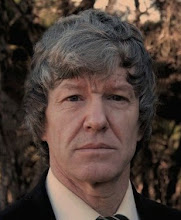
Please! A Board of only three!
One of the two men elected to the Waiheke Community's Local Board, Jim Hannan, Fullers' man, is dogmatically adamant that he can work fulltime for Fullers and also be a Member of the Board. Rubbish! Being a Board Member is a fulltime job. If he actually tries to do both jobs, conscientiously, he will kill himself. Otherwise he will be cheating the community.'No man can serve two masters.' His poor judgement is evidenced by his being so adamant that he can--regardless of fact and reason.
Just wading through the email from council officers can take all day. His poor judgement is also evidenced by his electioneering promise of jobs. He will be a Member of the Local Board, an enitity that in law is not allowed to employ people, and does not have the power to create employment. His promise is all sizzle and no steak.
The other man elected, Don McKenzie, is a very nice man, and very able to the extent that his blindness allows, but it is impossible to do that job without eyes, whatever he and his friends might claim.
Site-visits, for example, are impossible without sight. Just in the recent weeks I have done on three on behalf of the community. One was to see whether the community had got value for money in the restoration of the Pioneer Cemetery. Was it a job well done, or not? That was the last of three visits to it to oversee and discuss the project. A blind man could have done none of them. Nor could he judged and voted from the photos shown to other Board Members.
Another site-visit meant going to evaluate 8 hectares of forest and bush that the Council was considering buying. Getting there meant going along tracks, some too narrow for a man and a guide-dog, and crossing a small swamp on narrow, loose boards. Seeing it and judging it, seeing the magnificent 270-degree view, and arriving at a decision would all be impossible without eyes. The effect on me would have been no different to walking down my front path.
The job needs eyes in many necessary aspects of the job--studying charts, graphs, diagrams, drawings, slides and videos, reading and comparing many thousands of pages of written material on paper and on the Net, including hand-written material, and closely following what is on screen during Board meetings. Anyone who cannot see any of that has to rely on the skill and judgement of others, which means it is impossible for him to be true to the oath of office he must make on the 6th of November--his statutory promise to do the job to the best of his own skill and judgement. For him, in all the places where eyes are needed, he will have rely completely on the skill and judgement of the others, which makes them de facto Board
Members, unelected.
A guide-dog is useless in the labyrinth of local-government decision-making. A dog cannot read.
And software that can turn computer text into speech is useless in the face of handwritten material and any words that are not in text format. If the format is a scan or a photo that software is helpless.
Congratulations to the three. But you will have to work even harder than you should have to, to compensate for two handicapped men, one handicapped by a chronic lack of time and demonstrably poor judgement, the other by a very restrictive disability.
The 1300-odd people who voted for the two men obviously do not know, or do not care, what that job is.
Party-voting for local-government positions is very stupid. It is also way out of kilter with the law, because successful candidates must at their swearing-in promise to be impartial. Party-politics do not belong in local government. 'Vision Waiheke', the ticket the two men stood on, was just a National Party front; their claim to be independent was flim-flam. The Waiheke Community must now live for the three years with the consequences.
----
Footnote: Waiheke Marketplace claimed in a front-page story by the editor, George Gardner, that the new Board is centre-right, a swing from the far left of the existing Board. Where did George get that nonsense? Three members are right-wing: Tony Sears, Herb Romaniuk and Ray Ericson. Denise Roche is on the left. Eileen Evans would be centre-left. I, as I said in my election leaflet in 2007 am not left-wing, right-wing, tail-feathers or beak. I make decisions on the facts, not on some party-ideology. Only fools do that. So on balance, if you want to put a stupid wing-label on the present Board, it would be centre-right. Certainly not far left. Not left at all. And a much better Board than the new one.
Thursday, 14 October 2010
Wednesday, 29 September 2010
HIDE THE EXPERT ORGANISER!
Rodney Hide, the man who cannot organise his own party but thinks he can organise Auckland.
Rodney Hide, the man who cannot organise five people, including himself, but thinks he can organise 1.5 million people.
Rodney Hide, the man who cannot organise a tin-pot party of right-wing extremists but thinks he can get right the biggest local-government re-organisation ever attempted in Australasia, a re-organisation of a type that AUT says has never been
attempted anywhere, ever.
Rodney Hide, the man who admits that he did not think through to the human consequences of soliciting into his party a man who had as a 'prank' stolen the identity of a dead baby, but who thinks he can organise the lives of a third of New
Zealanders.
Rodney Hide, the man who ALWAYS tells the truth to the nation...
Rodney Hide, the Mincer of Local Government.
The word hyprocrite comes from an Ancient Greek word, which means actor. Traditional image to represent theatre is a pair of masks, behind which the actor hides himself as he assumed an acted persona. The ACT Party is led by a man called Hide. I do like God's sense of humour.
-------------
Did Waiheke jump joyously into the Super Silly or were we pushed by the thick Mr Hide?
Rodney Hide, the man whose accolytes seriously think that Waiheke, a small village-rural community, belongs with the huge maelstrom of the CBD of New Zealand's biggest city, and manage by plastering over the rule of law with egregious lies to make that outrageous shotgun marriage look as if it fits the rule of democratic law.
It was nothing but the age-old lust for territory, dressed up. A wolf in sheep's clothing.
Section 10 of the Local Government Act 2002 says, 'The purpose of local government is (a) to enable democratic local decision-making and action by, and on behalf of communities; and (b) to promote the social, economic, environmental, and cultural well-being of communities, in the present and for the future.'
'When men cannot change things, they change words.' -- Roman proverb.
Rodney Hide, the man who cannot organise five people, including himself, but thinks he can organise 1.5 million people.
Rodney Hide, the man who cannot organise a tin-pot party of right-wing extremists but thinks he can get right the biggest local-government re-organisation ever attempted in Australasia, a re-organisation of a type that AUT says has never been
attempted anywhere, ever.
Rodney Hide, the man who admits that he did not think through to the human consequences of soliciting into his party a man who had as a 'prank' stolen the identity of a dead baby, but who thinks he can organise the lives of a third of New
Zealanders.
Rodney Hide, the man who ALWAYS tells the truth to the nation...
Rodney Hide, the Mincer of Local Government.
The word hyprocrite comes from an Ancient Greek word, which means actor. Traditional image to represent theatre is a pair of masks, behind which the actor hides himself as he assumed an acted persona. The ACT Party is led by a man called Hide. I do like God's sense of humour.
-------------
Did Waiheke jump joyously into the Super Silly or were we pushed by the thick Mr Hide?
Rodney Hide, the man whose accolytes seriously think that Waiheke, a small village-rural community, belongs with the huge maelstrom of the CBD of New Zealand's biggest city, and manage by plastering over the rule of law with egregious lies to make that outrageous shotgun marriage look as if it fits the rule of democratic law.
It was nothing but the age-old lust for territory, dressed up. A wolf in sheep's clothing.
Section 10 of the Local Government Act 2002 says, 'The purpose of local government is (a) to enable democratic local decision-making and action by, and on behalf of communities; and (b) to promote the social, economic, environmental, and cultural well-being of communities, in the present and for the future.'
'When men cannot change things, they change words.' -- Roman proverb.
Friday, 30 July 2010
TELECOM REX ON WAIHEKE
So King Telecom is telling Waiheke that it is too much of a skinflint to upgrade our 372 exchange so that the entire community can have from it all the modern telecommunication goodies that other communities have.
It is saying that if you want all the wunnerful stuff you have to be moved to a 371 exchange. Thus with the stroke of an arrogant executive pen Telecom Scrooge has removed two of the things that identify us, things we have in common--the iconic fact that for all our telecommunications we all have the unique prefix that means Waiheke, and our friendly habit of quoting to each other only the four digits personal to us.
There was no need for another prefix. The 372 prefix provides 10,000 numbers, and there are oodles left.
Telecom has thus made 372 Waihekeans second-class telecommunications citizens. For first class service you have to be something else. All because it is too bean-counting mean to make 372 a first-class exchange.
Good ole Telecom Rex!
It is saying that if you want all the wunnerful stuff you have to be moved to a 371 exchange. Thus with the stroke of an arrogant executive pen Telecom Scrooge has removed two of the things that identify us, things we have in common--the iconic fact that for all our telecommunications we all have the unique prefix that means Waiheke, and our friendly habit of quoting to each other only the four digits personal to us.
There was no need for another prefix. The 372 prefix provides 10,000 numbers, and there are oodles left.
Telecom has thus made 372 Waihekeans second-class telecommunications citizens. For first class service you have to be something else. All because it is too bean-counting mean to make 372 a first-class exchange.
Good ole Telecom Rex!
BEWARE OF TEENAGE RIPPLES
Many years ago in Amsterdam a little boy poked out his tongue one winter's day and touched the iron railing of a bridge. It froze to it and stuck. The fireman had to come and carefully thaw out the joint to get him loose. The newspapers reported the incident, and next day there were dozens of little boys all over Amsterdam with their tongues stuck to bridges.
My case has shown two teenagers on Waiheke Island that they can lie to the police and the court and get away with it, and by that means get an adult into very serious hot water. They can make a false allegation and make it stick, and that the police prosecutor has skilfully shown them how to present themselves in court to achieve that. They have received a malignant education.
Therefore adults on Waiheke are now vulnerable to any teenager with grudge. All he or she needs to do is arrange things so that the target adult is alone with two or more of them, then agree on a story of a criminal act, and the adult is on his or her way to a guilty verdict and possibly a jail sentence.
The teenage grapevine never sleeps, so that How To is bound to get round those who have little interest in telling the truth, care nothing for the harm they do to the lives of others, and have a score to settle.
The recent case where a New Zealand teenager was found guilty of burning the mother of her former boyfriend to death by setting fire to her house because she wanted to get back at him is an extreme example of the same thing.
For adults, particularly on Waiheke, the moral of my story is before you allow yourself to be alone with a couple of teenagers study their shoulders. If there is a chip on them aimed at you, beware! And if you find yourself alone with them, avoid creating even the smallest chip. The court has given them the whip hand.
The Law of Unintended Consequences can be a harsh and terrifying law.
My case has shown two teenagers on Waiheke Island that they can lie to the police and the court and get away with it, and by that means get an adult into very serious hot water. They can make a false allegation and make it stick, and that the police prosecutor has skilfully shown them how to present themselves in court to achieve that. They have received a malignant education.
Therefore adults on Waiheke are now vulnerable to any teenager with grudge. All he or she needs to do is arrange things so that the target adult is alone with two or more of them, then agree on a story of a criminal act, and the adult is on his or her way to a guilty verdict and possibly a jail sentence.
The teenage grapevine never sleeps, so that How To is bound to get round those who have little interest in telling the truth, care nothing for the harm they do to the lives of others, and have a score to settle.
The recent case where a New Zealand teenager was found guilty of burning the mother of her former boyfriend to death by setting fire to her house because she wanted to get back at him is an extreme example of the same thing.
For adults, particularly on Waiheke, the moral of my story is before you allow yourself to be alone with a couple of teenagers study their shoulders. If there is a chip on them aimed at you, beware! And if you find yourself alone with them, avoid creating even the smallest chip. The court has given them the whip hand.
The Law of Unintended Consequences can be a harsh and terrifying law.
Tuesday, 27 July 2010
LIES HAVE TRIUMPHED OVER THE TRUTH
My entire life is concerned with only one thing, perfectly expressed in the words used courts of law: the truth, the whole truth and nothing but the truth, so help me God. That is the mainspring of my life, it is my paramount, fundamental and over-riding passion.
So it is a terrible shock to have had declared in a New Zealand court of law what I know to be false: that I am a criminal. It is almost unendurable to have watched and listened as two teenagers sat in the witness box and lied their faces off, calmly denied the truth, and were believed by the judge. He believed the liars, he rejected the truth and he convicted an innocent man. Now he will punish me for a crime that I did not commit.
I was accused of hitting on the head a teenager, who with his teenage friend had trespassed on my property on the 25th of May 2010, of hitting him on the head with a branch three feet long and two inches in diameter. Before God's throne I did not. There was no branch, there was no blow upon his head; I did not touch a single hair of his head, directly or indirectly, with anything. That is the truth before the Court of Heaven. But the Court of New Zealand says the opposite.
I did not plead not guilty because I wanted to try to get off the charge by some clever means. I pleaded not guilty because I was not guilty. If I had been guilty I would have pleaded guilty.
My trial has exposed three fundamental flaws in the justice system, which not even the cleverest lawyer on the planet can overcome.
1) The justice system assumes that when people place their right hand on the Bible and asked 'Do you swear before Almighty God that the evidence you are about to give shall be the truth, the whole truth and nothing but the truth, so help me God,' that they when they say 'Yes' that they will then utter nothing but truth. There will be not a word that is false.
But the days are long gone when most people believed in God, believed the Bible, and
believed that to make that promise before God and break it would bring down on their heads his terrible wrath. Few people nowadays are God-fearing, so that oath is only meaningless words and the book on which they place their hands is an irrelevant object. Many have concern at all about lying. They lie as easily as they breathe.
2) New Zealand law says that in the witness box no one can say 'I am not going to answer that.' Anyone eligible to give evidence can be compelled to give it. But that rests on the oath to tell the truth. Witnesses can be compelled to answer, but they cannot be compelled to tell the truth. So they can say 'I don't know' or 'I can't remember' even though they do know, and therefore they have fulfilled compellability, and cannot be forced to say anything more. They can also lie more directly and say something false, and not be compelled to correct themselves.
3) The court assumes that people will obey a court order. So when in my trial the judge, very rightly, took precautions to ensure that witnesses' statements would not be 'tainted' by what others said, and ordered that while each gave evidence the others would be excluded from the court, he assumed that he had made that order safe by also ordering them not talk to each other during the tea- and lunch-breaks about what had been said in court. He said 'You can talk about anything else. You can talk about the rugby, but must not talk about what has been said in court.' He assumed that they would obey him. But the two teenagers and the mother of the one who said he was hit and the prosecuting policeman went off together at the lunchbreak, and it was obvious when the second teenager gave his evidence afterwards that they had not restricted their conversation to the rugby.
Thus the openings for lies are wide, easily accessible, and cannot be blocked off by the smartest of lawyers. In a case like mine, when it is the word of two teenagers against one man, if the judge believes the liars there is nothing at all with which to counter it. There are many situations in life, for everyone, in which it would be impossible to prove the truth in a court of law. And no one can live preparing every moment for a possible court case. That would make life unendurable. So we are all vulnerable, especially if we have a public position, to being attacked by liars and having so little defence that we are vulnerable to a false conviction.
It was established in the trial that neither teenager saw the alleged blow, because they said they both had their backs to me. And one said he had his back to me when the alleged branch was allegedly picked up. Neither could describe the branch, except to say that it was two or three feet long and two inches in diameter (in spite of the fact that they are taught only in metrics, because New Zealand changed to metrics nearly twenty years before they were born, they both gave the measurements in imperial units, which showed that they had been coached by adults). They claimed not to know what the alleged branch looked like, whether it was rough or smooth, had cut or jagged ends, bark or no bark, projections or twigs or smaller branches. They claimed to know nothing at all about it, except its length and
thickness--in imperial units. Of that they were quite sure. They claimed that they were on my property because they had been taking a shortcut through an adjoining forest reserve, heading to a track southwest of their property, although my property is northeast from it--in exactly the opposite direction.
They claimed that they went my way because one of their dogs heard a noise and rushed off to investigate, and they had followed it,and did not catch up with until they got to my place--which is at least 100 metres away through what they admitted was thick, difficult forest. One of them described the noise as loud and startling. The other said he heard nothing; that only the dog heard it. The alleged victim also said that he had fallen against a tree, but denied that he had hit his head, only his shoulder. First he said he had fallen straight backwards, then when it was pointed out that he had also said that I was behind him he altered the direction he had fallen. So it went, point after point after point.
The complainants went to the police station two days after the alleged assault and to a chiropractor four days later. The only medical evidence presented was by the chiropractor who said that he could not be sure how the injuries that he was shown had occurred--a sore neck and some bruising on his head. He alleged that I had put it there with the non-existent branch. He lied.
The position of the bruise was pointed out by the alleged victim, the policeman and the chiropractor. The three positions did not coincide. The policeman pointed to the crown of the head, but admitted that he had not actually seen the bruise, the alleged victim pointed to a place forward of that, the chiropractor indicated tenderness from the crown across to where a baby has the fontanelle, and the judge did not think it was significant that it would be impossible to deliver a blow from behind and below that would get to the front of the head, which slopes away from anyone behind, especially below. The chiropractor said he could not sure when the injuries had occurred--that they could have occurred at any time during the previous week--i.e., at any time between the 23rd of May and the 29th inclusive. He was seen on the 29th, the police were seen on the 27th and the alleged assault was said to have occurred on the 25th. The chiropractor also said that the injuries could have sustained in many ways, such as by slipping and falling in the bush and hitting against something, and that he had no way of telling, from his examination, how they had been sustained--except for what the teenager had told him, and the chiropractor said that the mother was doing a lot of prompting. She would say something and the boy would agree.
The police admitted that they had not searched for a branch with my DNA on one end and the teenager's DNA on the other. They admitted that they had not called a doctor to examine the bruise on the 27th to establish whether it had been sustained on the 25th. They presented no physical or medical evidence of any kind to the provenance of what they 'saw' on the 27th, and they admitted that their entire case rested on the word of only one teenage trespasser.
The other one saw nothing even of the alleged assault, and even the alleged victim said he had had his back to me.
But the judge said he thought the teenagers were telling the truth. He ignored all the places where their testimonies differed, saying that those only proved that they had not been coached. He did not see the places where, to quote Hamlet, 'There is a kind of confession in your looks, which your modesties have not craft enough to cover.'
He has convicted an innocent man. He will sentence an innocent man. The lies have prevailed over the truth in what is meant to be a temple of truth before God.
And two teenagers have found that it is possible to lie to the police, and lie under oath in a court of law, and get away with it. That cannot do them any good, and it puts them on a slippery downward slope to ever-worse falsifications.
So it is a terrible shock to have had declared in a New Zealand court of law what I know to be false: that I am a criminal. It is almost unendurable to have watched and listened as two teenagers sat in the witness box and lied their faces off, calmly denied the truth, and were believed by the judge. He believed the liars, he rejected the truth and he convicted an innocent man. Now he will punish me for a crime that I did not commit.
I was accused of hitting on the head a teenager, who with his teenage friend had trespassed on my property on the 25th of May 2010, of hitting him on the head with a branch three feet long and two inches in diameter. Before God's throne I did not. There was no branch, there was no blow upon his head; I did not touch a single hair of his head, directly or indirectly, with anything. That is the truth before the Court of Heaven. But the Court of New Zealand says the opposite.
I did not plead not guilty because I wanted to try to get off the charge by some clever means. I pleaded not guilty because I was not guilty. If I had been guilty I would have pleaded guilty.
My trial has exposed three fundamental flaws in the justice system, which not even the cleverest lawyer on the planet can overcome.
1) The justice system assumes that when people place their right hand on the Bible and asked 'Do you swear before Almighty God that the evidence you are about to give shall be the truth, the whole truth and nothing but the truth, so help me God,' that they when they say 'Yes' that they will then utter nothing but truth. There will be not a word that is false.
But the days are long gone when most people believed in God, believed the Bible, and
believed that to make that promise before God and break it would bring down on their heads his terrible wrath. Few people nowadays are God-fearing, so that oath is only meaningless words and the book on which they place their hands is an irrelevant object. Many have concern at all about lying. They lie as easily as they breathe.
2) New Zealand law says that in the witness box no one can say 'I am not going to answer that.' Anyone eligible to give evidence can be compelled to give it. But that rests on the oath to tell the truth. Witnesses can be compelled to answer, but they cannot be compelled to tell the truth. So they can say 'I don't know' or 'I can't remember' even though they do know, and therefore they have fulfilled compellability, and cannot be forced to say anything more. They can also lie more directly and say something false, and not be compelled to correct themselves.
3) The court assumes that people will obey a court order. So when in my trial the judge, very rightly, took precautions to ensure that witnesses' statements would not be 'tainted' by what others said, and ordered that while each gave evidence the others would be excluded from the court, he assumed that he had made that order safe by also ordering them not talk to each other during the tea- and lunch-breaks about what had been said in court. He said 'You can talk about anything else. You can talk about the rugby, but must not talk about what has been said in court.' He assumed that they would obey him. But the two teenagers and the mother of the one who said he was hit and the prosecuting policeman went off together at the lunchbreak, and it was obvious when the second teenager gave his evidence afterwards that they had not restricted their conversation to the rugby.
Thus the openings for lies are wide, easily accessible, and cannot be blocked off by the smartest of lawyers. In a case like mine, when it is the word of two teenagers against one man, if the judge believes the liars there is nothing at all with which to counter it. There are many situations in life, for everyone, in which it would be impossible to prove the truth in a court of law. And no one can live preparing every moment for a possible court case. That would make life unendurable. So we are all vulnerable, especially if we have a public position, to being attacked by liars and having so little defence that we are vulnerable to a false conviction.
It was established in the trial that neither teenager saw the alleged blow, because they said they both had their backs to me. And one said he had his back to me when the alleged branch was allegedly picked up. Neither could describe the branch, except to say that it was two or three feet long and two inches in diameter (in spite of the fact that they are taught only in metrics, because New Zealand changed to metrics nearly twenty years before they were born, they both gave the measurements in imperial units, which showed that they had been coached by adults). They claimed not to know what the alleged branch looked like, whether it was rough or smooth, had cut or jagged ends, bark or no bark, projections or twigs or smaller branches. They claimed to know nothing at all about it, except its length and
thickness--in imperial units. Of that they were quite sure. They claimed that they were on my property because they had been taking a shortcut through an adjoining forest reserve, heading to a track southwest of their property, although my property is northeast from it--in exactly the opposite direction.
They claimed that they went my way because one of their dogs heard a noise and rushed off to investigate, and they had followed it,and did not catch up with until they got to my place--which is at least 100 metres away through what they admitted was thick, difficult forest. One of them described the noise as loud and startling. The other said he heard nothing; that only the dog heard it. The alleged victim also said that he had fallen against a tree, but denied that he had hit his head, only his shoulder. First he said he had fallen straight backwards, then when it was pointed out that he had also said that I was behind him he altered the direction he had fallen. So it went, point after point after point.
The complainants went to the police station two days after the alleged assault and to a chiropractor four days later. The only medical evidence presented was by the chiropractor who said that he could not be sure how the injuries that he was shown had occurred--a sore neck and some bruising on his head. He alleged that I had put it there with the non-existent branch. He lied.
The position of the bruise was pointed out by the alleged victim, the policeman and the chiropractor. The three positions did not coincide. The policeman pointed to the crown of the head, but admitted that he had not actually seen the bruise, the alleged victim pointed to a place forward of that, the chiropractor indicated tenderness from the crown across to where a baby has the fontanelle, and the judge did not think it was significant that it would be impossible to deliver a blow from behind and below that would get to the front of the head, which slopes away from anyone behind, especially below. The chiropractor said he could not sure when the injuries had occurred--that they could have occurred at any time during the previous week--i.e., at any time between the 23rd of May and the 29th inclusive. He was seen on the 29th, the police were seen on the 27th and the alleged assault was said to have occurred on the 25th. The chiropractor also said that the injuries could have sustained in many ways, such as by slipping and falling in the bush and hitting against something, and that he had no way of telling, from his examination, how they had been sustained--except for what the teenager had told him, and the chiropractor said that the mother was doing a lot of prompting. She would say something and the boy would agree.
The police admitted that they had not searched for a branch with my DNA on one end and the teenager's DNA on the other. They admitted that they had not called a doctor to examine the bruise on the 27th to establish whether it had been sustained on the 25th. They presented no physical or medical evidence of any kind to the provenance of what they 'saw' on the 27th, and they admitted that their entire case rested on the word of only one teenage trespasser.
The other one saw nothing even of the alleged assault, and even the alleged victim said he had had his back to me.
But the judge said he thought the teenagers were telling the truth. He ignored all the places where their testimonies differed, saying that those only proved that they had not been coached. He did not see the places where, to quote Hamlet, 'There is a kind of confession in your looks, which your modesties have not craft enough to cover.'
He has convicted an innocent man. He will sentence an innocent man. The lies have prevailed over the truth in what is meant to be a temple of truth before God.
And two teenagers have found that it is possible to lie to the police, and lie under oath in a court of law, and get away with it. That cannot do them any good, and it puts them on a slippery downward slope to ever-worse falsifications.
Friday, 2 July 2010
THE EMPIRE ACHIEVES WARP-SPEED!
Sound the trumpet! Tirrah! Tirrah! Scream 'Major event!' from Trig Hill. Break out the bubbly! ;-) Dance about wildly! Because you will no doubt be ecstatic to know that after more than two and a half years the two computers in the Community Board office are now fully functional. Which includes the one in the room that is also the Civil Defence office. So the Community Board and Civil Defence at last have a fully-functional office.
The first problem was that the computers had been programmed by The Empire to refuse us access to useless stuff. Like Google. And www.legislation.govt.nz. We were told that we might use it to look at porn. Please! But we were allowed to look at Auckland City Council's website. What was that about porn again?
They finally did remove that obstacle, after pretending for a while that it was too hard, but then the printer on our main computer, which had been manufactured shortly before Adam saw Eve, was found to have died even earlier.
So a new printer was installed in the room (actually a printer/copier/scanner). Unfortunately the cable connecting it to the computer was not installed. Even more unfortunately that was found to be a problem. It seems that the software needed for
telepathic connection had a bug. Probably made by the same people who made Auckland's consultation process, and who wrote in its Governance Statement that the principle of 'subsidiarity' applies--that 'decisions should be made at the lowest possible level.'
Then there was the enormous problem of finding $1000 to pay the bloke/blokess to install the cable. A cost that looks trivial beside the fact that that machine is also meant to be the front-line printer for the island's Civil Defence. A properly-equipped Civil Defence, surely, can justify $1000.
But I bet you were thinking that a non-functional printer on the island for the Waiheke Community Board was no real problem. That all Board bods could just go over to the city and use the office provided for all Auckland's Community Board Members high in the Tower of the Empire. Unfortunately the printer attached to that computer had also been manufactured shortly before Adam saw Eve, and had died ditto...
But now--tirrah! tirrah! tirrah!--everything is up and running on Waiheke. Because The Empire abandoned the notion of putting a cable from the computer to the new
printer/copier/scanner, and instead installed a second printer beside the computer.
Which means that the Waiheke Community Board at last has a fully-functioning office, ditto Civil Defence (sort of, because the second printer is only a printer, not a printer/scanner).
Two and a half years! Wow! Thanks for hurrying, guys.
The first problem was that the computers had been programmed by The Empire to refuse us access to useless stuff. Like Google. And www.legislation.govt.nz. We were told that we might use it to look at porn. Please! But we were allowed to look at Auckland City Council's website. What was that about porn again?
They finally did remove that obstacle, after pretending for a while that it was too hard, but then the printer on our main computer, which had been manufactured shortly before Adam saw Eve, was found to have died even earlier.
So a new printer was installed in the room (actually a printer/copier/scanner). Unfortunately the cable connecting it to the computer was not installed. Even more unfortunately that was found to be a problem. It seems that the software needed for
telepathic connection had a bug. Probably made by the same people who made Auckland's consultation process, and who wrote in its Governance Statement that the principle of 'subsidiarity' applies--that 'decisions should be made at the lowest possible level.'
Then there was the enormous problem of finding $1000 to pay the bloke/blokess to install the cable. A cost that looks trivial beside the fact that that machine is also meant to be the front-line printer for the island's Civil Defence. A properly-equipped Civil Defence, surely, can justify $1000.
But I bet you were thinking that a non-functional printer on the island for the Waiheke Community Board was no real problem. That all Board bods could just go over to the city and use the office provided for all Auckland's Community Board Members high in the Tower of the Empire. Unfortunately the printer attached to that computer had also been manufactured shortly before Adam saw Eve, and had died ditto...
But now--tirrah! tirrah! tirrah!--everything is up and running on Waiheke. Because The Empire abandoned the notion of putting a cable from the computer to the new
printer/copier/scanner, and instead installed a second printer beside the computer.
Which means that the Waiheke Community Board at last has a fully-functioning office, ditto Civil Defence (sort of, because the second printer is only a printer, not a printer/scanner).
Two and a half years! Wow! Thanks for hurrying, guys.
Thursday, 13 May 2010
LOCO GOVERNMENT DEMOCRACY IN NZ
We think of New Zealand as a democratic country, a country with a democratic system of government--representative democracy. But at local level, in many parts of the country, including ours, we do not. We have been robbed of it by three people who have been given high authority, but have failed to act responsibly and obey the law.
Before I became a member of the Waiheke Community Board I had never thought much about what happened after I put a tick next to a name on a ballot-paper, regardless of whether it was for a general election or a local-body election.
If anyone had asked me, I would probably have said that I expected those who won seats to be working full-time for their communities. I assumed that elected jobs in both levels of government were full-time occupations. And when I read the present version of the Local Government Act, which we have operated under since 2002, my assumption was confirmed. Even for elected Members of Community Boards (MCBs). Because the list set down for their role, particularly if put beside the rightful expectations and desires of their communities, makes it crystal clear that theirs is a full-time occupation and commitment.
Anyone who disputes that is not reading what it is written or listening to what is expected. MCBs clock on in October one year and clock off in October three years later.
But the assumption, the statutory expectations, and communities' expectations cannot possibly be fulfilled. Because human beings have some pesky addictions--to breathing, to eating, and to having the protection of cloth and the shield of a roof against dying of exposure (and getting the computer wet).
Unfortunately the Remuneration Authority, whose responsibility it is to set remuneration for various groups of people in public service, including MPs and those elected to local-body positions, has shown that it does not care much about local-body people, or local government or local democracy. Because it blatantly disobeys the statutory rules for setting local-government remuneration, instead using a weird rule of its own invention--the 'Pool Formula', invented in 2001 by a man called Hutton Peacock. With that it has set the remuneration so low for all MCBs, and for many Councillors round the country, that they cannot stay alive on the money. Some are paid as little as $206 a year; the average for MCBs is $4907.
They are therefore compelled to have some other form of income, so with the best will in the world they cannot work full-time at what they were elected to do. They are forced to be part-timers at local government. Otherwise they will quickly look like advanced cases of anorexia, after which they will graduate to being local bodies of the cemetery kind.
The effect on the democratic government of the country is equally severe. It is impossible for us to get a true democracy at local level, because the range of people who can stand for election is savagely restricted. Therefore our local democracy cannot be properly representative. And the standard of local government cannot be what it should be, and could be, because if you pay peanuts you get either monkeys or malnourished, crippled lions. You get people who are born incompetent, or competent people who cannot express all their competence because they have to treat local government as a side issue. You get deadwood or stumps of kauri.
A wage-earner cannot legally be paid less than $12.50 an hour, and fulltime employment is legally defined as at least 30 hours a week, so someone at the bottom of the heap will be earning at least $19,500 a year. At an average of $4907, MCBs are obviously far below the lowest of the low. No MCB earns anything like $19,500. Many councillors are in the same boat. In 28 of the 72 District Councils (39%) their remuneration is less than $19,500 (if you call that $20,000 it is 29 District Councils--40%). In one they are paid only $4000-odd. In 61 of our District Councils (85%) councillors are below the median income for New Zealand. In only 10 councils is remuneration above the average. There is obviously no way that local-government ballot-papers can compete on the open market for the best talent the country has to offer.
That is the country we live in, thanks to the Remuneration Authority's abysmal failure to comply with the excellent mandatory criteria that have set down in law--put there to ensure that both the community and those elected to serve it are treated fairly, that local-government remuneration is competitive, and that a representative range of skilled people are attracted to it.
Before I became a member of the Waiheke Community Board I had never thought much about what happened after I put a tick next to a name on a ballot-paper, regardless of whether it was for a general election or a local-body election.
If anyone had asked me, I would probably have said that I expected those who won seats to be working full-time for their communities. I assumed that elected jobs in both levels of government were full-time occupations. And when I read the present version of the Local Government Act, which we have operated under since 2002, my assumption was confirmed. Even for elected Members of Community Boards (MCBs). Because the list set down for their role, particularly if put beside the rightful expectations and desires of their communities, makes it crystal clear that theirs is a full-time occupation and commitment.
Anyone who disputes that is not reading what it is written or listening to what is expected. MCBs clock on in October one year and clock off in October three years later.
But the assumption, the statutory expectations, and communities' expectations cannot possibly be fulfilled. Because human beings have some pesky addictions--to breathing, to eating, and to having the protection of cloth and the shield of a roof against dying of exposure (and getting the computer wet).
Unfortunately the Remuneration Authority, whose responsibility it is to set remuneration for various groups of people in public service, including MPs and those elected to local-body positions, has shown that it does not care much about local-body people, or local government or local democracy. Because it blatantly disobeys the statutory rules for setting local-government remuneration, instead using a weird rule of its own invention--the 'Pool Formula', invented in 2001 by a man called Hutton Peacock. With that it has set the remuneration so low for all MCBs, and for many Councillors round the country, that they cannot stay alive on the money. Some are paid as little as $206 a year; the average for MCBs is $4907.
They are therefore compelled to have some other form of income, so with the best will in the world they cannot work full-time at what they were elected to do. They are forced to be part-timers at local government. Otherwise they will quickly look like advanced cases of anorexia, after which they will graduate to being local bodies of the cemetery kind.
The effect on the democratic government of the country is equally severe. It is impossible for us to get a true democracy at local level, because the range of people who can stand for election is savagely restricted. Therefore our local democracy cannot be properly representative. And the standard of local government cannot be what it should be, and could be, because if you pay peanuts you get either monkeys or malnourished, crippled lions. You get people who are born incompetent, or competent people who cannot express all their competence because they have to treat local government as a side issue. You get deadwood or stumps of kauri.
A wage-earner cannot legally be paid less than $12.50 an hour, and fulltime employment is legally defined as at least 30 hours a week, so someone at the bottom of the heap will be earning at least $19,500 a year. At an average of $4907, MCBs are obviously far below the lowest of the low. No MCB earns anything like $19,500. Many councillors are in the same boat. In 28 of the 72 District Councils (39%) their remuneration is less than $19,500 (if you call that $20,000 it is 29 District Councils--40%). In one they are paid only $4000-odd. In 61 of our District Councils (85%) councillors are below the median income for New Zealand. In only 10 councils is remuneration above the average. There is obviously no way that local-government ballot-papers can compete on the open market for the best talent the country has to offer.
That is the country we live in, thanks to the Remuneration Authority's abysmal failure to comply with the excellent mandatory criteria that have set down in law--put there to ensure that both the community and those elected to serve it are treated fairly, that local-government remuneration is competitive, and that a representative range of skilled people are attracted to it.
Friday, 30 April 2010
AUCKLAND LOGOS UNREAL AND REAL
Sssst! We have all been told that the wunnerful new Auckland Empire wants a new logo, a new symbol with which it can sell itself--it's 'world-class' self--to the world. But what we have not all been told (please stick your tongue in your cheek) is that the symbol has already been chosen.
Yes, they hired a team of two hundred Abyssinian consultants (there were none left in Australia or anywhere else who would work for them), allocated half a billion dollars of budget, gave each of them a yellow jacket, and locked them up in a secret hide-away for a whole year.
And after working like over-the-top Trojans every single nanosecond of that time (please stick your tongue even further into your cheek) they at last came up with the perfect symbol. It is brilliant, a masterpiece, an incredible stroke of collective genius. Ain't it amazing what you can get for half a billion nowadays!? It is so brilliant that it must be introduced with a triple blaze of trumpets! Tirrah! Tirrah! Tirrah! Thank you.
Wow! Behold! The new symbol for Auckland: a small spherical object, about the size of yer average marble, coloured orange on the outside and brown on the inside. It is rumoured that it will be popularised by being sold (only to suckers) in dark blue packets garnished with orange here and there.
......................
The piece above was conceived long ago, shared with a number of people privately, and written and published elsewhere before the winning logo in the real(?) world was announced. My reaction when I saw it was a howl of delight:
O goody! Seven jaffas on sticks.
......................
On second and third thoughts, in August 2011, perhaps they are not jaffas. Perhaps they are all-day-suckers, which is what we are in falling for Rodney Hide's blather (not that we had much choice). Or gob-stoppers, to shut us up, on the principle that, to quote Hide, 'putting local back into local government' actually means shutting up the locals and letting the mainland Sir Humphreys rule. Das Mainland Uber Alles...
Yes, they hired a team of two hundred Abyssinian consultants (there were none left in Australia or anywhere else who would work for them), allocated half a billion dollars of budget, gave each of them a yellow jacket, and locked them up in a secret hide-away for a whole year.
And after working like over-the-top Trojans every single nanosecond of that time (please stick your tongue even further into your cheek) they at last came up with the perfect symbol. It is brilliant, a masterpiece, an incredible stroke of collective genius. Ain't it amazing what you can get for half a billion nowadays!? It is so brilliant that it must be introduced with a triple blaze of trumpets! Tirrah! Tirrah! Tirrah! Thank you.
Wow! Behold! The new symbol for Auckland: a small spherical object, about the size of yer average marble, coloured orange on the outside and brown on the inside. It is rumoured that it will be popularised by being sold (only to suckers) in dark blue packets garnished with orange here and there.
......................
The piece above was conceived long ago, shared with a number of people privately, and written and published elsewhere before the winning logo in the real(?) world was announced. My reaction when I saw it was a howl of delight:
O goody! Seven jaffas on sticks.
......................
On second and third thoughts, in August 2011, perhaps they are not jaffas. Perhaps they are all-day-suckers, which is what we are in falling for Rodney Hide's blather (not that we had much choice). Or gob-stoppers, to shut us up, on the principle that, to quote Hide, 'putting local back into local government' actually means shutting up the locals and letting the mainland Sir Humphreys rule. Das Mainland Uber Alles...
Thursday, 22 April 2010
SIR HUMPHREY RULES THE ROAD--OK?
The Waiheke Transport Forum is a community body set up to advise the Waiheke Community Board on transport matters. At the April meeting, during yet another vigorous debate on The Esplanade (whether it should be closed to all but emergency traffic and reserved for pedestrians, cyclists and equestrians), a council officer became so angry that he blurted out the blunt truth.
That Yes Minister television series, in which the bureaucrat Sir Humphrey rules, with democracy always a distant second (unlike public servants, who really do serve the people faithfully and well), is a penetrating portrayal of real life. But it is still a shock to be bluntly told the same thing out in the real world. The Sir Humphreys are not normally purveyors of the crystal-clear truth.
The issue of The Esplanade issue is controversial, so the Transport Forum at its previous meeting in March had spent a long time thrashing out the wording of a survey to be sent out to the community so that the Community Board would know what most Waihekeans want. Arriving at the final text took a long time because there are many different views, but in the end we saw the miracle of a unanimous vote of approval. On Waiheke!
At the next meeting of the Community Board that wording was endorsed.
Then Sir Humphrey struck. Council officers wanted changes and additions; they wanted what they consider to be a survey that obeys what they have decided is the Auckland City Council standard for surveys (which of course includes irrelevant stuff with which they can fine-tune the vote--i.e., our votes are weighed on their scales instead of just being counted; then they can interpret the vote to their liking). But they were bluntly told to accept our democratic will.
That is why The Esplanade Survey was back Transport Forum's agenda in April, and why the council officer, the traffic engineer, ultimately blew a fuse when he was told that that was the wording that had been democratically agreed to, so that is to be the wording that goes out to the community.
He bluntly told us that if that was to be the wording the survey would NOT be going out. He also bluntly told us that the decision about The Esplanade would not be made by us. It would be made by 'the officer with the delegation--Andrew Allen' (the senior traffic engineer over in the city, and his boss).
Section 10 of the Local Government Act 2002, which is very the heart of local-government law in New Zealand, says 'The purpose of local government is (a) to enable democratic local decision-making and action by, and on behalf of, communities; and (b) to promote the social, economic, environmental and cultural well-being of communities in the present and for the future.'
All the Sir Humphreys should read that, learn that, get that nailed into their skulls and predicate every decision on that--on that and nothing else. (Copy it out and put it on the wall by your phone, and quote it every time you are getting the run-around from a Sir Humphrey--tell him plainly that his job exists first and foremost to fulfil that law.)
But what they actually do is to be Sir Humphreys. In that they are supported by a professional trade association called the Society of Local Government Managers (www.solgm.org.nz), a kind of Protect Sir Humphrey Society. Its view of how things should be run in local government is officer-centered, and is spelt out in black and white in the 2010 version of the diary it issued to bods in local government.
The preface, jointly written by SOLGM and the law-firm Simpson Grierson (which happens also to be Auckland City Council's external legal adviser), quotes section 12 of the Local Government Act 2002 virtually word for word--but then it tacks on an extra bit: ''For the purpose of carrying out its role a local authority has full capacity to carry on or undertake any activity or business, do any act, or enter into any transaction, and for these purposes has full rights, power and privileges (referred to as the power of general competence)'.
That bit in brackets is not part of the law, it is only an antiquated lawyers' paraphrase of it, but as you can see it means something very different in everyday speech. And if it is taken in isolation, any officers bent on getting their own way will arrive at a very different conclusion than if they were aiming 'to enable local democratic decision-making and action'.
It should be noted that 'local authority' in section 12 means the elected council, not the employed one, because the employed are legally defined as employed by the local authority--which is a fact usually denied by the CEO, who claims, contrary to law, that he employs them, and that he is the only employee of the council.
The phrase 'general competence' is deep in council officers' mythology; they are led to believe that it is in the Local Government Act 2002. It is not. Nowhere.
Using it as it is understood in everyday speech is a gross misinterpretation of section 12, which is just saying that councils have the legal power to make legal decisions, which is obviously needed, otherwise their decisions would neither be valid nor enforceable. But to paraphrase section 12 in a way which in effect says that council officers have the power to make decisions regardless of what the people want, and that they somehow have a superior level of competence, is somewhere between blatant arrogance and bureaucratic dictatorship.
Thus does Sir Humphrey, as always, run things by the mythical laws in his head instead of the ones printed in the lawbooks. The Esplanade, and everything else on Waiheke, have to take the consequences. OK?
That Yes Minister television series, in which the bureaucrat Sir Humphrey rules, with democracy always a distant second (unlike public servants, who really do serve the people faithfully and well), is a penetrating portrayal of real life. But it is still a shock to be bluntly told the same thing out in the real world. The Sir Humphreys are not normally purveyors of the crystal-clear truth.
The issue of The Esplanade issue is controversial, so the Transport Forum at its previous meeting in March had spent a long time thrashing out the wording of a survey to be sent out to the community so that the Community Board would know what most Waihekeans want. Arriving at the final text took a long time because there are many different views, but in the end we saw the miracle of a unanimous vote of approval. On Waiheke!
At the next meeting of the Community Board that wording was endorsed.
Then Sir Humphrey struck. Council officers wanted changes and additions; they wanted what they consider to be a survey that obeys what they have decided is the Auckland City Council standard for surveys (which of course includes irrelevant stuff with which they can fine-tune the vote--i.e., our votes are weighed on their scales instead of just being counted; then they can interpret the vote to their liking). But they were bluntly told to accept our democratic will.
That is why The Esplanade Survey was back Transport Forum's agenda in April, and why the council officer, the traffic engineer, ultimately blew a fuse when he was told that that was the wording that had been democratically agreed to, so that is to be the wording that goes out to the community.
He bluntly told us that if that was to be the wording the survey would NOT be going out. He also bluntly told us that the decision about The Esplanade would not be made by us. It would be made by 'the officer with the delegation--Andrew Allen' (the senior traffic engineer over in the city, and his boss).
Section 10 of the Local Government Act 2002, which is very the heart of local-government law in New Zealand, says 'The purpose of local government is (a) to enable democratic local decision-making and action by, and on behalf of, communities; and (b) to promote the social, economic, environmental and cultural well-being of communities in the present and for the future.'
All the Sir Humphreys should read that, learn that, get that nailed into their skulls and predicate every decision on that--on that and nothing else. (Copy it out and put it on the wall by your phone, and quote it every time you are getting the run-around from a Sir Humphrey--tell him plainly that his job exists first and foremost to fulfil that law.)
But what they actually do is to be Sir Humphreys. In that they are supported by a professional trade association called the Society of Local Government Managers (www.solgm.org.nz), a kind of Protect Sir Humphrey Society. Its view of how things should be run in local government is officer-centered, and is spelt out in black and white in the 2010 version of the diary it issued to bods in local government.
The preface, jointly written by SOLGM and the law-firm Simpson Grierson (which happens also to be Auckland City Council's external legal adviser), quotes section 12 of the Local Government Act 2002 virtually word for word--but then it tacks on an extra bit: ''For the purpose of carrying out its role a local authority has full capacity to carry on or undertake any activity or business, do any act, or enter into any transaction, and for these purposes has full rights, power and privileges (referred to as the power of general competence)'.
That bit in brackets is not part of the law, it is only an antiquated lawyers' paraphrase of it, but as you can see it means something very different in everyday speech. And if it is taken in isolation, any officers bent on getting their own way will arrive at a very different conclusion than if they were aiming 'to enable local democratic decision-making and action'.
It should be noted that 'local authority' in section 12 means the elected council, not the employed one, because the employed are legally defined as employed by the local authority--which is a fact usually denied by the CEO, who claims, contrary to law, that he employs them, and that he is the only employee of the council.
The phrase 'general competence' is deep in council officers' mythology; they are led to believe that it is in the Local Government Act 2002. It is not. Nowhere.
Using it as it is understood in everyday speech is a gross misinterpretation of section 12, which is just saying that councils have the legal power to make legal decisions, which is obviously needed, otherwise their decisions would neither be valid nor enforceable. But to paraphrase section 12 in a way which in effect says that council officers have the power to make decisions regardless of what the people want, and that they somehow have a superior level of competence, is somewhere between blatant arrogance and bureaucratic dictatorship.
Thus does Sir Humphrey, as always, run things by the mythical laws in his head instead of the ones printed in the lawbooks. The Esplanade, and everything else on Waiheke, have to take the consequences. OK?
Friday, 16 April 2010
COSTLY PIPERS AND SUGAR-DADDIES
Those who lust after millions of dollars from Auckland--far above the $16-million-plus that is collected on the island, are overlooking the simple arithmetic of a big, nasty problem.
A couple of years ago the Waiheke Community Board was briefed by a senior bean-counter in Auckland City Council who laid out the plain facts--every dollar spent on capital works here adds 14 cents to the operating expenditure every year, forever afterwards.
That means that for every $7 million pumped in by Auckland there has to be an extra $1 million added to the rates forever (plus inflation).
Obviously the only way that iniquitous situation can be sustained is by being increasingly dependent on Auckland's handouts. Thus we fall into the aid-dependency trap. And the loss-of-local-democracy trap, because he who pays the piper calls the tune.
Greed for someone else's money destroys self-determination. It cripples local decision-making and action. When we accept Auckland's money we also must accept its control of our community.
The problem with a Sugar-daddy is that sooner or later he wants his pound of sweetened flesh. He is like the wicked witch in Hansel and Gretel. He is not feeding us for our best nourishment, he is bent on making us tasty for his own dinner-table.
The argument by those who lust for Auckland's dollars--that we deserve Auckland's money because Aucklanders come here on holiday--is specious claptrap. First the ones with baches here are paying rates here--which is a third of ratepayers--so there is a solid contribution, but from insiders not outsiders, people who have a true commitment here. Second, it is nonsense to expect a portion of Auckland's rates to follow Aucklanders wherever they go on holiday. Tell that to Ruapehu, to Whangamata, to Bali, to Fiji, to Surfer's Paradise, to London, to Timbuktu. We no more deserve a portion of Auckland's rates than we do of Shanghai's, on the grounds that many Chinese come here.
A tourist destination that does that not stand on its own two feet, instead choosing to stand on someone else's, cannot complain when the other feet take it where it does not want to go.
On top of all that is what should be obvious, that using the rates collected from one group of ratepayers to better the lot of other ratepayers, above or far above what the others could afford to do for themselves, or in natural justice justify, is also a breach of the Bill of Rights Act, especially when you do not have a mandate from the group that was robbed. But never let good law get in the way of yet another example of brain-damaged ideological 'policy'.
A couple of years ago the Waiheke Community Board was briefed by a senior bean-counter in Auckland City Council who laid out the plain facts--every dollar spent on capital works here adds 14 cents to the operating expenditure every year, forever afterwards.
That means that for every $7 million pumped in by Auckland there has to be an extra $1 million added to the rates forever (plus inflation).
Obviously the only way that iniquitous situation can be sustained is by being increasingly dependent on Auckland's handouts. Thus we fall into the aid-dependency trap. And the loss-of-local-democracy trap, because he who pays the piper calls the tune.
Greed for someone else's money destroys self-determination. It cripples local decision-making and action. When we accept Auckland's money we also must accept its control of our community.
The problem with a Sugar-daddy is that sooner or later he wants his pound of sweetened flesh. He is like the wicked witch in Hansel and Gretel. He is not feeding us for our best nourishment, he is bent on making us tasty for his own dinner-table.
The argument by those who lust for Auckland's dollars--that we deserve Auckland's money because Aucklanders come here on holiday--is specious claptrap. First the ones with baches here are paying rates here--which is a third of ratepayers--so there is a solid contribution, but from insiders not outsiders, people who have a true commitment here. Second, it is nonsense to expect a portion of Auckland's rates to follow Aucklanders wherever they go on holiday. Tell that to Ruapehu, to Whangamata, to Bali, to Fiji, to Surfer's Paradise, to London, to Timbuktu. We no more deserve a portion of Auckland's rates than we do of Shanghai's, on the grounds that many Chinese come here.
A tourist destination that does that not stand on its own two feet, instead choosing to stand on someone else's, cannot complain when the other feet take it where it does not want to go.
On top of all that is what should be obvious, that using the rates collected from one group of ratepayers to better the lot of other ratepayers, above or far above what the others could afford to do for themselves, or in natural justice justify, is also a breach of the Bill of Rights Act, especially when you do not have a mandate from the group that was robbed. But never let good law get in the way of yet another example of brain-damaged ideological 'policy'.
Thursday, 8 April 2010
WAIHEKE COUNCIL NOT BOARD
An island is a place apart in body and mind. Islanders are people who choose to separate themselves from the madding crowd and live apart. And they want to be masters and mistresses of their own fate. Waihekeans do not want to be dictated to by It That Must Be Obeyed--The Empire Over The Water. We could live harmoniously with a community like ours, but Mr Yellowjacket has stomped mercilessly on that. We have been lumped in with the CBD. It has been the 1989 takeover all over again, this time with hobnailed, steel-toed boots, and Kalashnikovs at the ready. The city-siders, the bods who can never get into their heads and hearts what the island is all about, have cemented in their takeover.
But there is a candle at the end of Hide Tunnel. His legislation makes a division between regional and local decisions, and says that the only decisions that are not to be made locally are regional ones. And when John Carter etc., talk about regional it is plain that what they mean is Bombay to Wellsford. So for us there is nothing regional. EVERYTHING is local--the island, and its setting, which is the Hauraki Gulf, not Bombay to Wellsford. So ALL decision-making should be in our hands. Nothing should be decided by the Super-silly.
Therefore the Waiheke Local Board, which under the new regime replaces the Waiheke Community Board in October, should be where the democratic buck rests. Not on some bureaucratic city desk where democracy gets slaughtered and diced.
So we must fight tooth and nail to turn that candle into a bonfire. Which means that to get what we want--Waiheke deciding for Waiheke--we must do everything we can to make the Waiheke Local Board, in effect, the Waiheke Council. Anything less must be resisted to the hilt. Therefore anyone who stands for the Local Board who does not want that, and who will not say so explicitly, will really be saying that we should be under the Super-silly boot--and therefore should be ignored on the ballot-paper.
But there is a candle at the end of Hide Tunnel. His legislation makes a division between regional and local decisions, and says that the only decisions that are not to be made locally are regional ones. And when John Carter etc., talk about regional it is plain that what they mean is Bombay to Wellsford. So for us there is nothing regional. EVERYTHING is local--the island, and its setting, which is the Hauraki Gulf, not Bombay to Wellsford. So ALL decision-making should be in our hands. Nothing should be decided by the Super-silly.
Therefore the Waiheke Local Board, which under the new regime replaces the Waiheke Community Board in October, should be where the democratic buck rests. Not on some bureaucratic city desk where democracy gets slaughtered and diced.
So we must fight tooth and nail to turn that candle into a bonfire. Which means that to get what we want--Waiheke deciding for Waiheke--we must do everything we can to make the Waiheke Local Board, in effect, the Waiheke Council. Anything less must be resisted to the hilt. Therefore anyone who stands for the Local Board who does not want that, and who will not say so explicitly, will really be saying that we should be under the Super-silly boot--and therefore should be ignored on the ballot-paper.
Thursday, 18 March 2010
IMPORTANT QUESTIONS BY REMOTE CONTROL
I had a call from Nielsen Research last Sunday, calling on behalf of Auckland City Council. Why bug me on a Sunday? And why hire a research company at great expense? Is the Council not capable of using a telephone itself?
Nielsen wanted to know how the Council had responded to my complaint. 'Which complaint?' I asked. They did not know. Much later I realised that it was one I had made last year. So why did it take so long, at great expense, to get another organisation to ask that question?
The researcher read a blurb that said something along the lines of, 'The Council wants to make sure it is delivering the best service, so it is important to it to find out what you think of it.' I laughed. 'Everyone laughs when I read that bit,' she said.
If Auckland City was genuinely concerned to know how its staff handled your complaint, it would get them to ask you at the time, and would record your response for playing back to a senior manager. That would be instant feedback where it counts, at virtually no expense. Nielsen records its conversation with you many months later, but at great expense. The delay is so long that you will probably have probably forgotten the details, or even what it was all about, as I had, and the researcher will not know, so cannot jog your memory, because she has not been told. Bad management, at great expense.
So the result of the call was zilch. Zero. Nothing. Except for what went into Nielsen's pocket--out of the pockets of ratepayers.
Nielsen wanted to know how the Council had responded to my complaint. 'Which complaint?' I asked. They did not know. Much later I realised that it was one I had made last year. So why did it take so long, at great expense, to get another organisation to ask that question?
The researcher read a blurb that said something along the lines of, 'The Council wants to make sure it is delivering the best service, so it is important to it to find out what you think of it.' I laughed. 'Everyone laughs when I read that bit,' she said.
If Auckland City was genuinely concerned to know how its staff handled your complaint, it would get them to ask you at the time, and would record your response for playing back to a senior manager. That would be instant feedback where it counts, at virtually no expense. Nielsen records its conversation with you many months later, but at great expense. The delay is so long that you will probably have probably forgotten the details, or even what it was all about, as I had, and the researcher will not know, so cannot jog your memory, because she has not been told. Bad management, at great expense.
So the result of the call was zilch. Zero. Nothing. Except for what went into Nielsen's pocket--out of the pockets of ratepayers.
Friday, 12 March 2010
GOING BUMP ALL DAY AND ALL NIGHT
Potholes are not historic places. There is no requirement to preserve them for future generations. So before roads are resealed all the lumps and bumps and hollows and pits should be removed. Otherwise all we get is more chips stuck over the same shonky surface.
And roads are thoroughfares for all forms of transport, not just motor vehicles. Next to them, pedestrians are the most numerous and Auckland's traffic engineers should never, ever forget that.
Therefore on the many roads on the island that are too narrow for formal footpaths (and at a minimum of $422 a metre should never be provided with them), the natural grass verges and the tracks worn into them by countless feet should be sacrosanct. Obliterating them with seal that gets wider at every resealing is thoughtless and
stupid. It puts every pedestrian in harm's way.
Auckland City Council, like all New Zealand councils, has a legal responsibility to promote the well-being of the community. That means caring about human beings. Putting them in front of motor vehicles could be regarded as less than careful.
Unless you want them flattened into all those potholes. Cheap filling!
And roads are thoroughfares for all forms of transport, not just motor vehicles. Next to them, pedestrians are the most numerous and Auckland's traffic engineers should never, ever forget that.
Therefore on the many roads on the island that are too narrow for formal footpaths (and at a minimum of $422 a metre should never be provided with them), the natural grass verges and the tracks worn into them by countless feet should be sacrosanct. Obliterating them with seal that gets wider at every resealing is thoughtless and
stupid. It puts every pedestrian in harm's way.
Auckland City Council, like all New Zealand councils, has a legal responsibility to promote the well-being of the community. That means caring about human beings. Putting them in front of motor vehicles could be regarded as less than careful.
Unless you want them flattened into all those potholes. Cheap filling!
Monday, 1 March 2010
THE ATA MARKETS LOCAL BOARDS
The ATA's 54-page discussion paper on the Local Boards for the new-and-shiny 'super'-Auckland regime is a nice marketing exercise, full of smoke and mirrors. But what are we offered? Community Boards, depending on their Council, already have, or can have, the same or greater responsibilities and powers (look at North Shore's Community Boards, who decide on resource-consents, Thames-Coromandel's that decide the local rates, Southlands that are used to the hilt). What it will boil down to, as always, is the will of the Council and the bureacracy.
Much of the wording governing Local Boards is exactly the same as that governing Community Boards, except that Local Boards are part of the Auckland Council structure, not the community structure--which is not a good move from the point of view of democracy: their precious independence has gone. And the agreement between the Council and the Boards has a different label. But Local Boards, just like Community Boards, do not have control over local staff. They cannot hire and fire. All staff are controlled from the centre.
This statement on page 12 in the ATA's puffery is a killer: 'The purpose of the local boards is to enable democratic decision-making by, and on behalf of, communities within the local board area, and to promote the social, economic, environmental, and cultural well-being of communities within the local board area. Local Board are part of the Auckland Council, so they do not need to have their own powers to acquire, hold, or dispose of property, or appoint, suspend, or remove employees. They are not community boards, a committee of the governing body or incorporated bodies.'
Note the weasel-words 'so they do not need...' A logical connection is pretended, but there is no such connection. For real local control they need those powers. That is obvious. But they are not being given them.
In contrast, Community Boards in Thames-Coromandel can second staff for projects of their own. Auckland's Local Boards will have to wait at the CEO's door, cap in hand. 'Please sir...'
If we get a Council that is not on our side, as Waiheke has now, it will be struggle and battle all the way. And ditto if that huge, powerful, centrally-controlled bureaucracy wants something different to what the Local Board wants.
If we had a re-run of the rubbish contract saga under this new regime the outcome would be exactly the same.
The fact that councillors do not sit on the Local Boards as they do now means that there will be no direct contact between the Boards and the Council at that level.
The only bright spot in the ATA's document is in the discussion on page 25 on the role of Local Boards in such things as libraries, in which it says they should decide what new library buildings should be. So we can take them at their word and enlist their support to get the library we want--i.e., a library, not a libary/service-centre. The budget has been allocated, but the building is not what we want, so we can ask the ATA to approve funds only for what we want.
Words are easy. So are lies. Auckland City Council's governance statement trumpets 'subsidiarity'--i.e., decisions made at the lowest possible level. Do they do that? No. They treat Community Board with contempt. So the trumpeting is arrant lies.
Legislation is like the lock on your door. It only keeps honest people out. You cannot legislate honesty, integrity, adherence to human rights, local determination. The dishonest, the knaves, the liars, the fools, the incompetent will still be what they are. If they are in power all we will get is YMCA--yesterday's muck cooked again.
Does Waiheke need this monstrous edifice? No. And Great Barrier even less (it used to be run by three people; now it will have 6000). Both communities can run themselves far better than any unsympathetic mainland empire ever could.
Much of the wording governing Local Boards is exactly the same as that governing Community Boards, except that Local Boards are part of the Auckland Council structure, not the community structure--which is not a good move from the point of view of democracy: their precious independence has gone. And the agreement between the Council and the Boards has a different label. But Local Boards, just like Community Boards, do not have control over local staff. They cannot hire and fire. All staff are controlled from the centre.
This statement on page 12 in the ATA's puffery is a killer: 'The purpose of the local boards is to enable democratic decision-making by, and on behalf of, communities within the local board area, and to promote the social, economic, environmental, and cultural well-being of communities within the local board area. Local Board are part of the Auckland Council, so they do not need to have their own powers to acquire, hold, or dispose of property, or appoint, suspend, or remove employees. They are not community boards, a committee of the governing body or incorporated bodies.'
Note the weasel-words 'so they do not need...' A logical connection is pretended, but there is no such connection. For real local control they need those powers. That is obvious. But they are not being given them.
In contrast, Community Boards in Thames-Coromandel can second staff for projects of their own. Auckland's Local Boards will have to wait at the CEO's door, cap in hand. 'Please sir...'
If we get a Council that is not on our side, as Waiheke has now, it will be struggle and battle all the way. And ditto if that huge, powerful, centrally-controlled bureaucracy wants something different to what the Local Board wants.
If we had a re-run of the rubbish contract saga under this new regime the outcome would be exactly the same.
The fact that councillors do not sit on the Local Boards as they do now means that there will be no direct contact between the Boards and the Council at that level.
The only bright spot in the ATA's document is in the discussion on page 25 on the role of Local Boards in such things as libraries, in which it says they should decide what new library buildings should be. So we can take them at their word and enlist their support to get the library we want--i.e., a library, not a libary/service-centre. The budget has been allocated, but the building is not what we want, so we can ask the ATA to approve funds only for what we want.
Words are easy. So are lies. Auckland City Council's governance statement trumpets 'subsidiarity'--i.e., decisions made at the lowest possible level. Do they do that? No. They treat Community Board with contempt. So the trumpeting is arrant lies.
Legislation is like the lock on your door. It only keeps honest people out. You cannot legislate honesty, integrity, adherence to human rights, local determination. The dishonest, the knaves, the liars, the fools, the incompetent will still be what they are. If they are in power all we will get is YMCA--yesterday's muck cooked again.
Does Waiheke need this monstrous edifice? No. And Great Barrier even less (it used to be run by three people; now it will have 6000). Both communities can run themselves far better than any unsympathetic mainland empire ever could.
Thursday, 18 February 2010
LOCAL GOVERNMENT DEFINED
Local Government: An oxymoron practised by local bodies, which is a term made up from 'local' as in anaesthetic and 'body' as in dead.
REMUNERATION AND SUPER-SILLY OLIGARCHY
The Remuneration Authority is treasonously corrupt. Treasonous because it has betrayed the country, corrupt because it has replaced with an illegal formula the superb mandatory criteria laid down Clause 7 of Schedule 7 in the Local Government Act 2002. It has thereby kneecapped local government for years, depriving New Zealand of local government democracy. Democracy is not democracy unless it is representative. You cannot have representative government if a true cross-section of the community is barred from standing for election because no one can live on a pittance.
The present remuneration for Community Boards is a part-time salary for a full-time job, a national average of $4000 to $5000. No one can live on that, so the only people who can stand are those who have another form of income, which also means they cannot give the local-body job their full attention. So ratepayers are short-changed two ways. They do not get a representative selection to choose from at elections, and afterwards they do not get the service they expected and have the right to.
When they voted they ticked a selection of persons. What they got is only fractions of persons.
Even at regional level. Auckland Regional Councillors are the lowest-paid regional councillors in the country, on $22,000 a year. $22,000 for a high-level management job!
But Rodney Hide refuses to do anything about the Remuneration Authority (that is the same guy who wants the Auckland region to be well-run). Therefore Local Boards will be in the same situation as Community Boards. But to make matters worse there will be a bureaucracy of 6000, and history proves that large bureaucracies are never good, efficient public-servants. To make matters even worse the proposal is that Local Boards will come under that bureaucracy. That is wrong. They are the elected, they should be associated with the mayor's department.
The notion that you get better local government by the massive centralisation of political and bureaucratic power is fundamentally flawed.
It is ironic that the leader of the ACT Party, the party that worships the idol of competition, by setting up this state within a state, the state of Auckland within the state of New Zealand running under different local-body legislation from the rest of the country, has eliminated competition from local government.
Everywhere else in New Zealand areas that pass the population threshold of 10,000 can apply to have their own council, or if they are on the edge of a district and their analysis shows that the council over the border would deliver better local government they can apply to be transferred. But Rodney Hide's triple-whammy legislation deprives 1.4 million people of both options, because it takes precedence over the legislation that makes it possible (the Local Government Act 2002).
The whole shambolic upheaval is nothing but an ego-trip by a yellow-jacketed fool who thinks you have to turn the world upside down to crack a peanut. The man is a power-freak on steroids. Everything necessary (truly necessary, that is) could be achieved under the Local Government Act 2002, with perhaps a tweak here and there.
Some Community Boards, which happen to be blessed with far better councils than Auckland City Council, already have the sort of powers that are wanted by the latent Local Boards--such as doing the budgets for their communities and determining the local rates for them. And they can second staff to work for them on projects to benefit their local communities.
The Local Boards need the fair remuneration laid down in law, they need ready access to staff of their own, and they need control over local money.
Waiheke does not need 6000 people to run an island of 8000. Great Barrier does not need 6000 to run an island of 800.
This is vast upheaval, an expensive upheaval, a new system that is to be dumped on 1.4 million people, untried and untested, under which huge areas will descend from having their own local council to having a single councillor and a kneecapped Local Board. LOCAL government? No.
Good local government is government that is local and government that is good. It has to be both or it is neither. The Super Silly is neither, and cannot be either. For our small community, out here on the fringes of it it things will be worse than they have been since 1989.
In 1989 Waiheke went from 100% of the vote, 100% of the say and 100% of the councillors to 2.3% of the vote, even less of the say and 1 beseiged councillor out of 20. Now we are to go to 0.6% of the vote, even less of the say, and only a share in a councillor with a city mindset. We have been ruled by a city mindset for the last twenty years. We have proved to the hilt that that does not work. We have been at the mercy of Auckland's integrity for twenty years. Sadly, there is not much integrity to be found there. Now that situation is being made even worse.
'Community of interest' includes people who have a real, deep interest in your community, because their hearts and minds are in the same place. They care because they understand. Auckland does not, never has, and never will. Especially its CBD.
There is no such thing as a free lunch. There is a consequence to every act. And, sadly, to every ACT Party.
The much-vaunted, much-heralded Third Bill turned out to be a mess that a dog's breakfast would not be seen dead with, a document beside which the proposed Hauraki Gulf District Plan that was inflicted upon us looks like a splendidly concise exercise in tidy logical thought.
Waiheke will be worse off than it has been in the last twenty years under Auckland City Council. All we can do, as usual, is make a very loud protest, but the hurricane of ego-tripping, power-freakish political change will drown our voices in its cacophony. We can scream into this destructive wind, and scream we must, but we know that little or no notice will be taken. The weasel-words from power-mad unreason will carry the day.
The present remuneration for Community Boards is a part-time salary for a full-time job, a national average of $4000 to $5000. No one can live on that, so the only people who can stand are those who have another form of income, which also means they cannot give the local-body job their full attention. So ratepayers are short-changed two ways. They do not get a representative selection to choose from at elections, and afterwards they do not get the service they expected and have the right to.
When they voted they ticked a selection of persons. What they got is only fractions of persons.
Even at regional level. Auckland Regional Councillors are the lowest-paid regional councillors in the country, on $22,000 a year. $22,000 for a high-level management job!
But Rodney Hide refuses to do anything about the Remuneration Authority (that is the same guy who wants the Auckland region to be well-run). Therefore Local Boards will be in the same situation as Community Boards. But to make matters worse there will be a bureaucracy of 6000, and history proves that large bureaucracies are never good, efficient public-servants. To make matters even worse the proposal is that Local Boards will come under that bureaucracy. That is wrong. They are the elected, they should be associated with the mayor's department.
The notion that you get better local government by the massive centralisation of political and bureaucratic power is fundamentally flawed.
It is ironic that the leader of the ACT Party, the party that worships the idol of competition, by setting up this state within a state, the state of Auckland within the state of New Zealand running under different local-body legislation from the rest of the country, has eliminated competition from local government.
Everywhere else in New Zealand areas that pass the population threshold of 10,000 can apply to have their own council, or if they are on the edge of a district and their analysis shows that the council over the border would deliver better local government they can apply to be transferred. But Rodney Hide's triple-whammy legislation deprives 1.4 million people of both options, because it takes precedence over the legislation that makes it possible (the Local Government Act 2002).
The whole shambolic upheaval is nothing but an ego-trip by a yellow-jacketed fool who thinks you have to turn the world upside down to crack a peanut. The man is a power-freak on steroids. Everything necessary (truly necessary, that is) could be achieved under the Local Government Act 2002, with perhaps a tweak here and there.
Some Community Boards, which happen to be blessed with far better councils than Auckland City Council, already have the sort of powers that are wanted by the latent Local Boards--such as doing the budgets for their communities and determining the local rates for them. And they can second staff to work for them on projects to benefit their local communities.
The Local Boards need the fair remuneration laid down in law, they need ready access to staff of their own, and they need control over local money.
Waiheke does not need 6000 people to run an island of 8000. Great Barrier does not need 6000 to run an island of 800.
This is vast upheaval, an expensive upheaval, a new system that is to be dumped on 1.4 million people, untried and untested, under which huge areas will descend from having their own local council to having a single councillor and a kneecapped Local Board. LOCAL government? No.
Good local government is government that is local and government that is good. It has to be both or it is neither. The Super Silly is neither, and cannot be either. For our small community, out here on the fringes of it it things will be worse than they have been since 1989.
In 1989 Waiheke went from 100% of the vote, 100% of the say and 100% of the councillors to 2.3% of the vote, even less of the say and 1 beseiged councillor out of 20. Now we are to go to 0.6% of the vote, even less of the say, and only a share in a councillor with a city mindset. We have been ruled by a city mindset for the last twenty years. We have proved to the hilt that that does not work. We have been at the mercy of Auckland's integrity for twenty years. Sadly, there is not much integrity to be found there. Now that situation is being made even worse.
'Community of interest' includes people who have a real, deep interest in your community, because their hearts and minds are in the same place. They care because they understand. Auckland does not, never has, and never will. Especially its CBD.
There is no such thing as a free lunch. There is a consequence to every act. And, sadly, to every ACT Party.
The much-vaunted, much-heralded Third Bill turned out to be a mess that a dog's breakfast would not be seen dead with, a document beside which the proposed Hauraki Gulf District Plan that was inflicted upon us looks like a splendidly concise exercise in tidy logical thought.
Waiheke will be worse off than it has been in the last twenty years under Auckland City Council. All we can do, as usual, is make a very loud protest, but the hurricane of ego-tripping, power-freakish political change will drown our voices in its cacophony. We can scream into this destructive wind, and scream we must, but we know that little or no notice will be taken. The weasel-words from power-mad unreason will carry the day.
Wednesday, 23 December 2009
CHRISTMAS THOUGHTS
Marketplace asked a number of maily island people in Local Government to reflect seriously and/or humorously on Christmas, by answering a list of questions.
The real meaning of Christmas is that it celebrates the birth of Jesus. It is a celebration that began with most important family in history, which was the seed of the most important extended family--the global Christian family. Jesus Christ is the reason for the season.
How will I be spending Christmas? First and foremost, being eternally thankful for the real reason for Christmas, the coming into this world of God's Son, Jesus Christ, and for all that that means.
Then wishing that Rodney Hide would put a sock in it--before he was born. And that 'Santa' will take him back to the North Pole and dump him somewhere. And feeling sorry for Rudolph for having to carry Rodney (and his girlfriend, of course) all that way--being dumbed down to a kind of international wheelie-bin service.
What is the most fun I have had at Christmas or New Year? Knitting a sock for Rodney Hide. A large sock.
My predictions for 2010? All true Waihekeans will be knitting humungous socks for Rodney Hide. And writing sacks (not bins) of retrospective letters to Santa and Rudolph. And that we will wake up and this will only have been a nightmare, and at the foot of the bed will be a pillow-case overflowing with a bright new Waiheke Council. And that Rodney Hide will be nominated in the New Year Honours List for a special award: TGTSW (The
Grinch That Stole Waiheke). And that on Rodney's next overseas jaunt some kind airline will deliver his luggage back to Wellington, but lose him.
What is my New Year's resolution? Learn to knit large socks faster.
The real meaning of Christmas is that it celebrates the birth of Jesus. It is a celebration that began with most important family in history, which was the seed of the most important extended family--the global Christian family. Jesus Christ is the reason for the season.
How will I be spending Christmas? First and foremost, being eternally thankful for the real reason for Christmas, the coming into this world of God's Son, Jesus Christ, and for all that that means.
Then wishing that Rodney Hide would put a sock in it--before he was born. And that 'Santa' will take him back to the North Pole and dump him somewhere. And feeling sorry for Rudolph for having to carry Rodney (and his girlfriend, of course) all that way--being dumbed down to a kind of international wheelie-bin service.
What is the most fun I have had at Christmas or New Year? Knitting a sock for Rodney Hide. A large sock.
My predictions for 2010? All true Waihekeans will be knitting humungous socks for Rodney Hide. And writing sacks (not bins) of retrospective letters to Santa and Rudolph. And that we will wake up and this will only have been a nightmare, and at the foot of the bed will be a pillow-case overflowing with a bright new Waiheke Council. And that Rodney Hide will be nominated in the New Year Honours List for a special award: TGTSW (The
Grinch That Stole Waiheke). And that on Rodney's next overseas jaunt some kind airline will deliver his luggage back to Wellington, but lose him.
What is my New Year's resolution? Learn to knit large socks faster.
THE LITTERBUG COUNCIL OFFICER
Thank you Michael McQuillan! We used to have an island on which rubbish bags went out on Monday and Tuesday, and were gone within hours.
Now, thanks to him, we get rubbish bags and wheelie bins all over the place for days on end, cluttering the footpaths and berms.
Permanent mess.
McQuillan should read, get into his skull, and obey, section 10 in the Local Government Act 2002, which defines the purpose of local government as: '(a) To enable democratic local decision-making and action by, and on behalf of communities; and (b) To promote the social, economic, environmental and cultural well-being of communities, in the present and for the future.'
With people like him replacing democratic decision-making with bureaucratic, the word 'progress' has become a one-word joke.
Now, thanks to him, we get rubbish bags and wheelie bins all over the place for days on end, cluttering the footpaths and berms.
Permanent mess.
McQuillan should read, get into his skull, and obey, section 10 in the Local Government Act 2002, which defines the purpose of local government as: '(a) To enable democratic local decision-making and action by, and on behalf of communities; and (b) To promote the social, economic, environmental and cultural well-being of communities, in the present and for the future.'
With people like him replacing democratic decision-making with bureaucratic, the word 'progress' has become a one-word joke.
Monday, 14 December 2009
OPEN LETTER TO ALAN KNIGHT
As you can see from the blog at this link, a man can be so possessed by unreasoning, implacable hatred that he descends to puerile insult in a vain attempt to justify his hatred.
As has been wisely said, 'Hatred is the poison you drink in the hope that someone else will die.' It has no effect on the hated; it destroys the hater. And he wastes life expressing his hatred.
One day outside the supermarket that expression reached a venomous extreme, when he hurled this at me: 'Murder would be too good for you.'
I do not hate you, Alan. But I do feel very sorry for you. 'Lord of Misrule' is lord of nothing.
God bless you.
As has been wisely said, 'Hatred is the poison you drink in the hope that someone else will die.' It has no effect on the hated; it destroys the hater. And he wastes life expressing his hatred.
One day outside the supermarket that expression reached a venomous extreme, when he hurled this at me: 'Murder would be too good for you.'
I do not hate you, Alan. But I do feel very sorry for you. 'Lord of Misrule' is lord of nothing.
God bless you.
Saturday, 12 December 2009
ROCK-CLIMBING EVENT A GREAT SUCCESS
The Rock-climbing Event has been a great success. It far exceeded my best hopes. Nearly four hundred people, mainly children, took the opportunity to scale the nine-metre faces of Rockup Limited's mobile rock-climbing rig, many of them triumphing over a fear of heights in the process. The rig has four faces, so four climbers can be going up at once, each on a triple safety harness attached to a hydraulically-damped wire-rope belay, so when they have reached the top and pressed the siren-button that signals their success they abseil gently down to the foam mat at the bottom. Ditto if they fall off. The detailed attention to safety in the design and operation of the equipment was most noticeable.
The event, which was fully sponsored, was run in two stages. The first stage was an educational programme run at Waiheke Primary School on the 9th of December and Te Hurihi Primary School on the 10th and 11th. Classes were put through a very impressive process that emphasised safety, teamwork, communication and organisation. The climbmaster, Joe, a skilled 21-year-old Englishman and his assistant, Taylor, a 22-year-old American woman, did a superlative job. Each class was divided in small teams, usually of three children, who competed for points, gained by reaching the siren-button at top of the wall and by working together to keep to the simple rules that Joe had taught them. During that stage over two hundred children did the climb, most more than once, many several times. Well done, everyone.
It was very easy to choose the prizewinner for the best team on the island, because of the seventy teams that climbed the wall while the rig was at the primary schools, one stood out. A three-girl team at Waiheke Primary School that called itself Fruit-salad, made up of Savanah, Tahnee and Lochie, reached the top a total of sixteen times, well ahead of any other team. A boy's team at Te Purihi did well, but Fruit-salad's excellent teamwork, good organisation, speed of changeover (swapping the harness from one girl to the next) and massive score put it in a class of its own. Super well done, girls!
The second stage was the five-hour public event staged on Saturday the 12th where the new supermarket is to be built in Belgium Street (many thanks to Tony Pope for making that available). There, one wall was dominated by those who wanted to go for speed-prizes in various age-groups. Two walls were used for the Mum-and-child and Dad-and-child teams who wanted to go for the speed-prizes in those categories. At its peak that stage of the event was putting through about a hundred climbs an hour. Upwards of a hundred and fifty people climbed the wall that day,making a total for the island of about four hundred. Over the four days of the event the wall was climbed about 1600 times (which works out at about $3.50 a climb, less that the usual charge of $5).
In the up-to-eight age-group the speed-prize for boys was won by Kahn Nicholson and one for girls by Alex Hynds.
In the nine-to-twelve age-group the speed-prize for boys was won by Amara Sidibe, whose best time out of seven climbs was an astonishing 15 seconds--the fastest climb timed on the island. Second prize went to Leo Tomczyk, who was only 2 seconds behind Amara at the end of a to-and-fro tussle that went on most of the afternoon, and which saw him go up the speed-wall eleven times, but still be full of beans and wanting more. The prize for girls in that age-group was won by Rachelle Perry, whose best time was a fast 19 seconds.
In the thirteen-to-fifteen age-group the prize for boys was won by Gus Falvey. The prize for girls was won by Forrest Denize, who went up that wall till her hands could take no more, ending nine closely-packed climbs with best time of 19 seconds.
The special-achiever awards for the children who stood out amongst the many who triumphed over their fears were Tess MacIntyre, Thomas Coddlington and Calla Andrews. Tess froze, high up, on her first two attempts, but pulled herself together and got to the top. Thomas could not face the wall all, but overcame his fears and went up it, higher and higher each time. Calla was too afraid to go on the wall when it went to her school, but at the public event on Saturday she went up it like a squirrel, several times, and turned in such fast times that her best climb was only two seconds behind the winner in her age-group, Rachelle Perry. Well done, children!
The speed-prize in the girls 16-19 age-group was won by Liz Worthy, who hardly drew breath after completing her first climb then went up the speed-climb in only 23 seconds (no boys in that age-group had a go, so the speed-prize that had been designated for them went to Amara Sidibe).
The speed-prize for the best Dad-and-child team was won by Gary Gray and his son Zion, and for the best Mum-and-child team by Jane Burn and her son Tom (in 37 and 31 seconds respectively).
The speed-prizes for adults were won by Darian Brown, who in spite of the rain pelting down at the end went up in 19 seconds, and by Lucy Bennett who breezed up in 22 seconds.
Special thanks to all the sponsors, without whom the event would not have been possible. The major part of the cost was met by the Waiheke Community Board from its events budget, followed by TPI and Tony Pope. The balance came (listing them in no particular order) from First National Real Estate Oneroa, TheArtistGoldsmith Oneroa, Ostend Medical Centre, Oneroa Medical Centre, and The Barn. The prizes were generously donated by Fullers, Gulf Sound & Vision, Oneroa Four Square (which donated the four-dozen muesli bars that rewarded each member of the winning teams at the schools), OutThere, Oneroa/Ostend Unichem Pharmacies and Waiheke Vets.
As I said to Joe and Taylor, 'The benefit you have brought to this community is incalculable.' When people face a challenge, overcome their fears and stretch their boundaries the benefit is felt by many others, not just them.
I hope this will become an annual event.
The event, which was fully sponsored, was run in two stages. The first stage was an educational programme run at Waiheke Primary School on the 9th of December and Te Hurihi Primary School on the 10th and 11th. Classes were put through a very impressive process that emphasised safety, teamwork, communication and organisation. The climbmaster, Joe, a skilled 21-year-old Englishman and his assistant, Taylor, a 22-year-old American woman, did a superlative job. Each class was divided in small teams, usually of three children, who competed for points, gained by reaching the siren-button at top of the wall and by working together to keep to the simple rules that Joe had taught them. During that stage over two hundred children did the climb, most more than once, many several times. Well done, everyone.
It was very easy to choose the prizewinner for the best team on the island, because of the seventy teams that climbed the wall while the rig was at the primary schools, one stood out. A three-girl team at Waiheke Primary School that called itself Fruit-salad, made up of Savanah, Tahnee and Lochie, reached the top a total of sixteen times, well ahead of any other team. A boy's team at Te Purihi did well, but Fruit-salad's excellent teamwork, good organisation, speed of changeover (swapping the harness from one girl to the next) and massive score put it in a class of its own. Super well done, girls!
The second stage was the five-hour public event staged on Saturday the 12th where the new supermarket is to be built in Belgium Street (many thanks to Tony Pope for making that available). There, one wall was dominated by those who wanted to go for speed-prizes in various age-groups. Two walls were used for the Mum-and-child and Dad-and-child teams who wanted to go for the speed-prizes in those categories. At its peak that stage of the event was putting through about a hundred climbs an hour. Upwards of a hundred and fifty people climbed the wall that day,making a total for the island of about four hundred. Over the four days of the event the wall was climbed about 1600 times (which works out at about $3.50 a climb, less that the usual charge of $5).
In the up-to-eight age-group the speed-prize for boys was won by Kahn Nicholson and one for girls by Alex Hynds.
In the nine-to-twelve age-group the speed-prize for boys was won by Amara Sidibe, whose best time out of seven climbs was an astonishing 15 seconds--the fastest climb timed on the island. Second prize went to Leo Tomczyk, who was only 2 seconds behind Amara at the end of a to-and-fro tussle that went on most of the afternoon, and which saw him go up the speed-wall eleven times, but still be full of beans and wanting more. The prize for girls in that age-group was won by Rachelle Perry, whose best time was a fast 19 seconds.
In the thirteen-to-fifteen age-group the prize for boys was won by Gus Falvey. The prize for girls was won by Forrest Denize, who went up that wall till her hands could take no more, ending nine closely-packed climbs with best time of 19 seconds.
The special-achiever awards for the children who stood out amongst the many who triumphed over their fears were Tess MacIntyre, Thomas Coddlington and Calla Andrews. Tess froze, high up, on her first two attempts, but pulled herself together and got to the top. Thomas could not face the wall all, but overcame his fears and went up it, higher and higher each time. Calla was too afraid to go on the wall when it went to her school, but at the public event on Saturday she went up it like a squirrel, several times, and turned in such fast times that her best climb was only two seconds behind the winner in her age-group, Rachelle Perry. Well done, children!
The speed-prize in the girls 16-19 age-group was won by Liz Worthy, who hardly drew breath after completing her first climb then went up the speed-climb in only 23 seconds (no boys in that age-group had a go, so the speed-prize that had been designated for them went to Amara Sidibe).
The speed-prize for the best Dad-and-child team was won by Gary Gray and his son Zion, and for the best Mum-and-child team by Jane Burn and her son Tom (in 37 and 31 seconds respectively).
The speed-prizes for adults were won by Darian Brown, who in spite of the rain pelting down at the end went up in 19 seconds, and by Lucy Bennett who breezed up in 22 seconds.
Special thanks to all the sponsors, without whom the event would not have been possible. The major part of the cost was met by the Waiheke Community Board from its events budget, followed by TPI and Tony Pope. The balance came (listing them in no particular order) from First National Real Estate Oneroa, TheArtistGoldsmith Oneroa, Ostend Medical Centre, Oneroa Medical Centre, and The Barn. The prizes were generously donated by Fullers, Gulf Sound & Vision, Oneroa Four Square (which donated the four-dozen muesli bars that rewarded each member of the winning teams at the schools), OutThere, Oneroa/Ostend Unichem Pharmacies and Waiheke Vets.
As I said to Joe and Taylor, 'The benefit you have brought to this community is incalculable.' When people face a challenge, overcome their fears and stretch their boundaries the benefit is felt by many others, not just them.
I hope this will become an annual event.
Thursday, 26 November 2009
SHRINKAGE!
Have you noticed that purveyors of groceries are increasingly pulling a very neat trick? Instead of raising their prices they reduce the size of the packet/jar/tube/bottle/etc and keep the price the same (approximately).
The problem is that that is not sustainable. Sooner or later the packet/jar/tube/bottle/etc gets so small that it vanishes.
Which means that in a few years' time they will be selling us nothing for $2000 a year.
Sounds like the rates.
The problem is that that is not sustainable. Sooner or later the packet/jar/tube/bottle/etc gets so small that it vanishes.
Which means that in a few years' time they will be selling us nothing for $2000 a year.
Sounds like the rates.
ROCKUP TO THE ROCK-CLIMBING EVENT
Thanks to a list of sponsors, the four-day rock-climbing event that was planned for early December by the Waiheke Community Board will be going ahead. Rockup's mobile all-weather rock-climbing unit will be here from the 9th to the 12th of December (all weathers except high winds).
On Day One it will be at Waiheke Primary School for its students, and some parents. On Days Two & Three it will be at Te Huruhi for its students, and some parents, and while there it will also be open to Waiheke High School students.
On Day Four, Saturday the 12th, it will be available to everyone. It will be in Belgium Street, where the new supermarket is to be built, behind the bus stop over the road from The Barn.
It it is 8 metres high, and has four faces, so four people can be using it at once. Climbers are attached with a triple-lock harness to a hydraulically-damped belaying wire, so if they fall off, and when they have reached the top, they float gently down. Two Rockup staff will be in attendance.
Admission, thanks to the sponsors, will be free. But a gold-coin donation will be welcome; proceeds will be allocated by the Waiheke Community Board to community groups.
Major sponsors are TPI, Tony Pope (who also made available the site of the new supermarketfor Saturday the 12th), and the Waiheke Community Board. Other sponsors are Ostend Medical Centre, First National Real Estate Waiheke, TheArtistGoldsmith Oneroa, The Barn, Oneroa Accident & Medical Centre, Offshore Rentals, and the last few dollars were chipped in by Martin Green.
Prizes will given to people in various age-groups who make it to the top in the shortest time. There will also be a prize for the fastest mother-and-daughter and father-and-son teams (the son and daughter must be under twelve), and there will be prizes for those who overcome some handicap and make it to the top.
Prizes have so far been donated by Fullers, Gulf Sound & Vision, Oneroa Four Square, Out There, and Waiheke/Ostend Village Pharmacies. Anyone else who wants to donate a prizes or prizes please contact Nobilangelo, the Member of the Community Board who is organising the event, on 2242.
To see what the rock-climbing unit looks like, click here.
On Day One it will be at Waiheke Primary School for its students, and some parents. On Days Two & Three it will be at Te Huruhi for its students, and some parents, and while there it will also be open to Waiheke High School students.
On Day Four, Saturday the 12th, it will be available to everyone. It will be in Belgium Street, where the new supermarket is to be built, behind the bus stop over the road from The Barn.
It it is 8 metres high, and has four faces, so four people can be using it at once. Climbers are attached with a triple-lock harness to a hydraulically-damped belaying wire, so if they fall off, and when they have reached the top, they float gently down. Two Rockup staff will be in attendance.
Admission, thanks to the sponsors, will be free. But a gold-coin donation will be welcome; proceeds will be allocated by the Waiheke Community Board to community groups.
Major sponsors are TPI, Tony Pope (who also made available the site of the new supermarketfor Saturday the 12th), and the Waiheke Community Board. Other sponsors are Ostend Medical Centre, First National Real Estate Waiheke, TheArtistGoldsmith Oneroa, The Barn, Oneroa Accident & Medical Centre, Offshore Rentals, and the last few dollars were chipped in by Martin Green.
Prizes will given to people in various age-groups who make it to the top in the shortest time. There will also be a prize for the fastest mother-and-daughter and father-and-son teams (the son and daughter must be under twelve), and there will be prizes for those who overcome some handicap and make it to the top.
Prizes have so far been donated by Fullers, Gulf Sound & Vision, Oneroa Four Square, Out There, and Waiheke/Ostend Village Pharmacies. Anyone else who wants to donate a prizes or prizes please contact Nobilangelo, the Member of the Community Board who is organising the event, on 2242.
To see what the rock-climbing unit looks like, click here.
Thursday, 12 November 2009
YJ plus ATA plus AC equals YMCA
The news is getting worse for those who are pinning their hopes for Waiheke on the Local Board system that is to take over from the present Community Boards.
To be effective Boards of whatever name need time, money and people. They need to have control over the local budgets on behalf of their community, and their members need a full-time income because it is a full-time job. They need staff, which means staff they choose, not ones chosen by the corporate-culture cookie-cutter wielded
by the Chief Bureaucrat (CEO). They need meaningful input into the decision-making for their community, so they must not be under the thumb of the bureaucracy. But the structure proposed by Mr Yellow-Jacket's Auckland Transition Agency (ATA), puts them under two managers in the third level of bureaucratic managers, i.e., two levels below the CEO--they are local bodies neatly filed under bureaucracy like corpses in a morgue (see ATA10 Discussion Docu04 pages 13&14).
That is dead wrong. They should be associated with the mayor's department and linked directly to it. The elected should be with the elected. They are representatives of the people so they should be over the employed, not under them. We have had far too much of Sir Humphreys running things. They are the public servants, not the masters. The proposed structure is just YMCA (Yesterday's Muck Cooked Again).
Fair remuneration is of course needed for elected representatives to stay alive, but it is also absolutely vital for the existence of a democracy. If people cannot stand for the Community/Local Boards because they cannot afford to be members, it is impossible to get a truly representative local government. Government that is not
representative is not democracy.
In refusing to attend to the issue of remuneration, and allowing his ATA to muscle for under-the-thumb Local Boards, Mr Yellow-Jacket is saying loud and clear that what he really means by 'putting the local back into local government' is to jab it with a massive local anaesthetic.
To be effective Boards of whatever name need time, money and people. They need to have control over the local budgets on behalf of their community, and their members need a full-time income because it is a full-time job. They need staff, which means staff they choose, not ones chosen by the corporate-culture cookie-cutter wielded
by the Chief Bureaucrat (CEO). They need meaningful input into the decision-making for their community, so they must not be under the thumb of the bureaucracy. But the structure proposed by Mr Yellow-Jacket's Auckland Transition Agency (ATA), puts them under two managers in the third level of bureaucratic managers, i.e., two levels below the CEO--they are local bodies neatly filed under bureaucracy like corpses in a morgue (see ATA10 Discussion Docu04 pages 13&14).
That is dead wrong. They should be associated with the mayor's department and linked directly to it. The elected should be with the elected. They are representatives of the people so they should be over the employed, not under them. We have had far too much of Sir Humphreys running things. They are the public servants, not the masters. The proposed structure is just YMCA (Yesterday's Muck Cooked Again).
Fair remuneration is of course needed for elected representatives to stay alive, but it is also absolutely vital for the existence of a democracy. If people cannot stand for the Community/Local Boards because they cannot afford to be members, it is impossible to get a truly representative local government. Government that is not
representative is not democracy.
In refusing to attend to the issue of remuneration, and allowing his ATA to muscle for under-the-thumb Local Boards, Mr Yellow-Jacket is saying loud and clear that what he really means by 'putting the local back into local government' is to jab it with a massive local anaesthetic.
Thursday, 5 November 2009
THE BLOTCH IN THE BAY
The Blotch in the Bay--the proposed $10-million-dollar 150-berth marina at Matiatia--is a bad idea. It is only in the interests of a tiny number; it is not in the best interests of the Waiheke community. I don't care whether those who get the berths are fat-cats or thin-cats. That is no place for a cat-basket and kitty-litter. The development would forever spoil the bay and skew how it is used and developed. It is the far-from-thin end of a very long wedge, which would open the doors to a string of even worse developments.
Matiatia Bay is our *public* transport hub, the bus-stop for the island's floating bus. To build 150 private 'boat-garages' there is cross-purposes high on the steroids of greed.
Its proponent first represented it as for the public good, saying there are not enough moorings for island boaties. But when questioned by the Community Board he admitted he would not be able to control who got the berths. That exposed his real motive: his wallet.
Auckland boaties would love it. It takes 2-5 hours to sail out this far, but with a marina at Matiatia they could keep their boats here, catch a 35-minute ferry, and save hours. They would get far more sailing-time in the heart of the Gulf; we would get a defaced bay.
A berth would therefore be a cute investment for non-boaties. Buy a $20,000, $40,000 or $200,000 one and sell it to a rich Aucklander for a handsome profit.
The proponent also pointed to the benefits of his pump-out facilities. But all those
pumped-out pees and poos have to go somewhere, and be treated somewhere, and the leftovers have to go somewhere. Into the bay...
That bay is too small, too precious, and its dominant use too important to the island. Spoiling it and messing up its purpose must not happen.
I wish my colleagues on the Community Board who voted for the marina had not forgotten their promise to act in the best interests of the community. Especially the one who voted for it because he said he likes to wander round marinas and admire the boats. Please! Go to Auckland and wander round Westhaven. Don't mess up Matiatia.
Matiatia Bay is our *public* transport hub, the bus-stop for the island's floating bus. To build 150 private 'boat-garages' there is cross-purposes high on the steroids of greed.
Its proponent first represented it as for the public good, saying there are not enough moorings for island boaties. But when questioned by the Community Board he admitted he would not be able to control who got the berths. That exposed his real motive: his wallet.
Auckland boaties would love it. It takes 2-5 hours to sail out this far, but with a marina at Matiatia they could keep their boats here, catch a 35-minute ferry, and save hours. They would get far more sailing-time in the heart of the Gulf; we would get a defaced bay.
A berth would therefore be a cute investment for non-boaties. Buy a $20,000, $40,000 or $200,000 one and sell it to a rich Aucklander for a handsome profit.
The proponent also pointed to the benefits of his pump-out facilities. But all those
pumped-out pees and poos have to go somewhere, and be treated somewhere, and the leftovers have to go somewhere. Into the bay...
That bay is too small, too precious, and its dominant use too important to the island. Spoiling it and messing up its purpose must not happen.
I wish my colleagues on the Community Board who voted for the marina had not forgotten their promise to act in the best interests of the community. Especially the one who voted for it because he said he likes to wander round marinas and admire the boats. Please! Go to Auckland and wander round Westhaven. Don't mess up Matiatia.
A BAD HIDING
GETTING THE BEST FROM A BAD HIDING
Rodney Hide's notion that better local government will come from massive centralisation is a bad idea, a nasty oxymoron on steroids. Even worse is his notion that the SuperSilly can be dumped on 1.4 million people after the October 2010 local-body election--which means it will not really get going till early 2011--and that everything will immediately be wunnerful because all the idealogue theorists setting it up will have got it right.
He has already made that unlikely by refusing to make the Remuneration Authority obey the law and pay Community/Local Board Members a living wage. He therefore wants to keep them in fulltime jobs kneecapped by trifling part-time incomes, thus denied the time to do what the law says they should do, what they want to do, and what their communities rightly expect them to do. He therefore wants the SuperShiny Local Boards to be as chronically hamstrung as the present Community Boards.
But 1.4 million people have to live in his head whether they like it or not, so the best we can do is to try to make the best of it--ASAP. Waiheke is the ideal place to do what needs to be done in 2010--i.e., run a pilot on a small scale before dumping the thing untested on 1.4 million. Get hands-on experience first.
A new type of passenger jet is not rolled out of the factory and immediately loaded up with hundreds of people. It is tested and fine-tuned first. But Yellow-Jacket Hide wants to roll out the Super-shiny and immediately load up 1.4 million people. It would be far better to run a pilot in a small, self-contained community with a fair-sized population and a strong interest in local government. Waiheke is such a community, and the fact that its SuperShiny area is already defined in law makes it uniquely positioned to be the pilot--i.e., for our Community Board to run from early 2010, in effect, as a Local Board.
That is why I proposed to the Waiheke Community Board at our October meeting that we ask the Auckland Transition Agency to make us the pilot.
There is more than enough legislation in place to make that possible, so all that is
needed is for the ATA to say yes and to direct Auckland City Council accordingly. It is worth a shot, and our Community Board should put the question. If a question can be asked, and there is potential benefit, it should be asked. If it is not asked the answer will certainly be no--and the blame will be on those who did not have the guts to open their mouths. If it is asked and the answer is no, the blame is on others. The Community Board is sworn to act in the best interests of the community; it should ask.
If we were to succeed we would have more say in our own affairs (assuming that Hide's scheme really will 'put the local back into local government')--and we would have it in early 2010, not early 2011.
We would therefore squeeze some early silk out of the SuperShiny sow's ear; we would be a year ahead of the game; the period of local-government uncertainty would be dramatically reduced; our community would be better off. We should give it a shot.
Rodney Hide's notion that better local government will come from massive centralisation is a bad idea, a nasty oxymoron on steroids. Even worse is his notion that the SuperSilly can be dumped on 1.4 million people after the October 2010 local-body election--which means it will not really get going till early 2011--and that everything will immediately be wunnerful because all the idealogue theorists setting it up will have got it right.
He has already made that unlikely by refusing to make the Remuneration Authority obey the law and pay Community/Local Board Members a living wage. He therefore wants to keep them in fulltime jobs kneecapped by trifling part-time incomes, thus denied the time to do what the law says they should do, what they want to do, and what their communities rightly expect them to do. He therefore wants the SuperShiny Local Boards to be as chronically hamstrung as the present Community Boards.
But 1.4 million people have to live in his head whether they like it or not, so the best we can do is to try to make the best of it--ASAP. Waiheke is the ideal place to do what needs to be done in 2010--i.e., run a pilot on a small scale before dumping the thing untested on 1.4 million. Get hands-on experience first.
A new type of passenger jet is not rolled out of the factory and immediately loaded up with hundreds of people. It is tested and fine-tuned first. But Yellow-Jacket Hide wants to roll out the Super-shiny and immediately load up 1.4 million people. It would be far better to run a pilot in a small, self-contained community with a fair-sized population and a strong interest in local government. Waiheke is such a community, and the fact that its SuperShiny area is already defined in law makes it uniquely positioned to be the pilot--i.e., for our Community Board to run from early 2010, in effect, as a Local Board.
That is why I proposed to the Waiheke Community Board at our October meeting that we ask the Auckland Transition Agency to make us the pilot.
There is more than enough legislation in place to make that possible, so all that is
needed is for the ATA to say yes and to direct Auckland City Council accordingly. It is worth a shot, and our Community Board should put the question. If a question can be asked, and there is potential benefit, it should be asked. If it is not asked the answer will certainly be no--and the blame will be on those who did not have the guts to open their mouths. If it is asked and the answer is no, the blame is on others. The Community Board is sworn to act in the best interests of the community; it should ask.
If we were to succeed we would have more say in our own affairs (assuming that Hide's scheme really will 'put the local back into local government')--and we would have it in early 2010, not early 2011.
We would therefore squeeze some early silk out of the SuperShiny sow's ear; we would be a year ahead of the game; the period of local-government uncertainty would be dramatically reduced; our community would be better off. We should give it a shot.
Monday, 12 October 2009
MINUTES OF PUBLIC MEETING 11TH OCTOBER 2009
Minutes of a public meeting in the Memorial Hall
on Sunday the 11th of October 2009
to consider the next stage of the super-council process
Called and chaired by Councillor Denise Roche.
55 people present, sitting round an assembly of tables in the centre of the hall.
Denise opened by setting out the purposes of the meeting:
1) To give an update on the 'train-ride‘ to the super-council;
2) To get feedback for the Local Government Commission on what we wanted our ward for councillor to be, and what system we would have;
3) What we should be doing to get what we want. A campaign? If so, what?
What ward should be going into? Auckland Regional Council and City Vision think it should be the Central Business District plus Western Bays.
Pita: Expressed great anger that the Waiheke Community Board has been reported as saying that we should be with the CBD, that that was what the community wanted. He did not want to hear any more Board members saying that they knew what the community wanted.
Brian: The first thing we should do is revisit what we want. Then we can see where we fit.
Bernard: We want our own ward.
Inge: If we were in the CBD we would have no say. Would we have to pay for CBD things?
Denise: No, because the Local Board will be deciding on that.
Nobilangelo: This comes down to representation. We need to ensure that whoever represents us understands us, empathises with us. So if we cannot get a Hauraki Gulf Islands councillor as we have now, we must have one from a community as much like ours as possible. That means a village-rural community, not the CBD or any urban area. We often say of Auckland, 'They don‘t get it.‘ We need someone who understands us.
Christopher: The boundaries of the CBD have not yet been determined. We do not have to go along with Auckland City Council‘s thinking. We can dismiss it. We can ignore them completely. We need to get rid of the Citizens-&-Ratepayers-minded. We need to be free to align ourselves with people of like values.
Eileen: What I actually presented to the LGc on behalf of the Community Board was that we want our own councillor, and that Devonport was only a possibility. The UNESCO heritage status was being considered by the powers that be.
Carol: What about Great Barrier? The idea of the super-council was to get a regional focus. For us the regional focus should be the Hauraki Gulf Islands. We should be together.
Mike: All this is against the law. They have ignored the law. They will do it again. It is corruption. What is super about this 'super-city‘? This will just be a super concentration of power. If you think it is bad now, see how bad it will be.
George: It depends on our negotiating a proper contract for our Local Board. We need to be able to say what we want. If we can do that it will matter little what the councillor/ward is. If, as has been proposed, there is a truly independent arbitrator for the negotiation process we should get a good result. We must fight to get as much power as possible for the Waiheke Local Board.
Denise: Our councillor will be our key negotiator, so who it is not irrelevant.
Basil: We have to be realistic, then we will not be disillusioned when the results come out. On National Radio recently there was a discussion by 'experts‘ about the super-council, some from overseas. They never once used the word democracy. They were all agents of big international corporations. They want us. Which is why they have taken over the waste contract. Those people have no interest in the opinions of the people. They operate on the same principle as Hitler--you can manipulate public opinion. They don‘t want us to be talking like this. They want to dumb us down. Don‘t put too much emphasis on who the councillor will be. He won‘t have much power. All the people in charge want to do is paint over the rotten weatherboards. They have set up a new priesthood, with a new language: 'workstreams.‘ They are working on the Auckland Transition Agency to destroy Auckland. They are not on our side.
Mike: Why don‘t we ask the Auditor-General why they are ignoring the law?
Bernard: The mayor will have enormous power. We have to support the mayor most in our favour. That is our only hope. If we get John Banks it would be a disaster.
Denise: We may end up with first-past-the-post, party-dominated council.
Roger: I‘ve been listening for a change [laughter]. I asked the ATA to take into account the Human Rights Commission and human rights. One of the ATA‘s 'workstreams‘ is run by the person from Auckland City Council who wrote its report on Auckland governance. The person was seconded to the ATA. Others have been seconded there from ACC. They are in with the ATA. This ward system is driving us to where we do not want to be. This was an opportunity to change our local governance, but we are being pushed down a path. The community policy here is shocking: everything has been done to take us to corporatisation. Even our Recreation Centre is being run by a private company. Our community has been destroyed. We cannot comply with what ACC wants. We cannot fit in with it. All this is wool across the eyes. What we have now does not work, and this [new system] will not work.
Colin: This is a question of vision. The Royal Commission on Auckland Governance was presented as being about economy of scale. We know what that means! This [new system] was presented presented as peri-urban. That means the urbanisation of the islands. The Royal Commission and the Select Committee never analysed what Waiheke is. We want a separate councillor.
Nobilangelo: A very important point, which will make or break the Local Boards, is remuneration. The Remuneration Authority is corrupt, it wilfully breaks the law, it is more powerful than Parliament because Parliament is afraid to take it on. And it has been kneecapping local government for years. The result is that Community Boards in particular, and many councillors, cannot do the job they are meant to do, and want to do; they cannot afford the time, because they are paid so little. Some are on only $206 a year. The average for Community Boards is $4000-odd. But it is a full-time job. It should be a minimum of $30,000. Then the job can be done as it could and should be. Auckland Regional Councillors, on $22,000, are the lowest-paid councillors in the country. We need to pressure those spineless MPs to sack the Remuneration Authority, and change the law so that if the Authority does not keep to the law it sacks itself.
Pita: We have to come together. We have to use all the resources we have. I do not want to hear anyone say he knows all the community‘s views. The Waiheke Community Board reports to the LGC: we have to get a much better way of getting the community‘s views to it. A campaign and a working party.
Pita then put forward a resolution, which was seconded by Roger:
'The meeting advise the Waiheke Island (sic) Community Board that the Board must form a Community Working Party as soon as possible, in the Board's name and with the Board's facilitation and arrange meetings of the working party as necessary:
'Firstly: To finalise the Community views on Ward boundaries and membership in relation to the Auckland Council legislation and in particular the community's preferences in terms of representation for this community.
'Secondly: To assist the Board in presenting those views to the Local Government Commission and to represent and advocate for those views where ever and when ever possible.
'Thirdly: To assist the Board in lobbying for support of those views.'
Tony: I am concerned at the negative comments about the Waiheke Community Board. We said to the LGC that we did not want to be with Thames-Coromandel. We want to be with Auckland. We prefer to have our own councillor. Our first choice is a Hauraki Gulf Islands councillor. Second to go with Devonport. Third is to be with the CBD. That was our presentation. {{As a member of the Waiheke Community Board, I note here that that was never debated in the Community Board, either in open meeting or in a workshop; not even in an email discussion. There was no discussion, no vote.}} In the Thames-Coromandel application Nobilangelo pointed to a synergy of the two communities, because of their similarities. But there would be a lot more travel. It took me an hour and half to get to a meeting in Waitakere. We are blessed, because the Waiheke Local Board‘s area has already been defined. I think that the Local Boards will have more power than the Community Boards. The wards will be 65,000-70,000, so I think we will be lumped with someone else. Our biggest hope is to have an HGI ward. I hope ACC never gets its wish to have six councillors elected at large. We want all the councillors to be elected from wards. If the community wants Devonport, I will be happy with that; if wants the CBD, I will be happy with that; if it wants something else, I will be happy with that. My personal preference is (1) A Waiheke councillor; (2) A Hauraki Gulf Islands councillor; (3) Somewhere sensible.
Pita: Membership of the working-party should be open to anyone who wants to join it.
A woman: Why more talk?
Pita: To get a more comprehensive idea of what the community wants.
Andrew: What if we say what we want and the answer is no? Do we just accept it? How does the Waiheke Community Board know if it has a mandate? Would they resign, and thus cause an election with what we want as the election issue? (Nobilangelo pointed out that resigning would have no effect, because the timing is now such that there would be no election.)
Tony Sears then got up and walked out.
There is more work to do than can be done in a monthly community board meeting. Transport links are irrelevant. My personal view is that we should have a stand-alone councillor. If we don‘t get that we should make a fuss.
A woman: Everyone wants our own councillor. So people don‘t want options. We want our own councillor. The working party would get the same view.
George: Nikki Kaye emailed me to say, 'Make a representation.‘ So make a representation to her that you want to make a submission.
Christopher: [Reading] The record shows that the Waiheke Community Board said it wanted us to be with the CBD. This is all about vision. Devonport in the past has said it wanted to go with us. It is not practical to say we want our own councillor.
Inge: If Great Barrier wants to be with the CBD, we should let them go with that, and if we want Devonport we should get that. We don‘t have to have the same thing.
Pita: We have a powerful argument to put to the government that the Hauraki Gulf Islands should have its own ward and councillor.
His motion was then put to the meeting:
Ayes: all but two hands went up.
Noes: no hands.
Abstentions: two.
on Sunday the 11th of October 2009
to consider the next stage of the super-council process
Called and chaired by Councillor Denise Roche.
55 people present, sitting round an assembly of tables in the centre of the hall.
Denise opened by setting out the purposes of the meeting:
1) To give an update on the 'train-ride‘ to the super-council;
2) To get feedback for the Local Government Commission on what we wanted our ward for councillor to be, and what system we would have;
3) What we should be doing to get what we want. A campaign? If so, what?
What ward should be going into? Auckland Regional Council and City Vision think it should be the Central Business District plus Western Bays.
Pita: Expressed great anger that the Waiheke Community Board has been reported as saying that we should be with the CBD, that that was what the community wanted. He did not want to hear any more Board members saying that they knew what the community wanted.
Brian: The first thing we should do is revisit what we want. Then we can see where we fit.
Bernard: We want our own ward.
Inge: If we were in the CBD we would have no say. Would we have to pay for CBD things?
Denise: No, because the Local Board will be deciding on that.
Nobilangelo: This comes down to representation. We need to ensure that whoever represents us understands us, empathises with us. So if we cannot get a Hauraki Gulf Islands councillor as we have now, we must have one from a community as much like ours as possible. That means a village-rural community, not the CBD or any urban area. We often say of Auckland, 'They don‘t get it.‘ We need someone who understands us.
Christopher: The boundaries of the CBD have not yet been determined. We do not have to go along with Auckland City Council‘s thinking. We can dismiss it. We can ignore them completely. We need to get rid of the Citizens-&-Ratepayers-minded. We need to be free to align ourselves with people of like values.
Eileen: What I actually presented to the LGc on behalf of the Community Board was that we want our own councillor, and that Devonport was only a possibility. The UNESCO heritage status was being considered by the powers that be.
Carol: What about Great Barrier? The idea of the super-council was to get a regional focus. For us the regional focus should be the Hauraki Gulf Islands. We should be together.
Mike: All this is against the law. They have ignored the law. They will do it again. It is corruption. What is super about this 'super-city‘? This will just be a super concentration of power. If you think it is bad now, see how bad it will be.
George: It depends on our negotiating a proper contract for our Local Board. We need to be able to say what we want. If we can do that it will matter little what the councillor/ward is. If, as has been proposed, there is a truly independent arbitrator for the negotiation process we should get a good result. We must fight to get as much power as possible for the Waiheke Local Board.
Denise: Our councillor will be our key negotiator, so who it is not irrelevant.
Basil: We have to be realistic, then we will not be disillusioned when the results come out. On National Radio recently there was a discussion by 'experts‘ about the super-council, some from overseas. They never once used the word democracy. They were all agents of big international corporations. They want us. Which is why they have taken over the waste contract. Those people have no interest in the opinions of the people. They operate on the same principle as Hitler--you can manipulate public opinion. They don‘t want us to be talking like this. They want to dumb us down. Don‘t put too much emphasis on who the councillor will be. He won‘t have much power. All the people in charge want to do is paint over the rotten weatherboards. They have set up a new priesthood, with a new language: 'workstreams.‘ They are working on the Auckland Transition Agency to destroy Auckland. They are not on our side.
Mike: Why don‘t we ask the Auditor-General why they are ignoring the law?
Bernard: The mayor will have enormous power. We have to support the mayor most in our favour. That is our only hope. If we get John Banks it would be a disaster.
Denise: We may end up with first-past-the-post, party-dominated council.
Roger: I‘ve been listening for a change [laughter]. I asked the ATA to take into account the Human Rights Commission and human rights. One of the ATA‘s 'workstreams‘ is run by the person from Auckland City Council who wrote its report on Auckland governance. The person was seconded to the ATA. Others have been seconded there from ACC. They are in with the ATA. This ward system is driving us to where we do not want to be. This was an opportunity to change our local governance, but we are being pushed down a path. The community policy here is shocking: everything has been done to take us to corporatisation. Even our Recreation Centre is being run by a private company. Our community has been destroyed. We cannot comply with what ACC wants. We cannot fit in with it. All this is wool across the eyes. What we have now does not work, and this [new system] will not work.
Colin: This is a question of vision. The Royal Commission on Auckland Governance was presented as being about economy of scale. We know what that means! This [new system] was presented presented as peri-urban. That means the urbanisation of the islands. The Royal Commission and the Select Committee never analysed what Waiheke is. We want a separate councillor.
Nobilangelo: A very important point, which will make or break the Local Boards, is remuneration. The Remuneration Authority is corrupt, it wilfully breaks the law, it is more powerful than Parliament because Parliament is afraid to take it on. And it has been kneecapping local government for years. The result is that Community Boards in particular, and many councillors, cannot do the job they are meant to do, and want to do; they cannot afford the time, because they are paid so little. Some are on only $206 a year. The average for Community Boards is $4000-odd. But it is a full-time job. It should be a minimum of $30,000. Then the job can be done as it could and should be. Auckland Regional Councillors, on $22,000, are the lowest-paid councillors in the country. We need to pressure those spineless MPs to sack the Remuneration Authority, and change the law so that if the Authority does not keep to the law it sacks itself.
Pita: We have to come together. We have to use all the resources we have. I do not want to hear anyone say he knows all the community‘s views. The Waiheke Community Board reports to the LGC: we have to get a much better way of getting the community‘s views to it. A campaign and a working party.
Pita then put forward a resolution, which was seconded by Roger:
'The meeting advise the Waiheke Island (sic) Community Board that the Board must form a Community Working Party as soon as possible, in the Board's name and with the Board's facilitation and arrange meetings of the working party as necessary:
'Firstly: To finalise the Community views on Ward boundaries and membership in relation to the Auckland Council legislation and in particular the community's preferences in terms of representation for this community.
'Secondly: To assist the Board in presenting those views to the Local Government Commission and to represent and advocate for those views where ever and when ever possible.
'Thirdly: To assist the Board in lobbying for support of those views.'
Tony: I am concerned at the negative comments about the Waiheke Community Board. We said to the LGC that we did not want to be with Thames-Coromandel. We want to be with Auckland. We prefer to have our own councillor. Our first choice is a Hauraki Gulf Islands councillor. Second to go with Devonport. Third is to be with the CBD. That was our presentation. {{As a member of the Waiheke Community Board, I note here that that was never debated in the Community Board, either in open meeting or in a workshop; not even in an email discussion. There was no discussion, no vote.}} In the Thames-Coromandel application Nobilangelo pointed to a synergy of the two communities, because of their similarities. But there would be a lot more travel. It took me an hour and half to get to a meeting in Waitakere. We are blessed, because the Waiheke Local Board‘s area has already been defined. I think that the Local Boards will have more power than the Community Boards. The wards will be 65,000-70,000, so I think we will be lumped with someone else. Our biggest hope is to have an HGI ward. I hope ACC never gets its wish to have six councillors elected at large. We want all the councillors to be elected from wards. If the community wants Devonport, I will be happy with that; if wants the CBD, I will be happy with that; if it wants something else, I will be happy with that. My personal preference is (1) A Waiheke councillor; (2) A Hauraki Gulf Islands councillor; (3) Somewhere sensible.
Pita: Membership of the working-party should be open to anyone who wants to join it.
A woman: Why more talk?
Pita: To get a more comprehensive idea of what the community wants.
Andrew: What if we say what we want and the answer is no? Do we just accept it? How does the Waiheke Community Board know if it has a mandate? Would they resign, and thus cause an election with what we want as the election issue? (Nobilangelo pointed out that resigning would have no effect, because the timing is now such that there would be no election.)
Tony Sears then got up and walked out.
There is more work to do than can be done in a monthly community board meeting. Transport links are irrelevant. My personal view is that we should have a stand-alone councillor. If we don‘t get that we should make a fuss.
A woman: Everyone wants our own councillor. So people don‘t want options. We want our own councillor. The working party would get the same view.
George: Nikki Kaye emailed me to say, 'Make a representation.‘ So make a representation to her that you want to make a submission.
Christopher: [Reading] The record shows that the Waiheke Community Board said it wanted us to be with the CBD. This is all about vision. Devonport in the past has said it wanted to go with us. It is not practical to say we want our own councillor.
Inge: If Great Barrier wants to be with the CBD, we should let them go with that, and if we want Devonport we should get that. We don‘t have to have the same thing.
Pita: We have a powerful argument to put to the government that the Hauraki Gulf Islands should have its own ward and councillor.
His motion was then put to the meeting:
Ayes: all but two hands went up.
Noes: no hands.
Abstentions: two.
Saturday, 10 October 2009
UTU AND THE PLATINUM STEPS
The obscenity that is Auckland City Council has produced some shockingly excessive examples of crass stupidity and bureaucratic waste in its time, from the huge to the small. A still-current example of the smaller end of the Fathead Scale is the saga of the supermarket steps. Many people who walk to the supermarket from further up Ostend take a shortcut by going down the steep berm and over the gently-sloping grass at the top corner of the property instead of going right round the footpath. Very sensible: it is the quickest way to the front door.
But because the berm is steep it is not an easy route, and is hazardous when wet, or when going back up carrying shopping-bags, so soon after the 2007 election I put forward as a SLIPs proposal that we build a flight of steps at that corner (SLIPs is Council-speak for Small Local Improvement Projects). Eight wooden steps and a handrail going down the public berm. A very easy task.
But the council officers, for some reason that had nothing to do with reason, did not want the steps. So they invented lies to serve as obstructions.
Lie Number One said that putting steps there was illegal because it would create trespassers. It is impossible to fathom how they managed to think that anyone could take seriously the notion that giving people easier and safer passage into a public shopping-area, down a route that they had been using frequently for yonks, would create trespassers. But why let reason and the truth get in the way of malign bureaucratic intransigence?
That lie, of course, was finally compelled to crumble in the face of the truth.
The SLIPs empire comes under Michael McQuillan, king of the wheelie-bins and unflagging pusher of a hidesouly expensive sewerage system for the island. His empire, nothing daunted, recently switched to Lie Number Two. After beavering away from nearly two years, off and on, mainly very off (with the help of its 117-page manual), it arrived at a quotation for these eight steps and a handrail: $29,880!!! With a footnote that it might cost more. That makes pale into petty cash the outrageous $3970 they spent last year on six steps and a handrail in O'Brien Road.
One of the reasons for the huge cost is that McQuillan's empire added a completely unnecessary 50-metre path across the very land that they said the steps would create trespassers on. They proposed paying for a gravel path across Tony Pope's grass. A breakdown of all their costings shows $1000 for someone to stand there for a total of 24 hours counting pedestrians (who use the shortcut so much they they have worn a rut that shows in Council aerial photos); $16,203 for the steps and the path; $2821 to secure the easement for the path that no one asked for; $4656 for project-management (read consultants fee?); $200 to maintain the steps, then $600 a year to maintain them thereafter.
You have to hand it to them. They have raised incompetence, profligate waste and separation from reality to a stunningly high level. As the acid old joke says: 'You can't criticise the organisation because there isn't any.'
A true costing for the supermarket steps, with the helpful assistance of Placemakers, comes to no more than $1100, and that includes the building consent, and, to underline the point, quoting on H6 treatment (timber treated for immersion in the sea) even though only H4 is needed (the Council insists on H5).
Anyone with a working brain-cell and two functioning hands could get the whole thing done in a few days. When I did the twenty-nine wooden steps across the berm at my place it took only a few days, ant that was in the heat of February, and working with hand-tools because my power was not then connected.
Fortunately we have a Community Board, which at its monthly meeting in September voted to cut through all that nonsense, and ordered that nothing be done except to build the steps as specified.
As Councillor Roche accurately summarised during the Community Board's discussion, the $29,880 gambit was nothing but utu (a Maori word that means revenge)--aimed at me personally, and at Waiheke in general, by council officers driven by malice rather than responsibility and the rule of law.
We shall see if we get the steps, and how much longer it takes, and what the final cost turns out to tbe.
But because the berm is steep it is not an easy route, and is hazardous when wet, or when going back up carrying shopping-bags, so soon after the 2007 election I put forward as a SLIPs proposal that we build a flight of steps at that corner (SLIPs is Council-speak for Small Local Improvement Projects). Eight wooden steps and a handrail going down the public berm. A very easy task.
But the council officers, for some reason that had nothing to do with reason, did not want the steps. So they invented lies to serve as obstructions.
Lie Number One said that putting steps there was illegal because it would create trespassers. It is impossible to fathom how they managed to think that anyone could take seriously the notion that giving people easier and safer passage into a public shopping-area, down a route that they had been using frequently for yonks, would create trespassers. But why let reason and the truth get in the way of malign bureaucratic intransigence?
That lie, of course, was finally compelled to crumble in the face of the truth.
The SLIPs empire comes under Michael McQuillan, king of the wheelie-bins and unflagging pusher of a hidesouly expensive sewerage system for the island. His empire, nothing daunted, recently switched to Lie Number Two. After beavering away from nearly two years, off and on, mainly very off (with the help of its 117-page manual), it arrived at a quotation for these eight steps and a handrail: $29,880!!! With a footnote that it might cost more. That makes pale into petty cash the outrageous $3970 they spent last year on six steps and a handrail in O'Brien Road.
One of the reasons for the huge cost is that McQuillan's empire added a completely unnecessary 50-metre path across the very land that they said the steps would create trespassers on. They proposed paying for a gravel path across Tony Pope's grass. A breakdown of all their costings shows $1000 for someone to stand there for a total of 24 hours counting pedestrians (who use the shortcut so much they they have worn a rut that shows in Council aerial photos); $16,203 for the steps and the path; $2821 to secure the easement for the path that no one asked for; $4656 for project-management (read consultants fee?); $200 to maintain the steps, then $600 a year to maintain them thereafter.
You have to hand it to them. They have raised incompetence, profligate waste and separation from reality to a stunningly high level. As the acid old joke says: 'You can't criticise the organisation because there isn't any.'
A true costing for the supermarket steps, with the helpful assistance of Placemakers, comes to no more than $1100, and that includes the building consent, and, to underline the point, quoting on H6 treatment (timber treated for immersion in the sea) even though only H4 is needed (the Council insists on H5).
Anyone with a working brain-cell and two functioning hands could get the whole thing done in a few days. When I did the twenty-nine wooden steps across the berm at my place it took only a few days, ant that was in the heat of February, and working with hand-tools because my power was not then connected.
Fortunately we have a Community Board, which at its monthly meeting in September voted to cut through all that nonsense, and ordered that nothing be done except to build the steps as specified.
As Councillor Roche accurately summarised during the Community Board's discussion, the $29,880 gambit was nothing but utu (a Maori word that means revenge)--aimed at me personally, and at Waiheke in general, by council officers driven by malice rather than responsibility and the rule of law.
We shall see if we get the steps, and how much longer it takes, and what the final cost turns out to tbe.
Thursday, 1 October 2009
WHY AUCKLAND RATES RISE AND RISE
The reason was discovered by a nineteenth century genius, an Englishman called Charles Babbage, who amongst other things invented a mechanical computer.
He found that the more mysterious the means by which a product or service came to market the higher the price would be. Auckland City Council keeps getting more and more mysterious. The law says it should be open and transparent and democratically accountable, but why let good law get in the way of a swelling empire?
He found that the more mysterious the means by which a product or service came to market the higher the price would be. Auckland City Council keeps getting more and more mysterious. The law says it should be open and transparent and democratically accountable, but why let good law get in the way of a swelling empire?
REPLY TO JOHN COLLINGS' LETTER TO MARKETPLACE
In a letter to Waiheke Marketplace published on the 30th of September John Collings asked why anyone should vote for me in the local body elections at the end of 2010 for a seat on the Waiheke Community Board, because I had led the application to the Local Government Commission to shift the Hauraki Gulf Island from under the council in Auckland city to being with Thames-Coromandel District Council, and in his view that exercise was huge waste of time and money. He added up some imaginary figures and arrived at a total of $100,000.
In his lettere he made a string of errors and baseless assumptions. First, there will not be a Waiheke Community Board after 1 November 2010. Under the new legislation there will be a Waiheke Local Board. Second, he made assumptions about costs, then treated them as facts. Third, he obviously does not like democracy and the democratic process, which equally obviously means any opinion that he does not agree with. Fourth, democracy costs money; that is a fact of life. Fifth, Auckland City Council wastes more money before breakfast than his outside guesstimate. Sixth, if he had done some homework, he would know that Thames-Coromandel is provably a much better council than a city empire to the west, especially for a village-rural community like ours. Seventh, I made a solemn, statutory promise to do my best for this community. Trying, with the support of the statutory number of Waihekeans required to validate the application, is one of the actions that has kept that promise. Eighth, I hope that someone as incapable of logical thought as that letter demonstrates will not be standing. Ninth, he is assuming that I will be standing again.
If you ever studied logic, John, you show no evidence of it. For in logic there is a fundamental dictum: 'If, if and only if the premise is true and the reasoning is true will the conclusion be true.' To be true, a view must be founded on true premises and arrived at by true reasoning. Otherwise it will certainly be false.
Your letter, like the opposing petition to the Thames-Coromandel initiative that you cooked up with Mervyn Bennett, was devoid of any research worthy of the name, and equally devoid of true reasoning. Therefore the consequence was false premises and a shonky path from them, so the conclusions could not possibly be true. Your letter, like your Thames-Coromandel opposition, was misleading, manipulative, lacking in facts, logical reasoning and true conclusions.
You should also realise that some of the costs you complained about were due to the cardboard opposition created by you and Mervyn, which makes your complaints rather hypocritical.
It is instructive, and should be instructive to the pair of you, that it was necessary to write your letter to Marketplace due to the fact that the paper run by Mervyn, which was founded on his world-view, could not survive on Waiheke, lost money, and folded--and lost a good deal more money, if the island grapevine is correct, than the amount that you rail about in your letter. People in glass houses should not chuck rocks.
But if you and Mervyn are so against me I must be doing something right. Thank you both for your effusive inverted praise...
In his lettere he made a string of errors and baseless assumptions. First, there will not be a Waiheke Community Board after 1 November 2010. Under the new legislation there will be a Waiheke Local Board. Second, he made assumptions about costs, then treated them as facts. Third, he obviously does not like democracy and the democratic process, which equally obviously means any opinion that he does not agree with. Fourth, democracy costs money; that is a fact of life. Fifth, Auckland City Council wastes more money before breakfast than his outside guesstimate. Sixth, if he had done some homework, he would know that Thames-Coromandel is provably a much better council than a city empire to the west, especially for a village-rural community like ours. Seventh, I made a solemn, statutory promise to do my best for this community. Trying, with the support of the statutory number of Waihekeans required to validate the application, is one of the actions that has kept that promise. Eighth, I hope that someone as incapable of logical thought as that letter demonstrates will not be standing. Ninth, he is assuming that I will be standing again.
If you ever studied logic, John, you show no evidence of it. For in logic there is a fundamental dictum: 'If, if and only if the premise is true and the reasoning is true will the conclusion be true.' To be true, a view must be founded on true premises and arrived at by true reasoning. Otherwise it will certainly be false.
Your letter, like the opposing petition to the Thames-Coromandel initiative that you cooked up with Mervyn Bennett, was devoid of any research worthy of the name, and equally devoid of true reasoning. Therefore the consequence was false premises and a shonky path from them, so the conclusions could not possibly be true. Your letter, like your Thames-Coromandel opposition, was misleading, manipulative, lacking in facts, logical reasoning and true conclusions.
You should also realise that some of the costs you complained about were due to the cardboard opposition created by you and Mervyn, which makes your complaints rather hypocritical.
It is instructive, and should be instructive to the pair of you, that it was necessary to write your letter to Marketplace due to the fact that the paper run by Mervyn, which was founded on his world-view, could not survive on Waiheke, lost money, and folded--and lost a good deal more money, if the island grapevine is correct, than the amount that you rail about in your letter. People in glass houses should not chuck rocks.
But if you and Mervyn are so against me I must be doing something right. Thank you both for your effusive inverted praise...
Tuesday, 15 September 2009
HIDE'S SECOND BILL FOR AUCKLAND
Like all legislation, Rodney Hide's second Auckland bill is like a child's colouring book. Nothing but a lot of black lines on white paper. Whether it can be turned into a masterpiece depends on how good the lines are. Whether it will be depends on how skilfully it is finished.
Some of the lines provided in this Bill are good, some are indifferent, some are inadequate, some have some nasty traps; some are clear, some are fuzzy, some are safe, some are perilous, and some will not exist until 2012.
How good the final picture will be depends on the 'artists'--the 21 elected and the 6000 employed. If they are not much bothered about keeping within the lines, if they are not skilled at choosing the best pencils and paints, if they are careless about using the most fitting colours, if they do not know how to be creative and sensitive about adding rich and appropriate detail to the expanses of white, we will get a mess. A crayon scribble.
Whatever happens we face years of uncertainty while Local-Board/Council negotiations are made, bugs are worked out, and the elected and employed find their way round the new structure (and the dishonest figure out how to manipulate it).
One of the biggest flaws, especially considering that Rodney Hide bangs on so much about 'putting the local back in government', is that the CEO of the new empire is responsible for hiring all the staff, and local boards cannot hire or fire. That will tend to create a homogeneous bureacracy. If local boards really are going to be responsible for keeping the local character they will find themselves up against the perpetual obstacle of the cookie-cutter mentality of that huge centrally controlled bureacracy. Local boards should fight for control of local staffing.
The requirement for local boards to sign up to a code of conduct, although it sounds nice in principle to make sure people watch their P's and Q's, can be a very nasty way of suppressing them. The present community boards are exempt from a code, which does not mean they behave like Dunedin university students, but it does mean they are not under the prohibition in Auckland City Council's code of being forbidden from talking to any member of the staff except through the CEO. That is a code for control-freaks who want to run things behind the scenes without much chance of being got at by the people's representatives.
Which makes even more telling Franz Kafka's profound comment on government: 'After the dust of revolution has settled there arises the slime of a new bureaucracy.'
Some of the lines provided in this Bill are good, some are indifferent, some are inadequate, some have some nasty traps; some are clear, some are fuzzy, some are safe, some are perilous, and some will not exist until 2012.
How good the final picture will be depends on the 'artists'--the 21 elected and the 6000 employed. If they are not much bothered about keeping within the lines, if they are not skilled at choosing the best pencils and paints, if they are careless about using the most fitting colours, if they do not know how to be creative and sensitive about adding rich and appropriate detail to the expanses of white, we will get a mess. A crayon scribble.
Whatever happens we face years of uncertainty while Local-Board/Council negotiations are made, bugs are worked out, and the elected and employed find their way round the new structure (and the dishonest figure out how to manipulate it).
One of the biggest flaws, especially considering that Rodney Hide bangs on so much about 'putting the local back in government', is that the CEO of the new empire is responsible for hiring all the staff, and local boards cannot hire or fire. That will tend to create a homogeneous bureacracy. If local boards really are going to be responsible for keeping the local character they will find themselves up against the perpetual obstacle of the cookie-cutter mentality of that huge centrally controlled bureacracy. Local boards should fight for control of local staffing.
The requirement for local boards to sign up to a code of conduct, although it sounds nice in principle to make sure people watch their P's and Q's, can be a very nasty way of suppressing them. The present community boards are exempt from a code, which does not mean they behave like Dunedin university students, but it does mean they are not under the prohibition in Auckland City Council's code of being forbidden from talking to any member of the staff except through the CEO. That is a code for control-freaks who want to run things behind the scenes without much chance of being got at by the people's representatives.
Which makes even more telling Franz Kafka's profound comment on government: 'After the dust of revolution has settled there arises the slime of a new bureaucracy.'
Friday, 4 September 2009
LETTERS ON THE THAMES-COROMANDEL APPLICATION
Copies of letters to Marketplace and Gulf News, expressing the same thing in different ways (Gulf News always provides more space than Marketplace).
Marketplace:
The Local Government Commission, top-heavy with Aucklanders and dominated by Rodney Hide, has failed to get it. It has failed to see that the islands are not the city. It has also failed to understand that a council is a manager appointed by and for a community and that the best result can only come from appointing the best.
If you owned a company and had to choose between two management candidates, one who scored 8 out of 10 for ability and understood what your company was all about, and one who scored 4 and didn't, you would if you had any sense choose the 8.
The LGC has chosen to dump the 4 on us.
Thanks Mr Hide!
--
Gulf News:
What the Local Government Commission has said in effect is that the islands cannot exist without the city as a crutch, that Waihekeans cannot manage without Auckland--that we cannot manage in partnership with a community like ours; we can manage only if we are controlled by an entity completely unlike us.
That is a fusillade of falsehoods.
But it is hardly surprising. For twenty years we have had to put up with falsehoods directing us from Auckland, and the LGC is now dominated by Aucklanders--the latest appointment was put there by Rodney Hide so that he could get his own way. (Rodney's party got only 150 votes from the islands last November and his candidate got only 40).
The question put to the LGC was all about the quality of management. A council is a manager for a community, appointed by it and for it. If you owned a company and were appointing a manager for it, and had two candidates on offer, one who scored 8 out of 10 in all the tests and understood your company, and one who scored 4 and didn't, you would if you had any sense choose the 8.
The LGC has rejected the 8 and foisted the 4 on us. The illegal folly of 1989 has been repeated in 2009. The fundamental purpose of local government has been betrayed: 'To enable democratic local decision-making and action by, and on behalf of, communities.'
The false premise with which island life has had to contend for two decades has again been set in pseudo-legal concrete.
But it was worth having a shot at escaping to a far better council, one that understands our kind of community, where we would have had 23% of the vote and 3 councillors rather than the Super Silly's 0.6% of the vote. If we hadn't tried the fault would have been ours. Now it is the fault of the foisters.
Marketplace:
The Local Government Commission, top-heavy with Aucklanders and dominated by Rodney Hide, has failed to get it. It has failed to see that the islands are not the city. It has also failed to understand that a council is a manager appointed by and for a community and that the best result can only come from appointing the best.
If you owned a company and had to choose between two management candidates, one who scored 8 out of 10 for ability and understood what your company was all about, and one who scored 4 and didn't, you would if you had any sense choose the 8.
The LGC has chosen to dump the 4 on us.
Thanks Mr Hide!
--
Gulf News:
What the Local Government Commission has said in effect is that the islands cannot exist without the city as a crutch, that Waihekeans cannot manage without Auckland--that we cannot manage in partnership with a community like ours; we can manage only if we are controlled by an entity completely unlike us.
That is a fusillade of falsehoods.
But it is hardly surprising. For twenty years we have had to put up with falsehoods directing us from Auckland, and the LGC is now dominated by Aucklanders--the latest appointment was put there by Rodney Hide so that he could get his own way. (Rodney's party got only 150 votes from the islands last November and his candidate got only 40).
The question put to the LGC was all about the quality of management. A council is a manager for a community, appointed by it and for it. If you owned a company and were appointing a manager for it, and had two candidates on offer, one who scored 8 out of 10 in all the tests and understood your company, and one who scored 4 and didn't, you would if you had any sense choose the 8.
The LGC has rejected the 8 and foisted the 4 on us. The illegal folly of 1989 has been repeated in 2009. The fundamental purpose of local government has been betrayed: 'To enable democratic local decision-making and action by, and on behalf of, communities.'
The false premise with which island life has had to contend for two decades has again been set in pseudo-legal concrete.
But it was worth having a shot at escaping to a far better council, one that understands our kind of community, where we would have had 23% of the vote and 3 councillors rather than the Super Silly's 0.6% of the vote. If we hadn't tried the fault would have been ours. Now it is the fault of the foisters.
Friday, 21 August 2009
LGC SAYS ISLANDS ARE CITY
It's official. The village-rural Hauraki Gulf Islands, where people are one to every 55,000 square kilometres, have a community of interest with Auckland city, where people are one to every 360m square metres, but none with with the village-rural Coromandel Peninsula, where people are one to every 88,000 square metres.
That must be true. No, really, it must, because the 'independent statutory authority', the Local Government Commission, said so when it announced at 11:00am today (Friday the 21st of June 2009) that it would not be proceeding with the application to transfer the islands from Auckland's rule to Thames-Coromandel's. Two members of the LGC came to the Waiheke Community Board's boardroom to make the announcement (both Aucklanders, one recently appointed by the Minister of Local Government, Rodney Hide, to 'liase' with Hide's creation, the Auckland Transitional Agency).
But the decision was of course political. And no surprise. I have a letter from Rodney Hide dated the 9th of June in which he said that the Hauraki Gulf Islands would be staying inside Auckland's boundaries. So the LGC did its master's bidding. So much for the 'independent statutory authority.'
The rest of the Community Board certainly failed to do its job in the Thames-Coromandel exercise. After the election, like everyone elected to local government, they each swore 'faithfully and impartially to the best of their skill and judgement to act in the best interests of the Waiheke Community.' But they did no research, so they could not know which council was best. And obviously did not care, because in their submission to the LGC they said they could not be bothered.
Auckland Council is only a 4 out of 10; Thames-Coromandel is an 8 (and the National Research Bureau finds a 80-84% general satisfaction-rating each year). Thames-Coromandel is far better in every respect, especially for a community like ours. A far better mayor, a far better CEO, far better staff, far better organisational structure (Auckland has none worthy of the name), and far closer to the community. Thames-Coromandel has two ears and one mouth. Auckland has a very different anatomy.
So we tried for the best available, got the worst, and now we must live in Rodney Hide's head. No one could call that the best way to live. Not even him.
(In the General Election on November the 8th last year, Rodney Hide's ACT Party got exactly 150 votes from the Hauraki Gulf Islands--out of 4051. The ACT candidate got exactly 40--out of 4046.)
In 1989 the islands had 100% of the vote, 100% of the say and 100% of the councillors, because we had our own councils. The LGC of 1989 dumped us into the city where we soared to 2.3% of the vote, less of the say, and only one besieged councillor. Now the LGC of 2009 has dumped us into the Super Silly, where we shall have only 0.6% of the vote, even less of the say and (bar a miracle) no councillor at all.
Where from here? Babies. We need enough babies or new islanders (real islanders, not Aucklanders who sleep here), so that we have a population a tad over 10,000 at the next census night. Then we can go back to the LGC and ask for our own council. But while this government lasts, and this LGC is what it is, even that would not work.
But the possibility remains. Therefore so does the threat that if the new powers that be are not nice to us we can go back and try again in two years' time.
The only other ploy is to get the UNESCO World Heritage Status. Then there would be some international clout.
In the meantime it is a law of the jungle that those who rule you tend to make you more and more like them. Expect to see more and more citification of these village-rural islands.
:-(((
That must be true. No, really, it must, because the 'independent statutory authority', the Local Government Commission, said so when it announced at 11:00am today (Friday the 21st of June 2009) that it would not be proceeding with the application to transfer the islands from Auckland's rule to Thames-Coromandel's. Two members of the LGC came to the Waiheke Community Board's boardroom to make the announcement (both Aucklanders, one recently appointed by the Minister of Local Government, Rodney Hide, to 'liase' with Hide's creation, the Auckland Transitional Agency).
But the decision was of course political. And no surprise. I have a letter from Rodney Hide dated the 9th of June in which he said that the Hauraki Gulf Islands would be staying inside Auckland's boundaries. So the LGC did its master's bidding. So much for the 'independent statutory authority.'
The rest of the Community Board certainly failed to do its job in the Thames-Coromandel exercise. After the election, like everyone elected to local government, they each swore 'faithfully and impartially to the best of their skill and judgement to act in the best interests of the Waiheke Community.' But they did no research, so they could not know which council was best. And obviously did not care, because in their submission to the LGC they said they could not be bothered.
Auckland Council is only a 4 out of 10; Thames-Coromandel is an 8 (and the National Research Bureau finds a 80-84% general satisfaction-rating each year). Thames-Coromandel is far better in every respect, especially for a community like ours. A far better mayor, a far better CEO, far better staff, far better organisational structure (Auckland has none worthy of the name), and far closer to the community. Thames-Coromandel has two ears and one mouth. Auckland has a very different anatomy.
So we tried for the best available, got the worst, and now we must live in Rodney Hide's head. No one could call that the best way to live. Not even him.
(In the General Election on November the 8th last year, Rodney Hide's ACT Party got exactly 150 votes from the Hauraki Gulf Islands--out of 4051. The ACT candidate got exactly 40--out of 4046.)
In 1989 the islands had 100% of the vote, 100% of the say and 100% of the councillors, because we had our own councils. The LGC of 1989 dumped us into the city where we soared to 2.3% of the vote, less of the say, and only one besieged councillor. Now the LGC of 2009 has dumped us into the Super Silly, where we shall have only 0.6% of the vote, even less of the say and (bar a miracle) no councillor at all.
Where from here? Babies. We need enough babies or new islanders (real islanders, not Aucklanders who sleep here), so that we have a population a tad over 10,000 at the next census night. Then we can go back to the LGC and ask for our own council. But while this government lasts, and this LGC is what it is, even that would not work.
But the possibility remains. Therefore so does the threat that if the new powers that be are not nice to us we can go back and try again in two years' time.
The only other ploy is to get the UNESCO World Heritage Status. Then there would be some international clout.
In the meantime it is a law of the jungle that those who rule you tend to make you more and more like them. Expect to see more and more citification of these village-rural islands.
:-(((
Subscribe to:
Posts (Atom)